
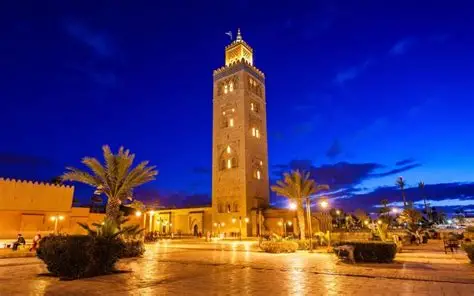
Morocco, officially the Kingdom of Morocco (Al-Mamlakah al-Maghribiyyah) is a North African nation on the Atlantic Ocean and Mediterranean Sea, bordered by Algeria to the east and the Spanish enclaves of Ceuta and Melilla to the north.
The capital is Rabat and the largest city is Casablanca. Morocco’s terrain includes the Atlas and Rif mountains, fertile coastal plains, and the Sahara Desert in the south.
One of Africa’s oldest states, Morocco’s indigenous Amazigh (Berber) peoples were later joined by Arab Islamic influence from the 7th century. It evolved through powerful dynasties and became a French and Spanish protectorate in 1912, eventually gaining full independence in 1956 under King Mohammed V.
Morocco’s population is roughly 37–38 million. Most identify as Arab-Berber, with Amazigh culture deeply woven into national life.
Modern Standard Arabic and Berber (Tamazight) are official languages, with Moroccan Arabic (Darija) widely spoken.
French remains a major language of business and education, and Spanish is common in northern regions. Moroccan culture blends Amazigh, Arab, African, and Mediterranean traditions in music, cuisine (tagine, couscous), crafts, and festivals.
Morocco is a constitutional monarchy. King Mohammed VI has ruled since 1999, with substantial executive authority.
The Prime Minister, currently Aziz Akhannouch, leads an elected government responsible for day-to-day governance.
The bicameral Parliament includes a House of Representatives and House of Counsellors.
Morocco has a growing, diversified economy. Key sectors include services, industry, agriculture, tourism, mining (notably phosphates), automotive and aerospace manufacturing, and renewable energy projects.
Recent initiatives aim to expand digital infrastructure and technology industries, including a push to grow AI’s contribution to GDP.
Morocco is among Africa’s most digitally connected nations, with internet penetration at over 92% of the population by late 2025 and roughly 35.5 million users.
Social media use is prominent: about 59% of Moroccans are active on platforms like Facebook, Instagram, TikTok and WhatsApp, with daily engagement especially high among youths.
This digital landscape deeply influences youth culture, communication, entertainment, and activism.
Young Moroccans are digitally savvy, using social media for news, culture, and expression, but they also organize online around social issues.
Movements like Gen Z 212 have used digital platforms to mobilize protests demanding better jobs, services, and political accountability, highlighting tensions between youth expectations and state priorities.
Football is hugely popular. Morocco’s national team has gained international acclaim, and the country is co-hosting the 2030 FIFA World Cup with Spain and Portugal. Sports and cultural diplomacy play key roles in Morocco’s global image.
Morocco pursues balanced relations with the EU, U.S., Gulf states, and African partners, focusing on trade, security, energy, and cultural ties. It also leads in regional cooperation initiatives across Africa and the Mediterranean.