
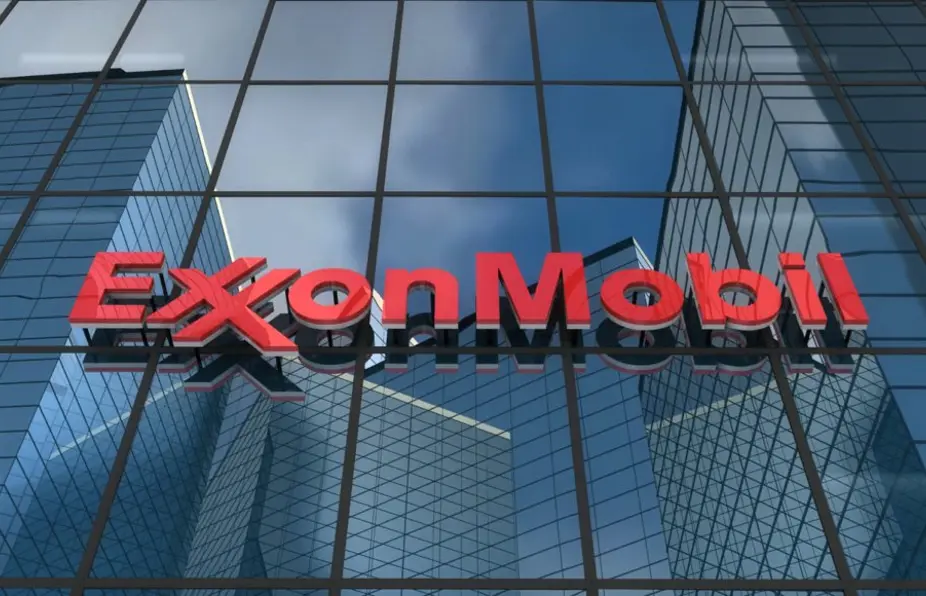
American energy giant ExxonMobil has officially commenced the long-awaited $1 billion Usan Infill Project in Nigeria’s deepwater oil sector, marking one of the country’s most significant upstream investments in over a decade.
The investment, which will be executed through ExxonMobil’s Nigerian affiliate, Esso Exploration and Production Nigeria Limited (EEPNL), is expected to increase Nigeria’s crude oil production by approximately 40,000 barrels per day (bpd) while generating an estimated $1.2 billion in additional revenue for the country over the next four years.
The project will be carried out at Oil Mining Lease (OML) 138, a major offshore asset jointly owned by NNPC Limited, Chevron, TotalEnergies, Nexen, and ExxonMobil, and represents a renewed wave of confidence in Nigeria’s oil and gas industry following years of declining investments.
The announcement was made during the 25th Nigeria Oil and Gas (NOG) Energy Week Conference and Exhibition in Abuja by the Managing Director of Esso Exploration and Production Nigeria and Chairman of ExxonMobil Affiliates in Nigeria, Jagir Baxi.
According to Baxi, the project is entering its execution phase after nearly ten years of delays and is designed to rapidly unlock new oil production through the drilling of additional wells within the existing Usan Field infrastructure.
He explained that a world-class deepwater drilling rig, alongside sophisticated subsea production equipment, is expected to arrive at the field next month, officially commencing offshore operations.
“Esso Nigeria, on behalf of the OML 138 partners, is proud to announce the commencement of the on-block execution of a cumulative $1 billion investment at the Usan Field, which will unlock around 40,000 barrels per day of new deepwater oil production,” Baxi stated
Unlike conventional deepwater developments that often require several years before first oil production, the Usan Infill Project has been designed as a short-cycle investment capable of delivering results much faster.
Baxi disclosed that production from the first newly drilled wells is expected within six months after offshore execution begins, while maximum production of approximately 40,000 barrels daily should be achieved within 18 months.
The project was conceptualised and developed in roughly 18 months following the successful completion of advanced seismic surveys and data processing conducted in mid-2024.
More than $300 million has already been committed to preparatory work ahead of the commencement of drilling activities.
According to ExxonMobil, one of the key factors behind the investment decision was the 20-year renewal of the OML 138 licence in 2022, which provided greater regulatory certainty and strengthened investor confidence.
Baxi described the licence renewal as a major signal that encouraged the project partners to proceed with the billion-dollar investment.
He noted that the new wells will utilise existing subsea infrastructure, reducing operational costs while maximising oil recovery from the offshore field.
The Usan Infill Project will also introduce advanced drilling technologies never before deployed by ExxonMobil in Nigeria.
One of the planned wells will become the longest extended-reach well ever drilled at the Usan Field, stretching more than four kilometres to access previously untapped reservoirs.
In addition, several wells will employ intelligent drilling and completion technologies capable of producing oil from multiple narrow reservoirs through a single wellbore.
According to Baxi, these technologies will improve production efficiency while reducing development costs and increasing overall resource recovery.
ExxonMobil revealed that the OML 138 partners have invested approximately $16 billion in developing the Usan Field over the past 14 years.
During that period, the field has produced more than 350 million barrels of crude oil, generating roughly $4.6 billion in value for Nigeria.
The new infill campaign aims to extend the productive life of the field while extracting additional reserves through existing facilities instead of constructing entirely new infrastructure.
Beyond increasing crude oil production, ExxonMobil says the project will create employment opportunities and stimulate economic activities across Nigeria’s oil and gas value chain.
Baxi explained that the Usan Floating Production Storage and Offloading (FPSO) vessel currently employs nearly 400 professionals, the vast majority of whom are Nigerians.
These offshore personnel are supported by hundreds of additional Nigerian workers employed by contractors, regulators, concessionaires, and service providers involved in the project.
He added that the investment demonstrates ExxonMobil’s long-term commitment to Nigeria’s petroleum industry.
ExxonMobil credited the success of the project to close collaboration with key government agencies, including the Nigerian Upstream Petroleum Regulatory Commission (NUPRC), NNPC Limited, and the Nigerian Content Development and Monitoring Board (NCDMB).
According to Baxi, the NUPRC expedited regulatory approvals required for the project, enabling ExxonMobil to maintain its aggressive development schedule.
Similarly, NNPC provided technical support and facilitated key execution decisions, while the NCDMB ensured that local content requirements were addressed without delaying project implementation.
The Nigerian Upstream Petroleum Regulatory Commission welcomed ExxonMobil’s investment, describing it as a landmark development for Nigeria’s upstream petroleum sector.
Speaking at the conference, the Commission Chief Executive, Mrs. Oritsemyiwa Eyesan, praised ExxonMobil and its partners for committing $1 billion to the Usan Infill Project.
She noted that the announcement was particularly significant because ExxonMobil’s Nigerian affiliate had not conducted any drilling operation since 2016.
“With Esso’s last drilling campaign dating back to 2016, this resumption signals renewed confidence in Nigeria’s deepwater assets,” Eyesan said.
She described the project as an important milestone in the Federal Government’s efforts to revive exploration activities, increase national crude oil production, expand petroleum reserves, and restore investor confidence.
During the event, the NUPRC also presented several Petroleum Prospecting Licences (PPLs) arising from the successful completion of the 2022/2023 Mini Bid Round and the Nigeria 2024 Licensing Round.
Among the companies receiving licences were Broron Energy Limited, Petroli Energy Marketing and Supply Limited, Sahara Deepwater Resources Limited, and Tulcan Energy E&P Company.
In total, 12 successful investors were awarded 19 Petroleum Prospecting Licences, covering deep offshore, shallow water, and continental shelf assets.
The Commission stated that the awards form part of Nigeria’s broader strategy to stimulate exploration, attract fresh investments, and maximise the country’s hydrocarbon resources.
The Usan Infill Project comes as the Federal Government continues implementing wide-ranging reforms aimed at revitalising Nigeria’s oil and gas industry.
Key initiatives include the full implementation of the Petroleum Industry Act (PIA), executive orders introducing tax incentives for deepwater investments, faster contracting processes, and simplified regulatory approvals designed to improve Nigeria’s competitiveness in attracting global energy investments.
With drilling expected to commence next month and first production anticipated before the end of the year, the $1 billion Usan Infill Project is widely regarded as one of Nigeria’s most important upstream developments in recent years.
Industry stakeholders believe the investment will significantly strengthen crude oil production, improve government revenue, create employment opportunities, and reinforce investor confidence in Nigeria’s energy sector as the country works towards increasing production and sustaining long-term economic growth.