


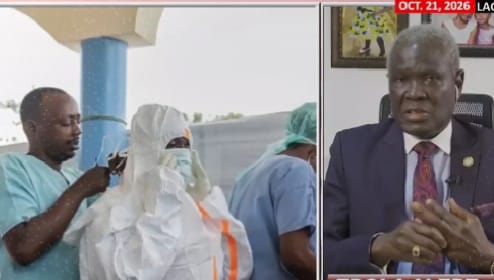
LAGOS: Nigerians have been advised to avoid handshakes, hugs and other forms of unnecessary physical contact as part of preventive measures against Ebola, with Professor Oladapo Ashiru stressing that the virus spreads primarily through direct contact with the body fluids of infected people who are showing symptoms.
Ashiru, President of the Foundation of the Academy of Medical Sciences, said public awareness, personal hygiene and responsible behaviour remain essential to reducing the risk of transmission and preventing a potential outbreak from spreading.
He emphasised that Ebola differs from COVID-19 in its principal mode of transmission, noting that Ebola is not considered an airborne disease under ordinary circumstances. Rather, transmission occurs mainly when a person comes into direct contact with the blood or other bodily fluids of an infected individual who has developed symptoms.
The clarification is particularly important as public health authorities and communities seek to understand how Ebola spreads, which precautions are necessary and how individuals can protect themselves without resorting to panic or misinformation.
Ebola virus disease is a severe and potentially fatal illness that can cause fever, weakness, muscle pain, headache, vomiting, diarrhoea and, in some cases, internal or external bleeding.
According to established public health guidance, the virus spreads primarily through direct contact with the blood, vomit, faeces, urine, saliva and other bodily fluids of an infected person who is symptomatic. Contact with contaminated clothing, bedding, medical equipment and other materials can also transmit the virus.
The risk is particularly significant when people provide care to infected relatives without appropriate protective equipment or when healthcare workers attend to patients without adequate infection prevention measures.
People may also be exposed through contact with the bodies of individuals who have died from Ebola, making safe and dignified burial practices an important part of outbreak control.
Unlike COVID-19, which can spread through infectious respiratory particles, Ebola is not ordinarily transmitted through the air over long distances. However, this distinction should not be interpreted as meaning that close contact with an infected person is safe.
The principal concern remains direct exposure to infectious bodily fluids, particularly when a patient has developed symptoms.Ashiru’s advice to avoid handshakes and hugs highlights the importance of reducing unnecessary physical contact when Ebola transmission is a concern.
Although a handshake or hug does not automatically transmit Ebola, such contact can create opportunities for exposure if infectious bodily fluids are present on a person’s skin, hands or clothing, particularly when there is contact with broken skin or the eyes, nose or mouth.
For this reason, Nigerians should exercise caution when interacting with anyone suspected of having Ebola and avoid direct physical contact with symptomatic individuals until trained health personnel can assess the situation.
Members of the public should also avoid touching a suspected patient’s bodily fluids, personal belongings or contaminated materials without appropriate protective equipment.
People who become ill after a possible exposure should seek urgent medical advice and inform healthcare providers about their exposure history before arriving at a facility, where possible. This allows health personnel to make appropriate arrangements to prevent further transmission.
Regular handwashing remains one of the practical measures individuals can take to reduce the spread of infectious diseases. Hands should be washed thoroughly with soap and running water, especially after contact with potentially contaminated surfaces or materials.
Where appropriate, an alcohol-based hand sanitiser can be used when hands are not visibly dirty, although it should not replace proper infection-control procedures when dealing with suspected Ebola cases.
Nigerians should also avoid sharing items that may be contaminated with bodily fluids and should not handle the clothing, bedding or other personal effects of suspected patients without guidance from trained health personnel.
Families caring for sick relatives should avoid attempting to manage a suspected Ebola case at home without professional guidance. Instead, they should contact the appropriate public health authorities or designated healthcare services for instructions.
Healthcare workers, meanwhile, must follow established infection prevention and control protocols, including the use of appropriate personal protective equipment, safe patient handling and proper disposal of contaminated materials.
Health experts have repeatedly emphasised that accurate information is essential during an infectious disease emergency. Misunderstanding how a virus spreads can encourage either unnecessary panic or dangerous complacency.
While Ebola is not considered airborne in the same way as COVID-19, it can spread rapidly through unprotected contact with infected people, particularly in settings where infection prevention measures are weak.
Communities should therefore avoid spreading unverified claims on social media and rely on credible information from the Nigeria Centre for Disease Control and Prevention (NCDC), the World Health Organization and other recognised public health agencies.
Anyone experiencing symptoms compatible with Ebola after a possible exposure should seek urgent medical assessment rather than self-medicate or conceal their illness out of fear of stigma.
Early reporting, prompt isolation when indicated, laboratory testing and contact tracing are among the measures public health authorities use to interrupt transmission.
Ashiru’s warning underscores the need for Nigerians to take sensible precautions while avoiding misinformation about Ebola.
The absence of ordinary airborne transmission does not eliminate the risk posed by direct contact with infectious bodily fluids. Equally, not every handshake, hug or encounter with another person represents an Ebola exposure.
The appropriate response is to reduce unnecessary physical contact where exposure is a concern, maintain good hygiene, recognise potential symptoms and follow official public health advice.
As health authorities monitor infectious disease threats, public cooperation and timely communication will remain central to protecting communities and preventing avoidable transmission.
By RapidoSpace News


