


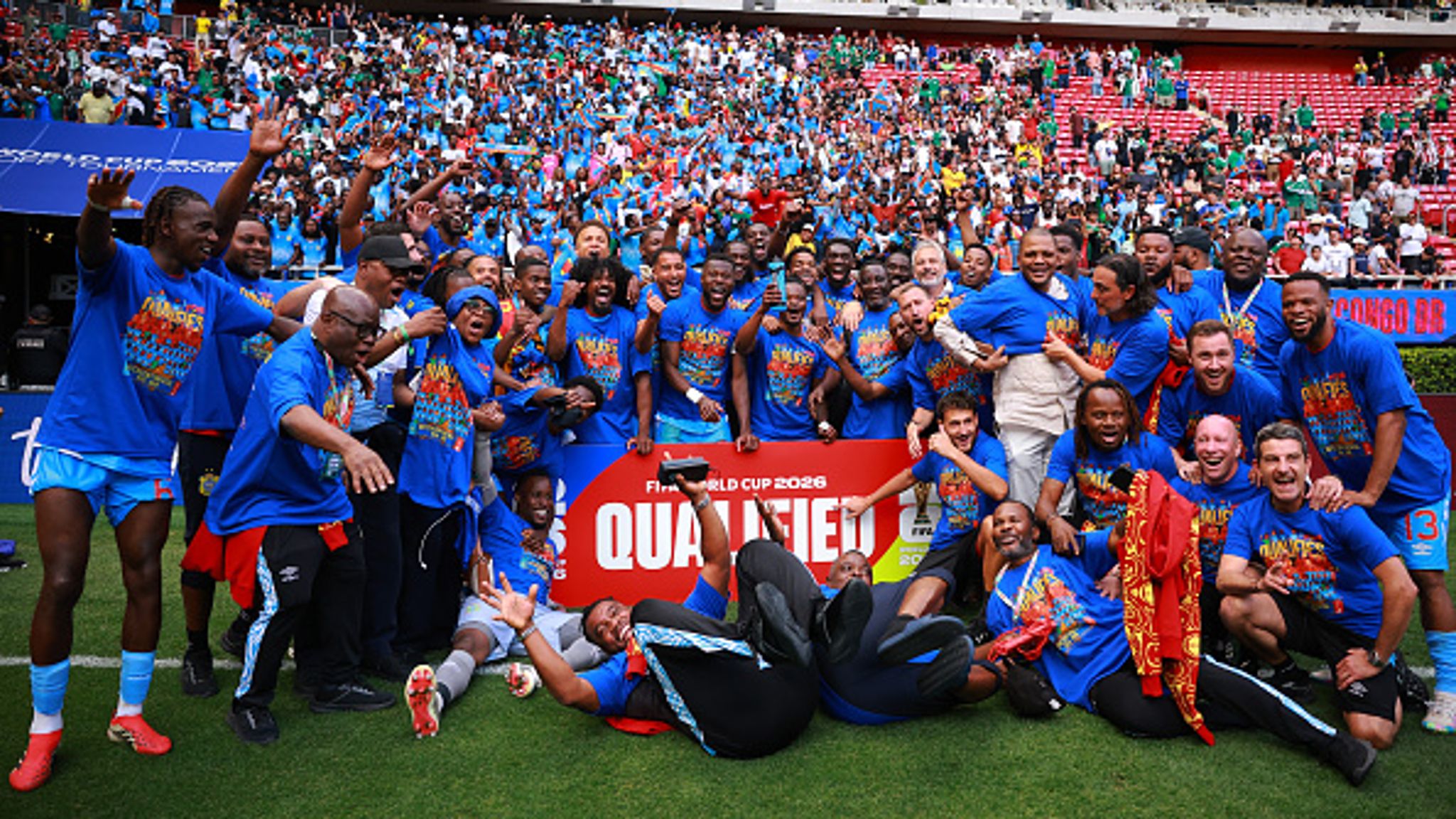
The DR Congo national football team have written a remarkable new chapter in their football history after sealing qualification for the 2026 FIFA World Cup, ending a 52-year wait to return to the global stage.
A dramatic extra-time goal from Axel Tuanzebe secured a hard-fought victory over the Jamaica national football team in the inter-confederation play-off final played in Mexico, sending the Leopards to their first World Cup since 1974.
For a nation where football remains one of the strongest symbols of unity and pride, the historic qualification triggered celebrations across the country and among the Congolese diaspora around the world.
The last time DR Congo appeared at the World Cup was in 1974, when the country competed under the name Zaire. That tournament marked a historic moment as they became the first team from sub-Saharan Africa to participate in the competition.
However, their appearance in West Germany was far from memorable. The team struggled against stronger opposition and suffered a humiliating 9-0 defeat against Yugoslavia.
One of the most talked-about incidents from that tournament occurred when defender Mwepu Ilunga famously ran out of the defensive wall to kick away a Brazil free-kick before it was taken a moment that has remained etched in World Cup folklore.
More than five decades later, the Congolese national team has finally earned an opportunity to rewrite that narrative and present a new image of the country’s footballing identity on the world stage.
The match against Jamaica proved to be a tense and closely contested affair. Both teams knew that victory would secure a coveted ticket to the 2026 World Cup, making every moment of the game fiercely competitive.
After 90 minutes of intense action failed to produce a winner, the match went into extra time. With fatigue beginning to show on both sides, the breakthrough finally arrived when Tuanzebe calmly finished from close range to give Congo the decisive lead.
The goal sparked wild celebrations among players and supporters, confirming DR Congo’s return to football’s biggest tournament after more than half a century.
For Tuanzebe, who previously represented England at youth level before committing his international future to DR Congo, the moment symbolised both personal pride and national triumph.
The current Congolese squad is a blend of homegrown talents and players born in the diaspora who have chosen to represent their ancestral homeland.
Among the most notable figures in the squad is right-back Aaron Wan-Bissaka, who switched international allegiance from England to DR Congo last year. His defensive strength and attacking contributions have made him a key part of the team’s structure.
Another rising talent is Noah Sadiki, a promising young midfielder who had the option of representing Belgium but chose to pledge his future to Congo instead.
Their decisions reflect a broader shift within Congolese football, as players of dual heritage increasingly view the national team as an attractive and competitive platform.
In previous generations, several prominent players of Congolese heritage represented other countries. Notable examples include Vincent Kompany, Romelu Lukaku, Presnel Kimpembe, Steve Mandanda and Christopher Nkunku.
While those players achieved success with European national teams, the emergence of a more competitive Congolese side is gradually changing the dynamic for future generations.
At the Centre of DR Congo’s football revival is French coach Sébastien Desabre, whose leadership has been widely credited with transforming the national team.
Desabre has earned admiration from both players and supporters for his commitment to improving the team despite difficult circumstances. Reports of delayed salaries, limited infrastructure and logistical challenges have not deterred the coach from pursuing his long-term vision.
His tactical decisions during the qualification campaign have often proved decisive.
One such moment came during the play-off semi-final against the Nigeria national football team, when Desabre made the bold decision to replace first-choice goalkeeper Lionel Mpasi with Timothy Fayulu before a penalty shoot-out. The gamble paid off, as Congo advanced to the final after winning the shoot-out.
The decision drew comparisons to the famous tactical move by former Netherlands manager Louis van Gaal during the 2014 World Cup, when he substituted his goalkeeper ahead of a penalty shoot-out.
For many observers, the moment highlighted Desabre’s confidence and tactical awareness.
While DR Congo has shown steady improvement over the past few years, the journey has not been without setbacks.
At the Africa Cup of Nations tournament earlier this year, the team failed to match expectations after suffering elimination in the round of 16.
Despite the disappointment, many analysts noted that the overall trajectory of Congolese football remained positive.
The team had previously reached the semi-finals of the 2023 AFCON, demonstrating that they possess the talent and resilience required to compete with Africa’s strongest sides.
Key players such as captain Chancel Mbemba and experienced striker Cédric Bakambu have continued to provide leadership within the squad while younger players gradually establish themselves.
Beyond football, the national team’s success carries deep emotional significance for many Congolese citizens.
The country has faced decades of political instability, economic challenges and social unrest. In this context, football has often served as a powerful source of unity and collective pride.
One symbolic figure frequently seen at Congo matches is devoted supporter Michel Kuka Mboladinga. Known for standing motionless during matches with his hand raised, he pays tribute to independence hero Patrice Lumumba.
His presence reflects the deep connection between football and national identity in DR Congo.
For many fans, the team’s qualification represents not only a sporting achievement but also a moment of hope and inspiration.
With qualification now secured, DR Congo will turn their attention to preparing for the challenges of the World Cup.
The expanded format of the 2026 FIFA World Cup, which will be hosted across the United States, Canada and Mexico, provides more opportunities for emerging teams to make an impact.
For the Leopards, the tournament represents a chance to demonstrate how far Congolese football has progressed since their difficult debut in 1974.
Fans will be hoping that the new generation of players can deliver performances that inspire pride and possibly surprise more established teams.
While few observers will place DR Congo among the tournament favourites, their resilience, energy and growing confidence make them a potential dark horse.
As the Leopards prepare to take their place among the world’s best teams, the message from Kinshasa to the diaspora is clear: Congolese football is back on the global stage.
And this time, they intend to make their mark.


