


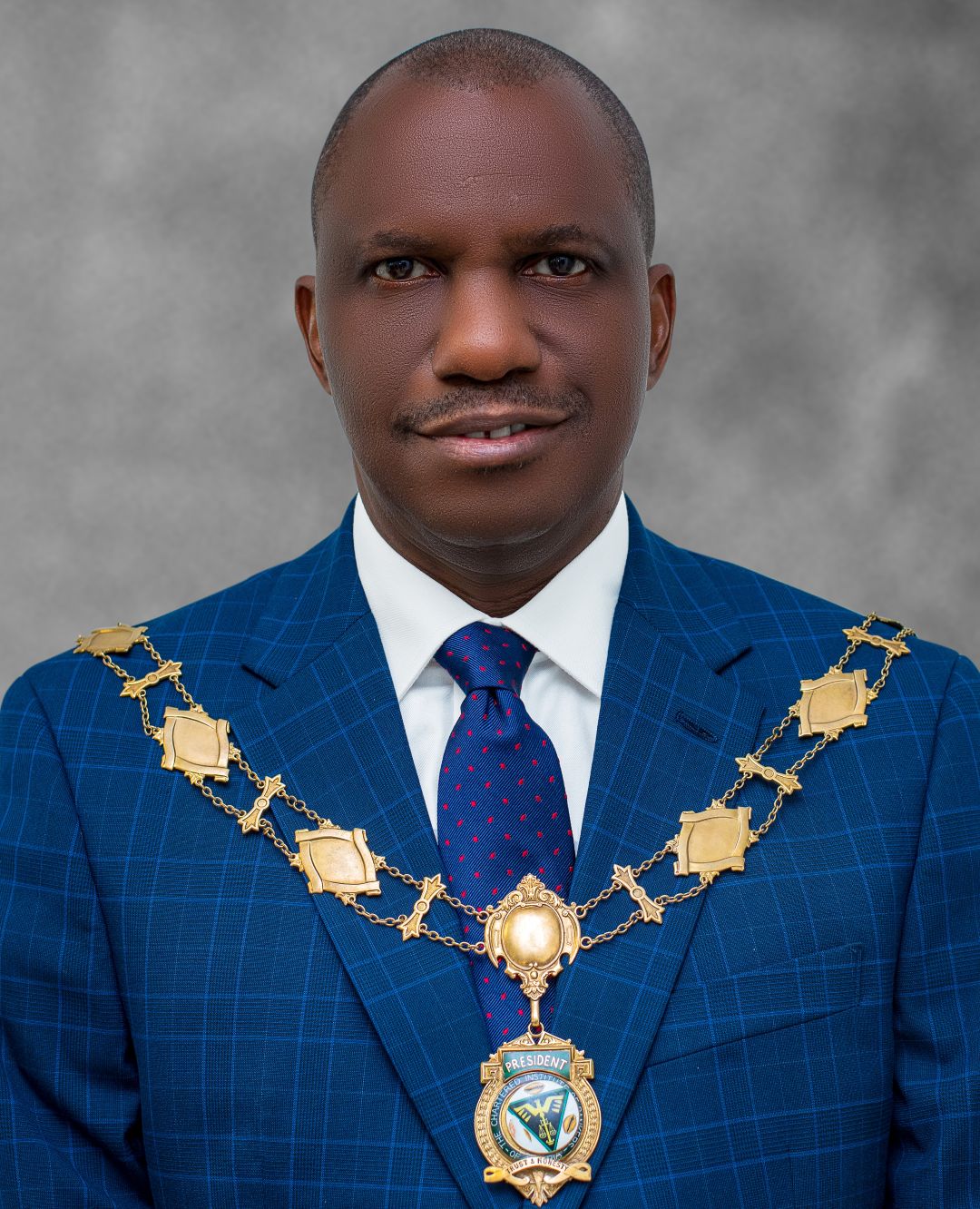
LAGOS: The Chartered Institute of Bankers of Nigeria has urged the Federal Government and financial institutions to ensure that Nigeria’s improving economic indicators translate into tangible benefits for citizens.
The President and Chairman of Council of the CIBN, Dr Dele Alabi, said economic reforms would have limited meaning if they failed to bring down living costs, create more jobs, raise incomes and improve the standard of living.
Alabi spoke in Abuja on Tuesday at the opening of the 19th Annual Banking and Finance Conference organised by the institute.
He said the ultimate measure of Nigeria’s economic reforms should not be limited to improvements in macroeconomic indicators but should focus on their impact on households, businesses and ordinary Nigerians.
According to him, stronger economic fundamentals must eventually be reflected in the daily experiences of citizens.
“They are milestones, not the destination. The true test is whether stronger fundamentals translate into lower living costs, more jobs, higher real incomes, affordable credit, reliable public services and reduced poverty,” Alabi said.
He added that macroeconomic progress must be felt at the microeconomic level, particularly among households and small businesses.
Alabi said the next phase of Nigeria’s economic reform programme should therefore focus on ensuring that gains from macroeconomic stability reach businesses and households.
He explained that the CIBN conference was designed to advance the institute’s IMPACT Vision, which he unveiled after assuming office in May 2026.
According to him, the institute’s advocacy for scalable small and medium enterprise hubs across the country is aimed at addressing some of the major challenges confronting micro, small and medium enterprises.
He identified high operating costs, inadequate infrastructure, limited market access, low productivity, skills shortages and slow adoption of digital technologies as some of the obstacles facing MSMEs.
Also speaking at the conference, the Lead Private Sector Development Specialist at the World Bank’s Nigeria Office, Ms Bertine Kamphuis, said credit to the Nigerian private sector remained inadequate.
Kamphuis, who was represented by the World Bank’s Division Director for Nigeria, Dr Mathew Verghis, called on banks to increase lending to sectors with strong job-creation potential.
She identified agriculture, manufacturing and MSMEs as key areas requiring greater access to productive financing.
Kamphuis noted that between three and four million young Nigerians enter the labour market annually, making increased access to credit essential for expanding businesses and creating employment opportunities.
She stressed the need for the banking sector to rethink its approach to financing and risk man
The call came against the backdrop of President Bola Tinubu’s charge to Nigerian banks to reconsider their approach to risk and increase financing for productive sectors.
Tinubu, represented at the conference by the Minister of Finance and Coordinating Minister of the Economy, Taiwo Oyedele, said banks should play a more active role in supporting businesses and the wider economy.
The President said profitability and shareholder returns remained important measures of banking performance but argued that they should not be the only indicators of a successful financial system.
For years, we have measured financial institutions by balance-sheet growth, profitability and shareholder returns. These remain important. But we must increasingly ask: what is the financial system doing for the real economy?” Tinubu said.
He noted that businesses would struggle to expand if they could not access affordable credit, while millions of MSMEs would remain outside the formal financial system.
Tinubu therefore urged banks to rethink their perception of risk and ensure that capital was directed towards areas capable of driving economic growth.
He said Nigeria had returned to a path of economic stability and was witnessing improved investor confidence, but warned that stability should not be confused with prosperity.
“Economic stability has returned. Credibility is rising. And prosperity is coming. These improvements matter. But we must not mistake macroeconomic stability for economic prosperity. Stability is the foundation; prosperity is the destination,” he said.
According to the President, the next phase of the reform programme should focus on converting stability into investment, investment into production, production into jobs and economic growth into improved living standards.
He said Nigeria needed to move beyond simply building larger banks with stronger balance sheets and instead create a financial system capable of supporting a larger and more productive economy.
“Capital must reach ideas, finance must enable enterprise, technology must expand opportunity, risks must be intelligently shared, and growth must translate into better lives for our people,” Tinubu said.
The President also said the banking and financial services industry would remain critical to achieving Nigeria’s development objectives, urging financial institutions to embrace their role as intermediaries between capital and productive economic activities.
Speaking on the ongoing banking sector recapitalisation, Tinubu said the exercise must produce benefits beyond stronger bank balance sheets.
He said the additional capital should support investment, business expansion and economic activity across Nigeria and Africa.
“It must translate into capital formation in the real economy, financing Nigerian businesses as they expand across Africa and pursue our ambition of a one-trillion-dollar economy,” he said.
Tinubu warned that simply having bigger banks without corresponding growth in productive economic activities would amount to an inadequate outcome.
He called for a financial system that finances productive potential and economic opportunities rather than concentrating capital on quick returns.
In his goodwill message, the Governor of the Central Bank of Nigeria, Olayemi Cardoso, said the significant capital raised by banks during the recapitalisation exercise demonstrated the depth of funds available within the domestic market.
Cardoso, who was represented by the CBN Deputy Governor in charge of Policy, Philip Ikeazor, challenged banks to deploy the newly raised capital towards financing the real sectors of the economy.
He said increased lending to productive sectors would help accelerate economic growth and contribute to improved living standards.
The CBN governor also urged state governments to work with the apex bank and Federal Government fiscal authorities to tackle inflation more effectively.
He expressed optimism that single-digit inflation could be achieved through stronger cooperation among stakeholders.
The discussions at the CIBN conference underscore the growing emphasis on ensuring that Nigeria’s economic reforms move beyond improved statistics and translate into cheaper living costs, stronger businesses, increased employment and higher household incomes.