


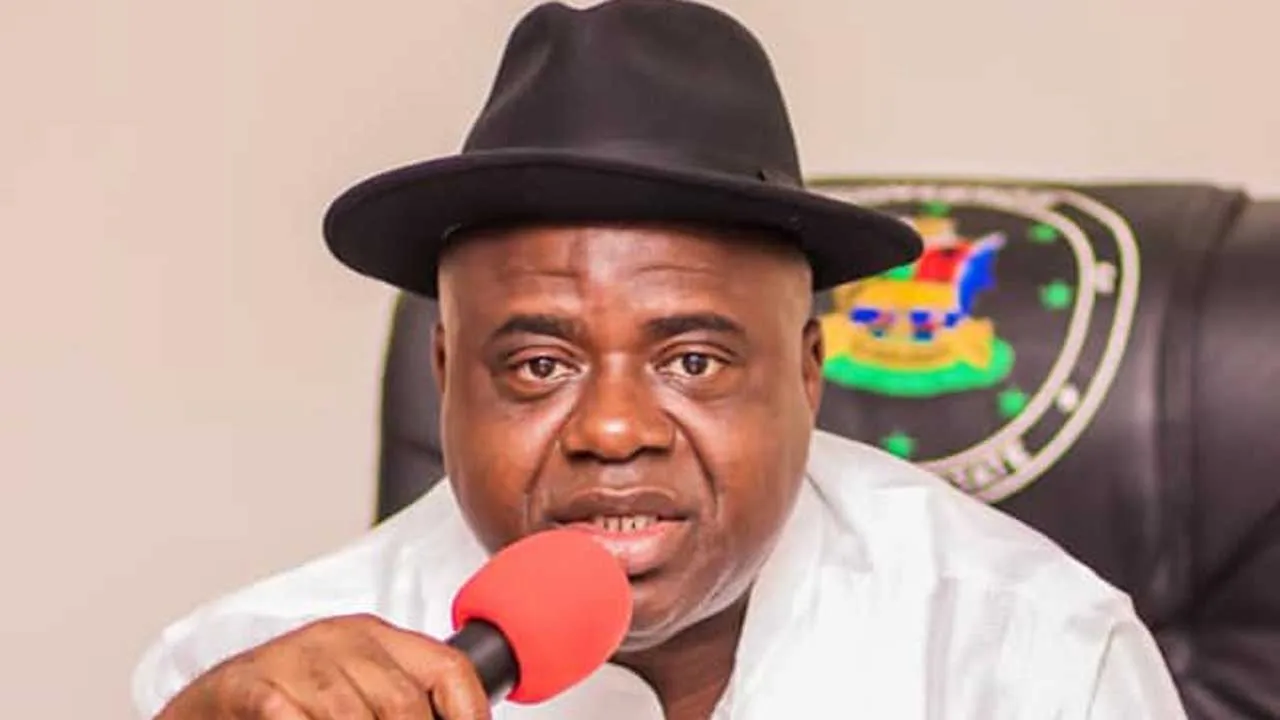
Senator Douye Diri has presented a proposed budget of ₦1.24 trillion for the 2027 fiscal year, with 68 per cent of the total expenditure earmarked for capital projects as his administration seeks to accelerate infrastructure development and improve public services.
The governor presented the ₦1,242,688,970,520.22 budget proposal before the Bayelsa State House of Assembly in Yenagoa on Tuesday, November 3, 2026.
Christened the Budget of Assured Prosperity and Sustainable Growth and Development, the proposal is designed to consolidate ongoing development projects, strengthen essential services, stimulate economic activities and improve the living conditions of residents across the state.
A major feature of the proposed spending plan is its emphasis on capital expenditure, which accounts for more than two-thirds of the total budget, reflecting the administration’s intention to channel substantial resources into infrastructure and other development-related investments.
Presenting the financial details, Diri disclosed that capital expenditure would gulp ₦840.79 billion, representing approximately 68 per cent of the proposed budget.
Recurrent expenditure, which covers personnel costs, administrative expenses and other government operating obligations, is projected at ₦401.90 billion, representing the remaining 32 per cent.
The allocation reflects the government’s stated preference for development-oriented spending, with infrastructure and public investment expected to remain central to its priorities in 2027.
According to the governor, the proposed budget is approximately 22 per cent higher than the 2026 fiscal year’s budget.
He assured lawmakers and residents that his administration would ensure that available resources were directed towards projects capable of delivering tangible benefits to the people.
Electricity development is another major component of the proposed 2027 fiscal plan, with the state government targeting 100 megawatts of power supply during the fiscal year.
Diri explained that the target would build on the existing 60-megawatt gas turbine currently supplying electricity to the state.
The planned expansion is expected to strengthen electricity availability, support businesses, improve public services and create a more favourable environment for industrial and commercial activities.
Improved power supply could also help reduce the operational challenges facing small businesses and other productive enterprises that depend heavily on alternative sources of electricity.
However, the governor did not provide further details on the specific projects, implementation timetable or additional infrastructure required to achieve the 100-megawatt target.
Works and Infrastructure received the largest sectoral allocation in the proposed budget, with ₦422.84 billion earmarked for the sector.
Education followed with ₦126.97 billion, while Sports Development received ₦68.50 billion.
Other major allocations include:
- Works and Infrastructure – ₦422.84 billion
- Education – ₦126.97 billion
- Sports Development – ₦68.50 billion
- Health – ₦53.32 billion
- Security – ₦24 billion
- Public Utilities – ₦22.94 billion
- Agriculture – ₦17.74 billion
The distribution places infrastructure development at the centre of the government’s spending priorities, while education, sports, healthcare and security also received significant funding provisions.
The ₦422.84 billion earmarked for Works and Infrastructure is expected to support road construction, rehabilitation and other physical development initiatives across the state.
Education’s ₦126.97 billion allocation is intended to support the sector, while the ₦53.32 billion proposed for healthcare is expected to strengthen health services and related infrastructure.
Agriculture received ₦17.74 billion, reflecting another area of government spending aimed at supporting economic activities and productive sectors.
Governor Diri also disclosed that the ₦68.50 billion allocation for Sports Development would support the completion of Bayelsa State’s 30,000-capacity stadium before the end of his administration.
The proposed stadium project represents one of the major sporting infrastructure ambitions of the state government.
Once completed, the facility is expected to provide a major venue for sporting competitions, training activities and other large-scale events.
The investment is also expected to strengthen Bayelsa’s sporting profile and potentially create opportunities for young athletes, sports administrators and other stakeholders in the industry.
The governor’s commitment places the stadium among the projects expected to receive attention under the 2027 spending programme.
The proposed 2027 budget is based on several macroeconomic assumptions, including an oil benchmark of $60 per barrel, crude oil production of 1.8 million barrels per day and an exchange rate of ₦1,400 to the US dollar.
The government also projected an inflation rate of 18 per cent and Gross Domestic Product growth of 3.5 per cent.
These assumptions will form part of the financial framework guiding revenue projections, expenditure planning and the implementation of the proposed budget.
Given Bayelsa’s status as an oil-producing state, crude oil prices and production levels remain important factors that could influence the revenue available to finance the proposed expenditure.
Any significant deviation from the projected oil benchmark, production volume or exchange rate could affect the government’s revenue expectations and budget implementation.
The ability of the state to translate the ambitious spending plan into completed projects will therefore depend partly on revenue performance and effective financial management.
The Speaker of the Bayelsa State House of Assembly, Rt. Hon. Abraham Ingobere, who was represented by the Deputy Speaker, Hon. Michael Ogbere, commended Governor Diri for presenting the 2027 budget proposal on time.
The Assembly leadership assured the governor that lawmakers would give the document the necessary legislative consideration to facilitate its passage.
The proposed budget will undergo the legislative process, during which lawmakers are expected to examine the allocations, revenue projections and spending priorities before granting approval.
If passed, the 2027 appropriation law will provide the financial framework for the Diri administration’s development programmes and government activities throughout the fiscal year.
With ₦840.79 billion proposed for capital expenditure and major investments planned across infrastructure, education, sports and electricity, attention will now shift to the legislature’s consideration of the proposal and the government’s ability to deliver on its ambitious development targets.


