


Fresh waves of violence struck parts of northern Nigeria as suspected armed herders and insurgents launched attacks in Benue State and Borno State, leaving several people, including soldiers, dead and triggering renewed concerns over the country’s security situation.
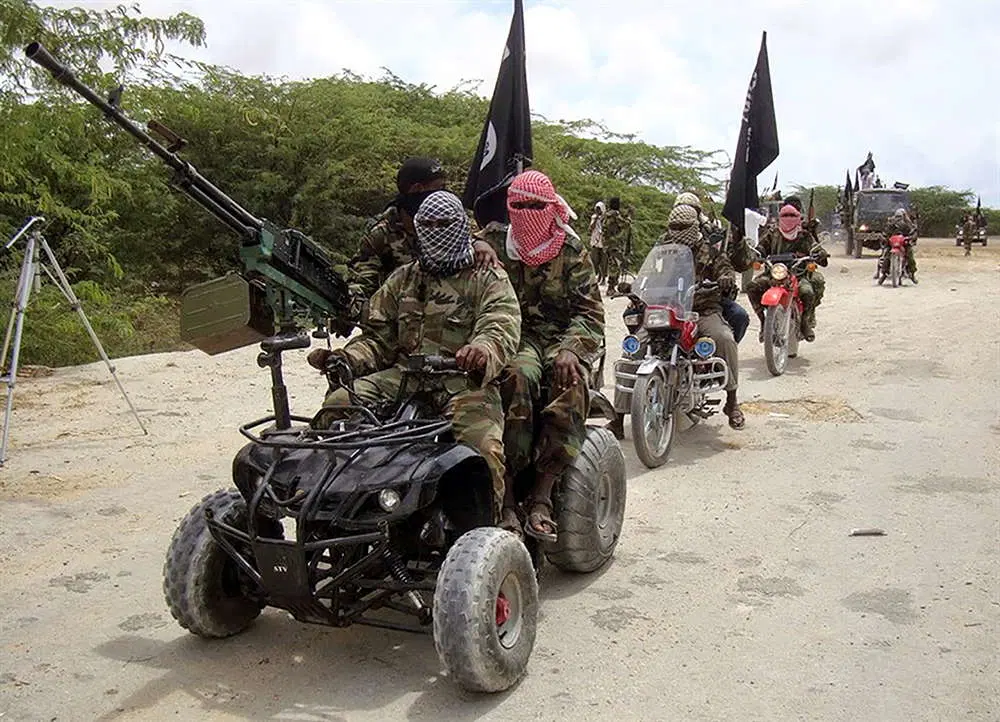
The incidents occurred in separate attacks, with armed herders allegedly killing farmers in Benue while insurgents linked to Boko Haram targeted a military formation in Borno.
In Benue State, at least three persons were reportedly killed by suspected armed herders in Yelewata, located in Guma Local Government Area.
Local sources said the victims were attacked while working on their farms, with three others sustaining injuries during the assault.
A government official in the area, who requested anonymity, disclosed that the victims had gone to their farmland when the attackers struck.
“The victims had gone to the farm when the armed herders attacked them. They killed three people while three others escaped with injuries,” the source said.
The attack came weeks after a previous assault in the same community reportedly left over 200 people dead, intensifying fears among residents.
The source added that the latest killings triggered protests by angry women from the community who blocked the Makurdi–Lafia Road, demanding urgent government action to stop the recurring violence.
Residents expressed concern that the renewed attack could discourage thousands of displaced persons who had fled the community from returning home.
According to reports, over 3,000 residents currently taking refuge in Makurdi had been considering returning to Yelewata before the latest incident occurred.
Confirming the attack, the Special Adviser to Governor Hyacinth Alia on Security and Internal Affairs, Joseph Har, said the incident took place in a community close to Yelewata.
“It is true that there was an attack. Three people were killed and three others were injured, but the protest that blocked the road has now been resolved,” he said.
The Chairman of Guma Local Government Area, Maurice Orwough, also confirmed the development and appealed to residents to remain calm while efforts were made to restore peace.
Meanwhile, insurgents suspected to be members of Boko Haram attacked a military formation in Kirawa, killing at least two soldiers.
Local sources said the attackers stormed the town around 9:30 p.m., firing sporadically and causing panic among residents.
The attackers were reportedly operating in two groups and entered the community through nearby villages before launching the assault.
The Mohammed Shehu Timta confirmed the attack, explaining that he received a distress call from the district head of Kirawa shortly after the incident.
“Yes, I received a distress call that armed terrorists invaded the town and caused havoc. Many residents fled to neighbouring communities in Cameroon for safety,” the monarch said.
Residents claimed the attackers also abducted a female student during the raid.
However, the Nigeria Police Force said it was still verifying details about the attack.
The Police Public Relations Officer for Borno State Command, Kenneth Daso, confirmed the incident but said the exact number of casualties had yet to be determined.
Reacting to the reports, the Theatre Commander of the North-East joint military task force Operation Hadin Kai, Abdulsalam Abubakar, said the report that Nigerian troops were attacked was inaccurate.
According to him, the assault actually occurred on a military base belonging to Cameroonian forces in Cameroon, not Nigerian troops.
“It’s the Cameroonian base in Kirawa that was attacked, not Nigerian troops,” he stated in a message to journalists.
He urged the media to verify security reports with military authorities before publishing them in order to avoid spreading incorrect information.
Meanwhile, Senator Diket Plang alleged that foreign armed groups collaborating with local accomplices were responsible for recent killings in Bokkos Local Government Area.
Plang, who chairs the Senate Committee on Labour, Employment and Productivity, described the attacks as “heinous crimes aimed at displacing residents from their ancestral homes.
He said the violence had led to the destruction of homes, farmlands and livelihoods across the Mushere chiefdom and other parts of the council area, forcing thousands of residents to flee.
The senator urged security agencies to intensify operations in the region and establish permanent military bases to prevent further attacks.
He also called for improved road infrastructure to enable faster troop deployment and easier access for farmers returning to their communities.
Elsewhere, fresh data from the Zamfara Circle Community Initiative revealed that armed groups attacked at least 15 villages across Zamfara State between August 4 and 10, 2025.
The report indicated that the attacks resulted in the kidnapping of 144 people, the killing of 24 others and injuries to at least 16 residents.
Affected communities were spread across several local government areas including Bakura, Tsafe, Mafara, Gummi and Bukkuyum.
However, the Nigerian Air Force announced that its aircraft recorded a major breakthrough in the fight against bandits in Zamfara.
According to the Director of Public Relations and Information, Ehimen Ejodame, coordinated air and ground operations under Operation Fasan Yamma led to the killing of several notorious bandit leaders in Makakkari Forest.
Meanwhile, the United States has urged West African and Sahel nations to strengthen cooperation in combating terrorism across the region.
Speaking during a briefing at the United Nations Security Council, US Ambassador Dorothy Shea stressed that terrorist groups operate across borders and require coordinated regional responses.
She condemned attacks carried out by extremist organisations such as ISIS-West Africa Province, ISIS-Sahel, and Jama’at Nusrat al‑Islam wal‑Muslimin.
She urged countries in the region to strengthen military cooperation, intelligence sharing and joint security strategies to confront the growing threat of terrorism.
Security analysts warn that continued instability across parts of northern Nigeria and the wider Sahel region could worsen humanitarian crises and displace more communities if stronger coordinated responses are not implemented.


