


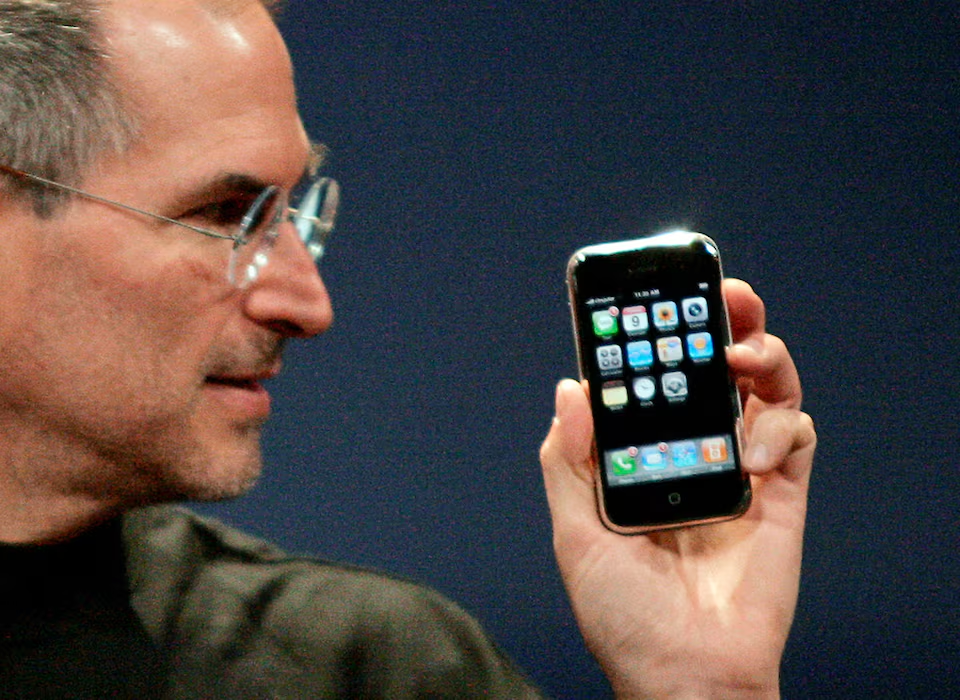
Apple Inc is marking its 50th anniversary on April 1, 2026, celebrating a remarkable journey from a small garage startup to one of the world’s most influential technology companies, even as it faces fresh challenges in the rapidly evolving artificial intelligence race.
The company was founded in 1976 in California by Steve Jobs and Steve Wozniak after Wozniak designed a computer circuit board he initially planned to share with fellow hobbyists.
Jobs, however, saw a commercial opportunity to manufacture and sell the boards, leading to the creation of the company and its first product, the Apple I.
Over the next five decades, Apple reshaped the technology industry and popular culture. The company helped bring desktop computing into homes and offices, later revolutionized mobile technology with the launch of the iPhone and played a major role in popularizing mobile applications and tightly integrated hardware-software ecosystems.
Today, Apple remains one of the most valuable companies in the world, with expected revenue of about $465 billion in its current fiscal year ending in September, driven largely by strong demand for its latest devices.
However, the company now faces growing pressure to maintain its dominance as artificial intelligence becomes the next major frontier in technology.
Competitors such as Alphabet Inc. and Microsoft have invested tens of billions of dollars to build leadership in AI technologies, intensifying competition for Apple.
The company’s stock has also lagged behind many major technology firms since the launch of ChatGPT by OpenAI in November 2022, highlighting investor concerns about Apple’s position in the emerging AI era.
Although Apple has embedded machine-learning capabilities in its custom chips since 2017, analysts say the company was slow to anticipate how quickly consumers would embrace AI-powered tools.
Delays in rolling out major features including an upgraded version of its voice assistant Siri have reinforced concerns that the company may be playing catch-up.
Meanwhile, AI developers such as OpenAI are exploring new AI-focused devices that could challenge the long-standing dominance of smartphones.
Despite these concerns, Apple’s core products continue to enjoy strong demand globally. The latest iPhone 17 series boosted sales during the company’s December quarter, while the $599 MacBook Neo the firm’s most affordable laptop to date — recorded a strong market debut.
Industry analysts say Apple’s integrated ecosystem of hardware, software and services remains one of its biggest competitive advantages.
According to independent technology analyst Ben Thompson, Apple’s future success may depend on how transformative AI becomes and whether competitors can disrupt its longstanding model.
The company made it fifty years with no one truly competing with its integrated business model, Thompson said.
The fate of its next fifty years may rest on the question of just how compelling AI ends up being.
Over the years, Apple has diversified its revenue streams beyond the iPhone. Its services division which includes platforms such as the App Store, Apple Music and Apple TV+ has become a key source of growth, generating recurring income from subscriptions and commissions on digital sales.
The company has also expanded its hardware lineup to include products such as smartwatches, wireless earbuds and the mixed-reality headset Vision Pro.
Apple’s global revenue mix has also evolved as the U.S. smartphone market becomes increasingly saturated.
Growth in China and emerging markets, particularly India, is now playing a larger role in driving sales.
From the humble Apple I circuit board to a vast ecosystem of devices and services used by billions of people worldwide, Apple’s journey over the past five decades has helped define modern consumer technology.
Yet as the industry enters a new era shaped by artificial intelligence, the company’s next chapter may depend on how successfully it adapts to the technological transformation reshaping the global tech landscape