


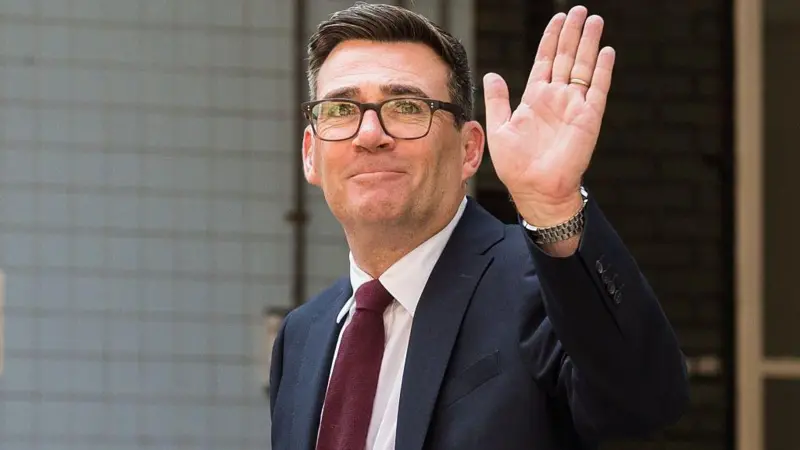
LONDON: Andy Burnham officially became Britain’s new prime minister on Monday after Keir Starmer resigned, promising to rewire Britain by prioritizing the cost-of-living crisis, economic growth and the improvement of public services.
The 56-year-old former Mayor of Greater Manchester is the seventh British prime minister in just a decade, marking another significant leadership change in UK politics.
Following Starmer’s farewell speech outside 10 Downing Street, he formally tendered his resignation to King Charles III. Burnham was then invited by the monarch to form a new government, completing the constitutional transfer of power.
In his first address as prime minister, Burnham is expected to outline plans for what his office described as “a more stable and responsible politics.
He has pledged to reshape government by focusing on the issues most affecting ordinary Britons, particularly rising living costs, stagnant economic growth and struggling public services.
Describing his election as Labour leader last week as “the most significant change moment in British politics for 40 years,” Burnham promised sweeping reforms aimed at improving living standards and making the economy work better for communities across the country.
He said Britain needed political stability and honest leadership to overcome its mounting economic and social challenges.
One of Burnham’s first major tasks will be naming his cabinet, with particular attention on who will become Chancellor of the Exchequer (finance minister).
Energy Security and Net Zero Secretary Ed Miliband was initially viewed as a leading contender, although reports now suggest Home Secretary Shabana Mahmood has emerged as the favourite.
Burnham has dismissed speculation over cabinet appointments, saying he has yet to finalise his team.
Political analysts believe the relationship between the prime minister and finance minister will be critical, given that disagreements between the two offices have contributed to the collapse of previous British governments.
The new government has already abandoned plans requiring all employees to carry digital identity documents, a proposal designed to combat illegal migration but criticised by lawmakers across party lines.
Attention is now turning to Burnham’s broader economic agenda, including:
- Measures to reduce the cost of living.
- Taxation and public spending reforms.
- Oil and gas policy.
- Greater public control of underperforming utility companies.
One of Burnham’s earliest tests may involve Thames Water, Britain’s largest water company, which has come under heavy criticism over mounting debts and repeated sewage pollution incidents.
Deputy Labour Leader Lucy Powell indicated that the company could be placed under “special measures,” effectively bringing it under government control if necessary.
She said Burnham wants to redirect government resources toward improving living standards and restructuring the economy to better serve working people.
Burnham’s rise comes as Labour seeks to rebuild public confidence and counter growing support for Nigel Farage’s Reform UK.
Many Labour MPs believe Burnham’s popularity, particularly in northern England where he earned the nickname “King of the North,” gives the party a stronger chance of reconnecting with voters ahead of future elections.
His administration now faces the challenge of translating campaign promises into policy while addressing Britain’s sluggish economy, struggling public services and rising public expectations.