


Rising geopolitical tensions across the Middle East and parts of Africa are beginning to reshape global security and economic dynamics, as military confrontations intensify, energy markets remain volatile, and domestic crises deepen in several countries.
From Israel’s strike on a critical Iranian gas facility to fresh arms deals in the Gulf and growing unrest over water shortages in South Africa, developments across multiple regions highlight the fragile state of international stability.
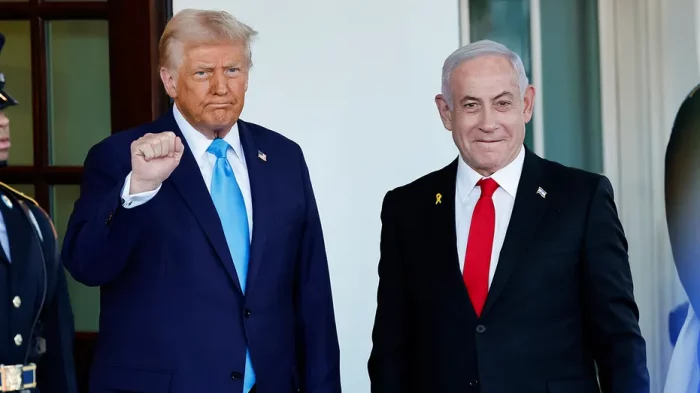
Israeli Prime Minister Benjamin Netanyahu has said Israel independently carried out the strike on Iran’s South Pars Gas Field, seeking to distance the United States from the operation amid growing speculation about coordination between the two allies.
The strike targeted infrastructure within the South Pars field, widely regarded as the largest natural gas reserve in the world and jointly shared by Iran and Qatar. Energy analysts say the attack marks one of the most significant escalations in the conflict involving Iran, Israel and the United States since hostilities intensified earlier this year.
Netanyahu rejected claims that Israel had coordinated the strike with Washington or attempted to pressure Donald Trump into supporting the operation. According to the Israeli leader, the decision was taken solely based on Israel’s national security calculations.
Trump later confirmed he had not been informed in advance of the attack and urged restraint, warning that further strikes on critical oil and gas facilities could trigger broader instability across the region.
The incident has raised questions about the extent of strategic alignment between Washington and Tel Aviv, particularly as both countries remain central actors in efforts to counter Iran’s regional influence.
Energy experts warn that attacks on major energy infrastructure could have far-reaching consequences for global markets. The Middle East remains the backbone of global oil supply chains, and disruptions to production or transport routes could push prices significantly higher.
A major concern is the vulnerability of the Strait of Hormuz, through which roughly 20 percent of the world’s oil supply passes. Any prolonged disruption in the waterway could send shockwaves through international markets, increasing fuel prices and raising inflationary pressures worldwide.
Iran responded swiftly to the Israeli strike by launching retaliatory attacks on energy infrastructure across the Gulf region. Reports indicate that some facilities in Qatar were targeted, raising fears that the conflict could spill over into neighbouring countries and disrupt broader regional energy production.
Meanwhile, Iranian authorities have executed three men accused of killing police officers during anti-government protests, in what observers describe as the first executions directly linked to the wave of unrest that has gripped the country this year.
Among those executed was teenager Saleh Mohammadi, who was reportedly associated with Iran’s national wrestling team. His death has drawn widespread condemnation from international human rights groups and sporting organisations.
The executions took place in Qom Province after Iran’s Supreme Court upheld death sentences on charges including “waging war against God,” a broad legal accusation frequently used by Iranian authorities against political dissidents.
State media reported that the men were convicted for participating in attacks against security personnel during protests earlier in the year.
However, international human rights organisations have strongly criticised the judicial process, alleging that confessions were extracted under torture and that the accused were denied access to fair trials or adequate legal representation.
The protests began as demonstrations against rising living costs, unemployment and currency instability but soon evolved into wider demands for political reforms and greater civil freedoms.
Human rights groups estimate that thousands of people may have died during the government’s crackdown, with many more arrested. Observers say the scale of the repression has made the unrest one of the most severe internal crises Iran has faced in decades.
As the conflict deepens, the White House has requested an additional $200bn in military funding to sustain operations linked to the ongoing confrontation with Iran.
President Donald Trump said the funds would be used to replenish depleted ammunition stocks and ensure the US military remains prepared for further escalation.
According to the United States Department of Defense, the conflict cost approximately $11.3bn during its first week alone. Military planners say expenses could increase significantly if hostilities continue to expand across the region.
US Defence Secretary Pete Hegseth said sustained military engagement requires substantial financial resources, adding that the Pentagon must remain prepared for a prolonged confrontation.
Analysts note that the funding request reflects the growing scale of the conflict and the potential economic strain it could place on the United States if military operations continue for an extended period.
In a parallel development, the United States Department of State has approved a $16.5bn arms package aimed at strengthening defence capabilities among key Gulf allies.
The package includes $8.4bn worth of military equipment for the United Arab Emirates, including drones, advanced missile systems, radar technology and F-16 fighter jets.
Another $8bn will support air and missile defence systems for Kuwait, while Jordan will receive $70.5m in aircraft upgrades and munitions support.
US officials say the arms package is designed to reinforce regional security and strengthen alliances at a time of heightened tension with Iran.
The State Department authorised the deal under emergency provisions, allowing it to bypass congressional approval. Marco Rubio provided the formal justification required for the expedited approval.
American officials described the UAE as a key stabilising partner in the region, noting that stronger defence cooperation with Gulf allies is critical to maintaining security in the Middle East
As the conflict disrupts energy markets, several international allies have pledged support for efforts aimed at reopening the Strait of Hormuz and stabilising global oil supply chains.
Leaders from United Kingdom, France, Germany, Italy, Netherlands, and Japan issued a joint statement expressing readiness to support international efforts to ensure safe passage through the strategic waterway.
The International Energy Agency has already authorised the coordinated release of strategic petroleum reserves to ease pressure on global markets. The move represents one of the largest such interventions in recent years.
Despite calls from Washington for a coordinated naval operation to secure the shipping route, European governments have ruled out direct military involvement, instead favouring diplomatic engagement and economic measures to stabilise the situation.
In Johannesburg, growing frustration over water shortages has triggered street protests, with residents complaining that some communities have gone weeks without reliable access to running water.
Demonstrators in suburbs including Greenside warned that the prolonged shortages could lead to public health emergencies and increase the risk of disease outbreaks.
Experts attribute the crisis to ageing infrastructure, persistent electricity instability and years of underinvestment in water systems.
Some residents also accuse criminal groups of exploiting the shortages by operating illegal water distribution networks, further complicating efforts to restore normal supply.
The unrest highlights broader structural challenges facing urban centres in South Africa, where deteriorating infrastructure and service delivery failures have become increasingly urgent political issues.
In East Africa, the government of Kenya has restarted construction on a major railway extension linking Nairobi to the Rift Valley, reviving a project that had stalled for six years due to financing challenges.
President William Ruto said the project will now be funded through alternative financing mechanisms rather than relying heavily on Chinese loans under the Belt and Road Initiative.
Officials say the railway extension could significantly boost trade and improve transport connectivity across East Africa, particularly with neighbouring Uganda.
However, critics remain cautious about the long-term financial sustainability of the project,
Tensions have also escalated between Chad and Sudan following a drone strike that killed at least 17 people attending a funeral near the border town of Tiné.
President Mahamat Idriss Déby condemned the attack as a violation of the country’s territorial sovereignty and ordered the military to remain on high alert.
Chad has also announced the immediate closure of its border with Sudan as tensions between the two countries continue to rise.
Meanwhile, officials from the Democratic Republic of Congo and Rwanda have agreed to take what they described as “concrete steps” to reduce tensions following talks hosted by the United States.
The agreement includes commitments to respect territorial sovereignty and reduce military activity in eastern Congo, where armed groups have continued to operate despite repeated peace agreements.
In another tragic development, at least 17 migrants have died after a boat capsised off the coast of Comoros while attempting to reach Mayotte.
Authorities said around 30 survivors were rescued, while search operations continued for others feared missing.
Officials believe many of the migrants were from the Democratic Republic of Congo, highlighting the growing risks faced by migrants attempting dangerous sea journeys in search of better opportunities.
The incident adds to a growing list of maritime tragedies involving African migrants, underscoring the urgent need for coordinated regional solutions to migration pressures across the continent.


