


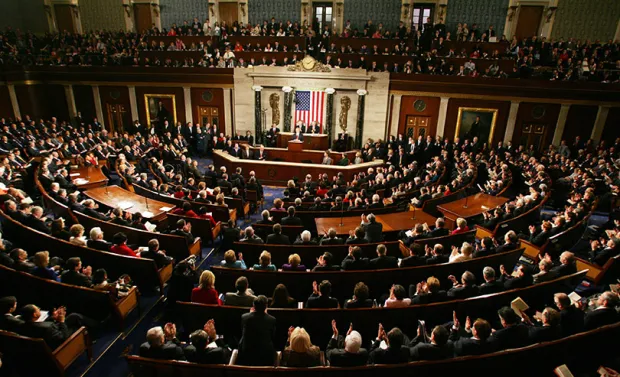
WASHINGTON: A bill seeking to designate Fulani militia groups as a terrorist organisation has reportedly been presented before the United States Congress, a development that has drawn renewed global attention to Nigeria’s persistent security challenges and the ongoing farmer-herder conflicts in several parts of the country.
The proposed legislation is said to focus on violent attacks frequently attributed to armed herder groups, particularly in Nigeria’s Middle Belt and some southern states, where clashes between farmers and herders have resulted in significant loss of lives, displacement of communities, destruction of farmland, and broader humanitarian concerns.
Supporters of the proposed designation argue that classifying the militia as a terrorist organisation could strengthen international monitoring of suspected violent networks, restrict potential funding channels, and enhance global counterterrorism cooperation.
They believe such a move may also place greater diplomatic pressure on stakeholders to intensify efforts aimed at ending recurring violence and protecting vulnerable communities.
Analysts note that insecurity linked to herder-farmer clashes has remained a sensitive and complex issue in Nigeria, often involving ethnic tensions, competition over land and grazing routes, climate-related migration pressures, and weak local conflict-resolution mechanisms.
Some observers warn that any international designation must be approached carefully to avoid oversimplifying what many consider a multifaceted socio-economic conflict.
There are also concerns that the issue could have diplomatic implications, particularly regarding Nigeria–United States relations, security cooperation, and ongoing discussions around counterterrorism partnerships in West Africa.
Nigeria has previously collaborated with international partners, including the US, in addressing terrorism threats such as Boko Haram insurgency and other armed groups operating within the region.
Security experts have repeatedly emphasised the need for a comprehensive approach to resolving the crisis.
Such measures include strengthening law enforcement, promoting dialogue between affected communities, improving land-use policies, investing in ranching and modern livestock management systems, and addressing underlying economic and environmental factors contributing to conflict.
Meanwhile, stakeholders within Nigeria continue to debate the most effective strategies for tackling insecurity linked to herder-farmer clashes.
Some advocate stronger military and policing responses, while others emphasise reconciliation initiatives, economic reforms, and community-based peacebuilding efforts.
The bill’s progress through the US legislative process and its potential impact on international policy toward Nigeria remain to be seen.
However, the development has already sparked discussions among policymakers, civil society groups, and security analysts about how best to balance global counterterrorism efforts with the need for nuanced understanding of local conflicts.
Observers say continued dialogue, diplomatic engagement, and sustained domestic reforms will be crucial in addressing the underlying drivers of violence while ensuring long-term stability in affected regions.