


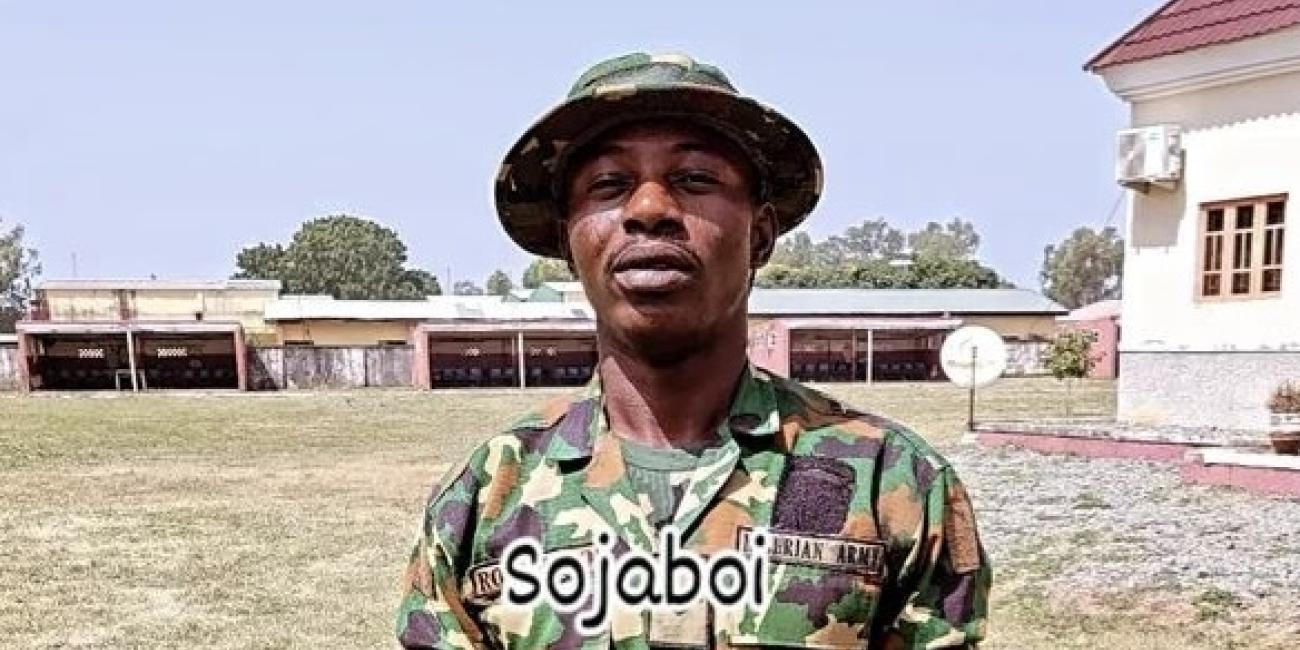
A dismissed Nigerian soldier, Rotimi Olamilekan, popularly known as Soja Boi (service number 18NA/77/1009 LCPL), has revealed that soldiers in conflict zones like Borno State often pay for their own uniforms and protective gear, despite operating in extremely high-risk conditions.
Olamilekan, a former lance corporal with the 81 Division Task Force Battalion, made the claims during an interview on the Honest Brunch Podcast with human rights activist Omoyele Sowore.
Known for his humorous military-themed content on social media, he spoke candidly about the realities of serving in the Nigerian Army under challenging conditions.
According to Olamilekan, his salary before dismissal ranged between ₦51,000 to ₦111,000, with allowances bringing the total to roughly ₦70,000 per month. He described surviving on this income as “extremely difficult,” noting that soldiers often bear the cost of uniforms, boots, and other essential items.
The uniform alone costs about ₦55,000. Boots can go for ₦60,000. And you have to buy bulletproof vests and helmets yourself. If anything happens in the field, you are on your own, Olamilekan said.
He explained that protective gear is rarely provided, except during high-profile visits by government officials or military hierarchy, leaving soldiers vulnerable in conflict zones such as Sambisa Forest and other insurgency-hit areas Extended Deployments
Olamilekan also recounted spending over four years in Maiduguri, despite standard rotation timelines of two years, highlighting the prolonged exposure of soldiers to danger.
In Maiduguri, I spent four years, nine months. They tell us two years, but I did double, almost triple, he said, describing the mental and physical strain of prolonged deployments in insurgency-affected regions.
The dismissed officer previously went viral in February 2026 after releasing a video urging political leaders to send their children to serve on the frontlines.
We have 36 governors, senators, and ministers. Let each one of them send their son to join the Nigerian Army not even as officers, but as ordinary soldiers—so they can witness the realities of war firsthand, he said.
Olamilekan’s arrest in January 2026, shortly after posting the video, sparked widespread social media campaigns under #FreeSojaBoi. He was released in March, expressing gratitude to supporters for their advocacy.
Experts say Olamilekan’s revelations shed light on the operational challenges faced by Nigerian soldiers in the Northeast, where communities are under constant threat from Boko Haram, bandits, and other militant groups.
Many soldiers operate in remote areas with insufficient equipment, inadequate pay, and limited rotation, increasing the risk to both personnel and civilians.
Residents in Borno, Yobe, and Adamawa States frequently report attacks on villages, abductions, and destruction of property.
The lack of sufficient protective gear and logistical support for soldiers exacerbates the human cost of these conflicts, with soldiers often forced to rely on personal resources to stay safe.
When contacted, Lieutenant Colonel Appolonia Anaele, spokesperson for the Nigerian Army, confirmed receipt of Olamilekan’s claims and said an official response would be issued. She neither confirmed nor denied the allegations at the time of reporting.
Before his dismissal, Olamilekan maintained a strong online presence, blending military life, comedy, and lifestyle content. He also runs Giran Wears, a clothing brand specializing in customized streetwear.
Olamilekan’s story underscores the daily challenges faced by soldiers in high-risk deployments and raises questions about the adequacy of support and welfare structures for personnel safeguarding Nigeria’s most vulnerable communities.


