


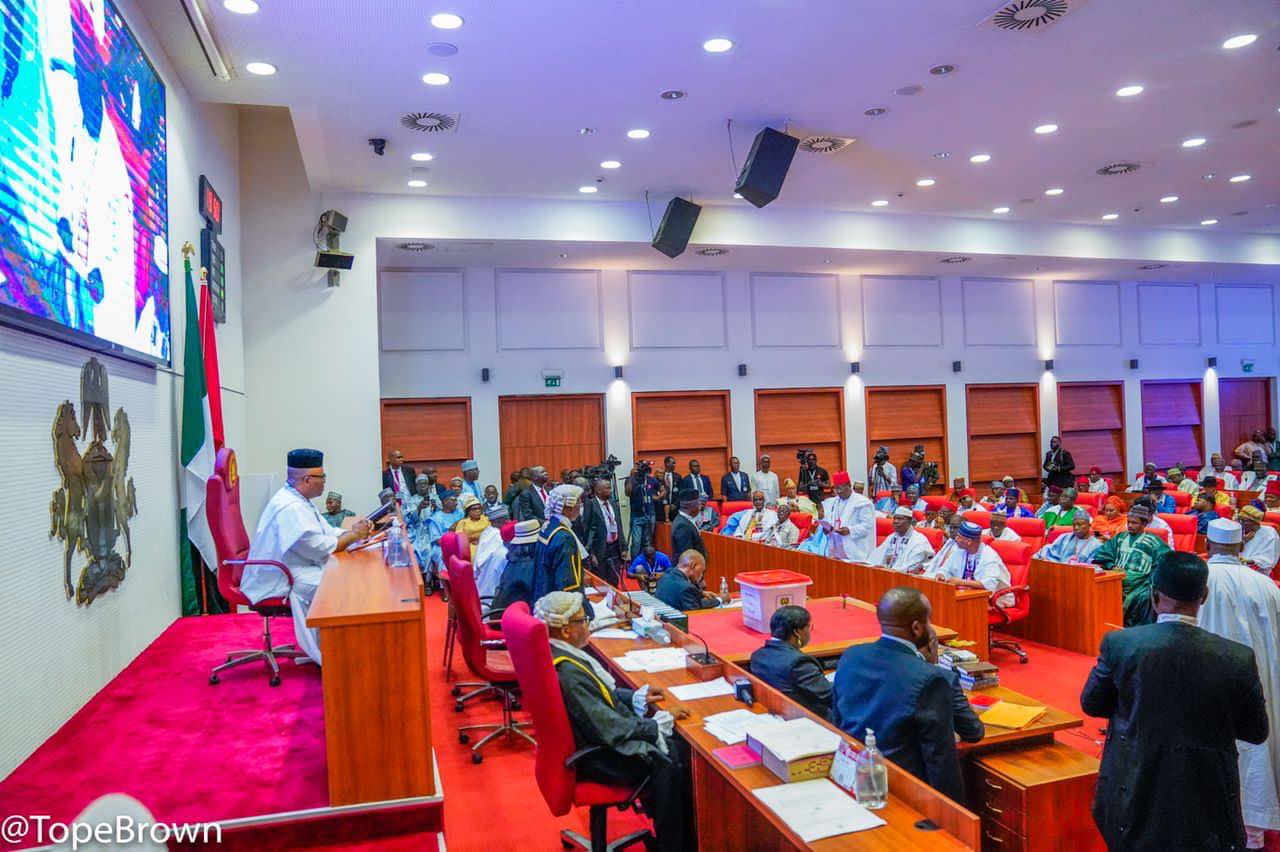
ABUJA: Political tensions ahead of Nigeria’s 2027 general elections intensified on Thursday as the Senate dismissed fresh demands by opposition leaders seeking an immediate amendment of the newly enacted Electoral Act 2026.
Opposition figures, including former Vice-President Atiku Abubakar, former Labour Party presidential candidate Peter Obi, and ex-Minister of Transportation Rotimi Amaechi, had mounted pressure on the National Assembly, describing aspects of the new law as anti-democratic and potentially detrimental to credible elections.
However, Senate leaders rejected the agitation, insisting that any concerns must follow constitutional legislative procedures.
Leaders of opposition parties, including the African Democratic Congress (ADC) and the New Nigeria Peoples Party (NNPP), argued that certain provisions of the Electoral Act 2026 could weaken electoral transparency ahead of the 2027 polls.
NNPP National Chairman, Ajuji Ahmed, stated that the law grants excessive discretionary powers to polling officials, particularly regarding electronic transmission of election results.
According to opposition leaders, the controversial Section 60(3) could allow delays in uploading polling unit results under the excuse of network failure — a development they fear may open loopholes for manipulation.
They also criticized the restriction of political parties to only direct primaries or consensus methods, arguing that removing indirect primaries interferes with internal party autonomy.
Opposition figures further alleged that shortening campaign timelines and reducing advance funding periods for the Independent National Electoral Commission (INEC) may affect electoral preparedness.
Speaking during the stakeholders’ meeting in Abuja, Peter Obi warned that Nigeria’s worsening economic hardship and insecurity demanded stronger democratic safeguards rather than restrictive electoral reforms.
Atiku Abubakar, on his part, cautioned that democratic instability in Nigeria could have wider implications across Africa, urging opposition parties to unite in defence of electoral integrity.
Rotimi Amaechi also advised opposition blocs to strengthen internal strategy, stressing that political organization, rather than government influence alone — would determine success in future elections.
Reacting swiftly, Senate spokesperson Yemi Adaramodu dismissed calls for immediate amendment, likening the demand to attempting to reverse a completed process.
He advised opposition leaders to submit formal proposals through lawmakers if they seek legislative review.
Similarly, former Abia State governor and Senator, Orji Uzor Kalu, maintained that only the National Assembly possesses constitutional authority to amend electoral legislation.
Kalu warned against inflammatory political rhetoric capable of overheating the polity, urging opposition parties to channel their energy toward electoral competition rather than public confrontation.
The disagreement highlights growing political realignments and ideological divisions as preparations for the 2027 general elections gather momentum.
With the Electoral Act now signed into law by President Bola Ahmed Tinubu, debates surrounding electoral transparency, party autonomy and technological deployment are expected to dominate Nigeria’s political discourse in the months ahead.
Observers note that the battle over electoral reforms may ultimately become one of the defining issues shaping alliances, campaigns and voter confidence ahead of the next general elections