


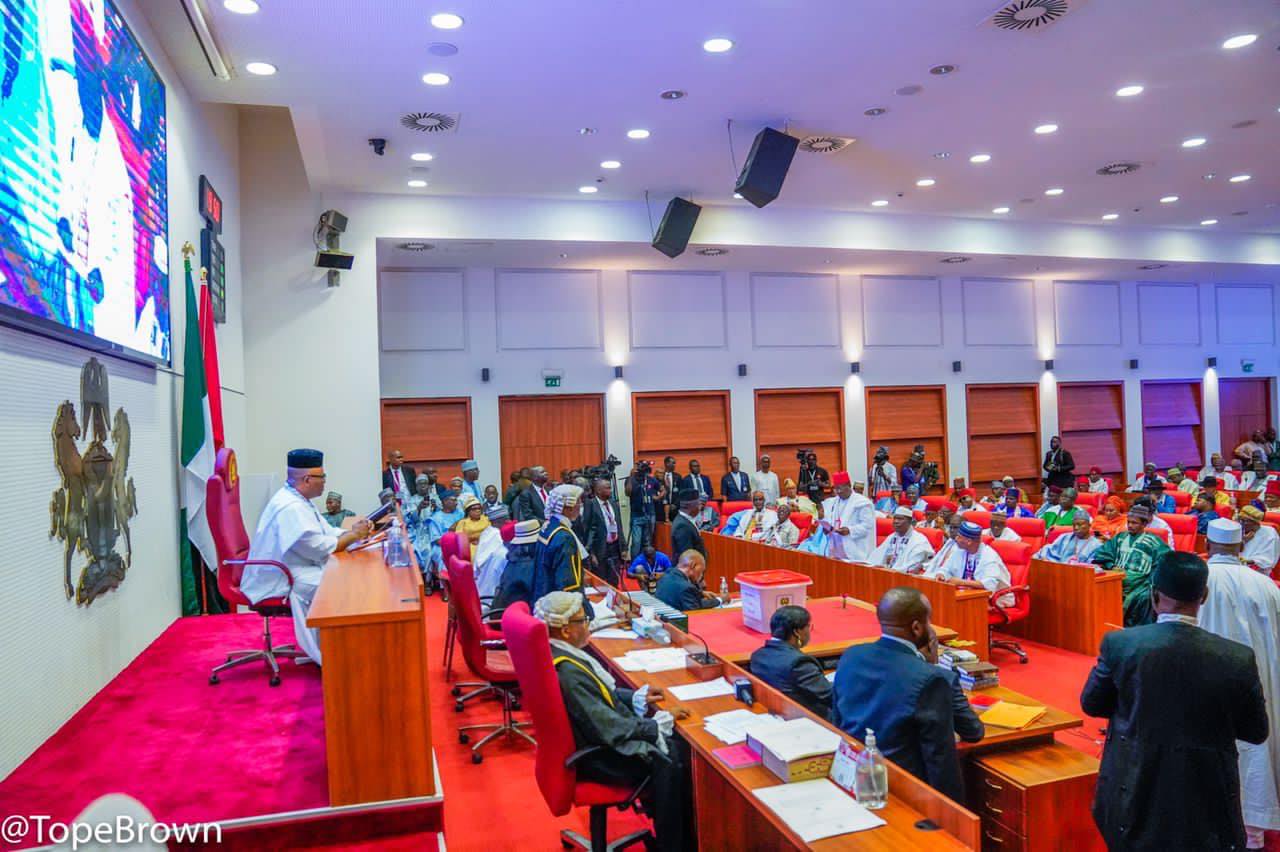
ABUJA: The Nigerian Senate has rejected a proposed amendment to the Electoral Act that sought to make the electronic transmission of election results mandatory.
The upper chamber voted against an amendment to Clause 60(3) of the Electoral Act (Amendment) Bill, which aimed to remove the discretionary powers of the Independent National Electoral Commission (INEC) over how election results are transmitted.
The rejected provision would have compelled INEC presiding officers to electronically transmit results from each polling unit directly to the Result Viewing Portal (IREV) in real time, immediately after Form EC8A was signed and stamped by the presiding officer and countersigned by party agents.
Instead, lawmakers opted to retain the existing provision of the Electoral Act, which states that the presiding officer shall transfer the results, including the total number of accredited voters and the results of the ballot, in a manner as prescribed by the Commission.”
By maintaining this clause, the Senate has effectively allowed INEC to continue determining whether or not to deploy electronic transmission of results during elections.
Critics argue that this discretionary power was exploited during the 2023 general elections, when delays and failures in uploading results to the IREV portal raised widespread concerns about transparency and electoral credibility.
The Senate’s decision has triggered disappointment among civil society organizations and election observers, who had pushed for mandatory electronic transmission as a safeguard against manual manipulation of results at collation centers.
Political analysts described the rejection as a setback for electoral reforms, warning that it could undermine public confidence in Nigeria’s democratic process.
Reacting to the development, analyst Gerald Ede said the National Assembly had failed to learn from the shortcomings of the 2023 elections, where the IREV portal became a source of controversy.
According to him, rejecting mandatory real-time transmission leaves room for what critics describe as manual miracles and continued disputes over election outcomes.
The move comes amid renewed calls for comprehensive electoral reforms aimed at reducing human interference, curbing result manipulation, and restoring trust in Nigeria’s electoral system.


