


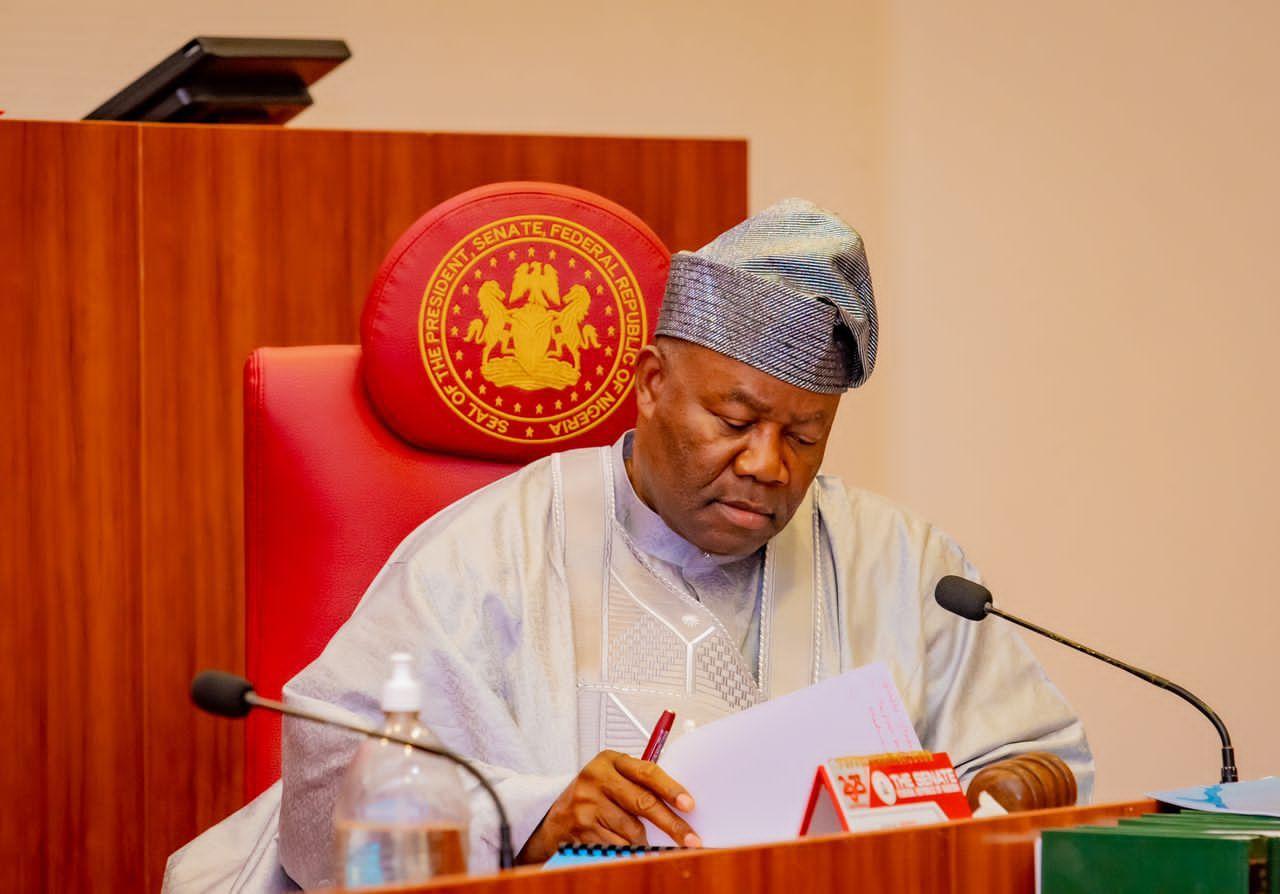
ABUJA: The Senate is set to reconvene today for an emergency plenary session following growing nationwide backlash over recent amendments to the Electoral Act, particularly the controversial removal of the clause mandating real-time electronic transmission of election results.
The extraordinary sitting comes less than a week after the passage of the Electoral Act Amendment Bill, 2026, which has sparked criticism from civil society groups, opposition politicians, labour unions, professional bodies, regional leaders, and youth movements. Some protesters have already staged demonstrations at the National Assembly demanding the restoration of the provision.
Senate President Godswill Akpabio is expected to preside over the session, which will be attended by about 105 senators.
The Senate currently has fewer members following the deaths of two lawmakers and the recent diplomatic appointment of Senator Jimoh Ibrahim.
The Clerk of the Senate, Emmanuel Odo, confirmed the emergency session in a statement issued on Sunday, noting that plenary would commence at noon.
Public outrage intensified after the Senate deleted the term real-time from provisions concerning electronic transmission of election results. Critics argue that the move could create loopholes for manipulation during election result collation.
Some lawmakers reportedly faced intense public criticism, including threatening calls and social media backlash, prompting several senators to switch off their phones temporarily.
Despite Senate leaders’ insistence that electronic transmission was not completely discarded, skepticism persists among Nigerians who fear potential setbacks to electoral transparency.
The controversy has triggered widespread protests, including a demonstration tagged Occupy NASS in Abuja.
Former Labour Party presidential candidate Peter Obi joined protesters at the National Assembly, urging lawmakers to safeguard Nigeria’s democratic progress.
Pro-democracy groups warned that protests could continue until mandatory electronic transmission of election results is reinstated. Labour unions have also hinted at possible nationwide demonstrations if the issue is not resolved.
Civil society organisations, including Yiaga Africa, the Kukah Centre, and several electoral advocacy groups, have given the National Assembly a two-week ultimatum to finalise amendments ensuring credible elections ahead of 2027.
They urged lawmakers to prioritise national interest, restore confidence in the electoral process, and provide clarity on electronic transmission provisions.
The Nigerian Guild of Editors warned that the ongoing controversy risks eroding public trust in elections, while regional political groups have also called for the retention of compulsory real-time result transmission.
Legal experts, including Senior Advocate of Nigeria Ebun-Olu Adegboruwa, described electronic transmission as essential to strengthening Nigeria’s democratic system and argued it should no longer be subject to debate.
With the House of Representatives reportedly favouring mandatory real-time transmission and a harmonization committee expected to meet soon, today’s Senate plenary is widely viewed as critical to shaping Nigeria’s electoral framework ahead of the 2027 general elections.
Observers say the outcome could either rebuild public confidence or deepen concerns about the credibility of future elections.