


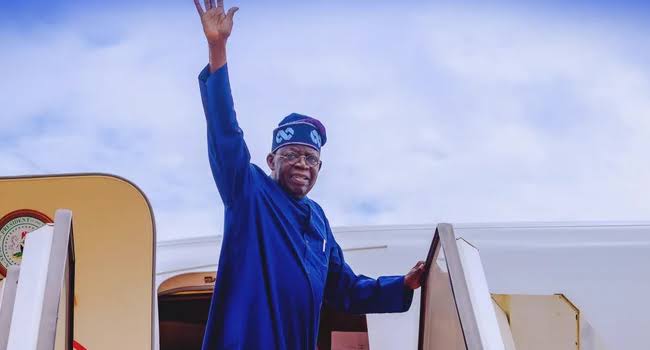
The Presidency expended no less than N34.39bn on foreign exchange purchases for international travel and related obligations over a two-year period, data obtained from GovSpend, a government expenditure tracking platform managed by BudgIT, have revealed.
The records, which cover transactions linked to the State House, Presidential Air Fleet, Office of the Chief of Staff, as well as activities involving the President, Vice President, First Lady and their aides, show a sharp contrast in spending patterns between 2024 and 2025.
Findings indicate that 2024 accounted for the bulk of the expenditure, with total forex purchases amounting to N29.35bn, while 2025 recorded N5.04bn, representing a year-on-year decline of 82.8 per cent.
The drop aligns with broader developments in the foreign exchange market, including relative naira stabilisation following policy reforms and improved dollar inflows.
The forex purchases were largely made to cover official foreign trips, aviation operations, estacodes, training programmed, logistics and other international engagements involving top government officials.
Despite repeated assurances by the Presidency that such trips are essential for diplomacy, investment promotion and bilateral relations, the scale and timing of the spending have continued to attract public scrutiny amid Nigeria’s fiscal pressures and persistent forex shortages.
In 2024, forex purchases were heavily concentrated in the first half of the year, a period marked by exchange rate volatility and intense pressure on the naira.
The Presidential Air Fleet emerged as one of the biggest spenders, accounting for several multi-billion-naira transactions listed as presidential air fleet forex transit funds.
Managed by the Nigerian Air Force, the fleet provides air transport for the President, Vice President and other senior officials. However, its maintenance costs have long been criticised, particularly in the context of rising public debt and fiscal constraints.
Between March and May 2024, the Presidential Air Fleet Naira Transit Account recorded repeated forex purchases of about N1.27bn on multiple dates, alongside larger transactions of N5.08bn on April 23 and N2.43bn on May 8.
Further payments made in July and August, including transactions ranging from N34m to over N2.21bn, significantly inflated the fleet’s forex bill. In addition, payments later in the year pushed cumulative aviation-related forex spending into several billions of naira.
Beyond aviation costs, the State House Headquarters also recorded substantial forex purchases throughout 2024.
In February alone, more than N2.5bn was spent on forex tied directly to presidential and vice-presidential trips.
These included N1.04bn for the President’s trip to Ethiopia, N750m for Dubai, N426.88m for the Vice President’s trip to Switzerland, and smaller amounts for trips to Côte d’Ivoire, France and Liberia involving the Vice President and First Lady.
Further spending followed in March, covering trips by the First Lady to Mozambique and Addis Ababa, as well as engagements by the Vice President in Côte d’Ivoire and training programmes in the UK and US.
From July 2024, forex purchases intensified, with multiple same-day transactions recorded on July 17. Additional payments in August, October and November culminated in a major N1.36bn transaction on October 28.
By December, another N736.20m had been spent, pushing total forex purchases linked to the Presidency in 2024 to N29.35bn, one of the highest annual figures for official foreign travel in recent years.
In contrast, 2025 witnessed a significant reduction in forex spending. Total purchases for the year stood at N5.04bn, with smaller and less frequent transactions recorded across the Presidency, Vice Presidency and supporting offices.
Most 2025 transactions were in the tens of millions of naira, with only a few exceeding N1bn, mainly linked to the Presidential Air Fleet and spread across several months.
By the second half of the year, forex purchases had tapered further, suggesting tighter controls and improved planning around official travel.
The moderation in spending coincided with a stronger naira, which closed 2025 at N1,429/$1, representing a 7.4 per cent appreciation from N1,535/$1 at the end of 2024, according to official Central Bank of Nigeria data.
A breakdown of the data shows that aviation-related expenses remained the largest driver of forex demand across both years, reigniting debate over the size, cost and sustainability of the Presidential Air Fleet.
The Country Director of Accountability Lab Nigeria, Odeh Friday, raised concerns over the impact of such spending on taxpayers, stressing the need for greater transparency and accountability.
This highlights the urgent need for improved management of public finances, he said, questioning whether the expenditures delivered tangible benefits to Nigerians.
Former Labour Party presidential candidate, Peter Obi, also criticized President Bola Tinubu’s frequent foreign trips, particularly in January, arguing that they divert attention from pressing domestic challenges.


