


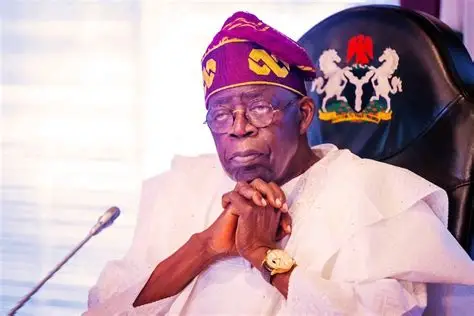
The Petroleum and Natural Gas Senior Staff Association of Nigeria (PENGASSAN) has urged President Bola Tinubu to immediately withdraw the recent Executive Order (EO) mandating the direct remittance of oil and gas revenues to the federation account, warning that the directive could threaten about 4,000 jobs and destabilize Nigeria’s petroleum industry.
Speaking during a media briefing in Lagos, PENGASSAN President, Festus Osifo, described the Executive Order as a violation of key provisions of the Petroleum Industry Act (PIA), enacted in 2021 to reform and stabilize the oil and gas sector.
Osifo questioned the signal the directive sends to investors and the international community. What are we telling the investors? What are we telling the international community? That just with an executive order, you can set aside the law of the land. This is an aberration. This should never have happened, he said.
He explained that the actual percentage of revenue that eventually goes into the federation account is below two percent, adding that the 30 percent Frontier Exploration Fund is paid into a designated Frontier Exploration Account not directly to the national oil company.
According to him, some provisions in the Executive Order failed to present the full picture of the existing framework under the PIA.
He clarified that royalties are paid into the Federal Government’s account and not into the personal accounts of regulators.
Osifo warned that if the directive remains in place, thousands of workers could face redundancy in the coming months.
If this is allowed to sit through the way it is today, in the next few months, our members are in danger of being declared redundant because the company may not be able to meet their obligations, he stated.
He recalled the union’s involvement in the formulation of the PIA, noting that the law was designed to restore investor confidence after nearly a decade of declining investments in the sector.
“We had to believe that with that piece of legislation, there would be some level of certainty in the industry.
The people who are coming to invest will know what the rules of engagement are. If you don’t stabilize your environment, investors will take their money elsewhere, he said.
Describing the oil and gas industry as Nigeria’s major revenue earner, Osifo stressed that any disruption to production could have far-reaching economic consequences.
“Our major revenue earner as a country is oil and gas. The more money we earn from the industry, the more we can defend our naira.
If production is impacted and foreign exchange earnings reduce, it will affect our exchange rate, and once the exchange rate is impacted, it will affect our pockets,” he said.
He added that the sector is capital-intensive, with some rigs costing up to $1.5 million per day, emphasizing that policy instability could discourage investment in a multi-billion-dollar industry.
Osifo also noted that the union was not consulted before the Executive Order was issued. According to him, labour representatives had earlier been informed of plans to introduce an executive bill to amend the PIA, but were surprised when the changes came in the form of an Executive Order instead.
The information at our disposal was that there was going to be a bill. But instead of a bill, it came as an executive order. We were not carried along in any way, he said.