


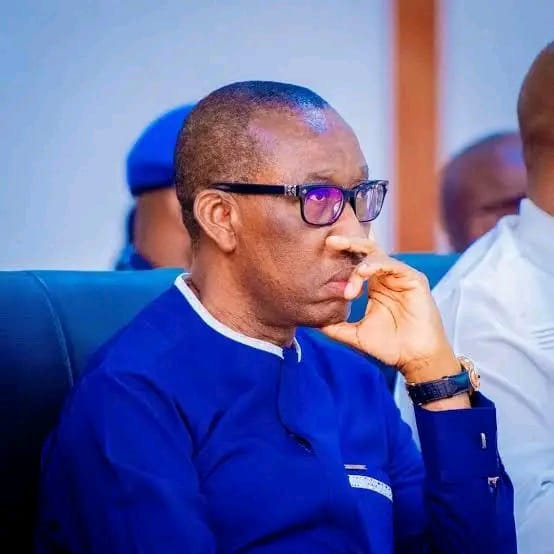
AGBOR:
Silence is the most dreaded statement of a sagacious statesman.
In this modern era of improved and advanced technology—where impressive and expressive communication through social media, public speaking, debating, bantering, interaction, and political pitching is constantly emphasized, empowered, and encouraged—it may seem almost reckless to underestimate the strength and strategy that lie beneath the concept of silence, especially within a socio-political context.
Yet silence remains one of the most potent instruments available to a thoughtful political actor. In recent times, it is increasingly recognized across the world that one of the most impactful forms of communication a politician may adopt as a strategy is the deliberate act of silence.
Silence can be as forceful as the strength of a bulldozer tearing down an unwanted and unnecessary structure. It is a tool with many dimensions and purposes. It can be used to shield or to strike, to control or concede, to lead or to learn—particularly in a world that is busy, noisy, and often nosy.
In the words of the ancient Chinese philosopher Lao Tzu:
He who knows does not speak; he who speaks does not know.
Politics, by its very nature, sometimes entails the amplification of silence. At certain moments, silence becomes the balancing weight on the scale of arguments, while at other times it becomes a shield used in defence against the sword of challenges and criticisms.
The immediate past Governor of Delta State, Senator (Dr.) Ifeanyi Okowa, is widely characterized as a “politician of silent operation” because of his strategic, calm, and often low-profile approach to political decision-making.
The man popularly known as Ekwueme has often focused on strategic planning, allowing results to speak louder than reports. He has frequently been described as a “master planner who avoids unnecessary fanfare while focusing on quiet execution of policy and political strategy.
Okowa’s style of “silent operation” was particularly noticeable during his tenure as Governor of Delta State. He often operated in what could be described as “silent mode” while making key political decisions and appointments.
This approach enabled him to avoid the excessive influence of lobbyists and political godfathers, allowing him to select trusted individuals who eventually formed part of his cabinet.
Political observers frequently pointed to his “quiet strength” and calm demeanour, even when confronted with intense political pressure and criticism. Those who attempted to pull his legs often found themselves dragged by their own actions instead.
Whenever Okowa switched his political antenna to “silent mode,” he became almost impossible to predict. That unpredictability is widely regarded as one of the mysteries behind his political strength and strategy.
Unlike many politicians who thrive on drama and slogans, Okowa governed with the calm precision of a medical doctor studying problems carefully, diagnosing their causes, and applying quiet but effective solutions.
His professional background in medicine clearly influenced his political style. Just as a doctor prefers steady and careful stitches rather than sudden and chaotic interventions, Okowa’s political method has often reflected the philosophy of steady and deliberate action rather than loud and impulsive responses.
Indeed, Senator Ifeanyi Okowa is widely regarded as a quiet political heavyweight who chases attestation while others chase attention. In his political worldview, progress does not necessarily require noise in order to be noticed.
He also appears to understand that not every criticism, accusation, or provocation deserves a response. Over the years, he has demonstrated a consistent ability to ignore certain attacks and resist the temptation to react to every allegation levelled against him.
In many ways, he belongs to the school of thought that believes the strategic use of silence involves withholding responses that offer little or no meaningful value.
Recently, calls emerged from some socio-political groups in Delta North Senatorial District urging Okowa to consider returning to the Senate, the Red Chamber in 2027.
Almost immediately, murmurs and protests erupted from opposing camps who condemned the suggestion and labelled it selfish and politically manipulative.
Some media commentators aligned with Okowa’s political rivals began flooding the public space with sharp criticisms and hostile remarks directed at him.
Despite the razzmatazz and the accompanying political hullabaloo, Okowa remained calm, unruffled, and completely unperturbed by the wave of criticisms and accusations.
In a normal democratic environment, such differing opinions would simply be regarded as sectional perspectives reflecting the diversity of political interests within society.
Ordinarily, observers might have waited to hear directly from Okowa himself, considering that the responsibility of blinking the eyes rests with the head that owns them.
However, many of his antagonists appeared too eager to throw stones in his direction even before hearing his position. Yet, despite the intensity of the criticism, Okowa has not uttered a word on the matter up to this moment.
A similar pattern was observed during the 2023 general elections when he was selected as the vice-presidential candidate of the Peoples Democratic Party (PDP).
At the time, his critics unleashed a barrage of allegations and accusations against him. Still, he remained largely unmoved and uninterested in engaging in public quarrels.
Likewise, when political controversies arose following his eventual defection from the PDP to the ruling All Progressives Congress (APC), he again maintained his characteristic silence despite the numerous accusations thrown his way.
To many observers, Okowa’s refusal to respond was consistent with his long-standing political style. Rather than engage in endless public debates, he often allows political developments and outcomes to speak on his behalf.
In Ika Federal Constituency, where he hails from, political tensions and name-calling have at times reached unprecedented levels. The loudest voices often come from those he had previously outclassed politically.
Yet even in the face of such hostility, Okowa rarely reacts publicly. Instead, he seems content to let events unfold while maintaining his characteristic composure.
In many ways, his approach reflects the belief that silence, when used wisely, can become a powerful form of communication.
Ultimately, despite the numerous political storms he has encountered, Okowa has managed to navigate them with remarkable composure—much like a seasoned army general calmly inspecting a guard of honour.
His political journey offers an important lesson: the most impactful politicians are not always the loudest voices in the room.
Often, the most powerful voice belongs to the individual who listens more, observes carefully, and speaks only when there is something truly meaningful to say.
This perspective aligns with the view held by many scholars who argue that sometimes the most influential speech is the one that was never delivered at all.
The great Indian leader Mahatma Gandhi captured this philosophy succinctly when he wrote:
In the attitude of silence, the soul finds the path in a clearer light, and what is destined to be done will be easier achieved.