


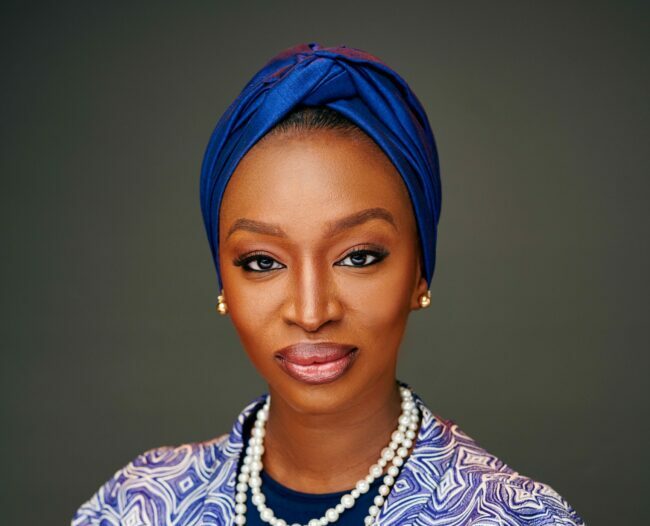
WASHINGTON D C: Malala Fund has announced the appointment of Nabila Aguele as its new Chief Executive Officer, marking a significant leadership transition for the global advocacy organisation dedicated to advancing girls’ education.
Aguele, who currently serves as Chief Executive of Malala Fund Nigeria, will officially assume the global leadership role on April 1, 2026, following a carefully planned succession process.
Her appointment also makes her the organisation’s first global CEO based in Nigeria, one of the group’s priority countries for advocacy and grantmaking.
The Washington, D.C.-based organisation said Aguele brings extensive experience in policy advocacy, international development and leadership in the education sector.
In her current role leading Malala Fund Nigeria, Aguele has overseen nearly $3 million in grants distributed to local education advocates and organisations. She has also played a key role in supporting a coalition of civil society groups that promote education as a tool to combat child marriage.
Over the past year alone, Malala Fund has awarded more than $9 million in grants to over 40 organisations working to promote and protect girls’ education across 10 countries.
Reacting to her appointment, Aguele described the opportunity as both an honour and a responsibility at a critical moment for global education advocacy.
I am honoured to step into this role at such an important moment for girls’ education and for Malala Fund, she said. Having grown within this organisation and led our work in Nigeria, I know the strength of this team, the ambition of our strategy and the power of our partnerships. Building on Lena’s leadership, I am committed to deepening our impact and ensuring that every girl can claim the education she deserves.”
Co-founder of Malala Fund, Malala Yousafzai, praised Aguele’s leadership and experience, describing her as the right person to lead the organisation into its next phase.
Nabila is the leader this moment calls for, Yousafzai said. She brings deep policy and advocacy experience, trusted leadership within Malala Fund and a close understanding of what it takes to drive change for girls from the ground up.”
She also expressed appreciation to the outgoing CEO for her contributions in strengthening the organisation’s global impact.
Similarly, Malala Fund co-founder and board member Ziauddin Yousafzai acknowledged the role played by the outgoing CEO in stabilising and strengthening the organisation’s operations.
“I have seen Nabila’s leadership up close, and she brings a rare combination of wisdom, integrity and deep understanding of the realities girls face,” he said.
Outgoing Chief Executive Lena Alfi, who has been with the organisation for nearly nine years and served as CEO since late 2022, said the transition represents a natural evolution of the organisation’s leadership structure.
It has been an honour to serve Malala Fund for nearly nine years, including the last three as CEO,” Alfi said. “I am deeply proud of the transformation this team has led together — building a clear strategy, a strong leadership and a more solid foundation for the future.”
Alfi added that Aguele has demonstrated exceptional leadership and commitment to advancing policies that support girls’ education and empowerment.
The leadership change follows the launch of Malala Fund’s 2025–2030 strategy, which outlines the organisation’s long-term focus on expanding access to secondary education for girls and strengthening advocacy efforts worldwide.
Aguele will now lead the implementation of that strategy, as the organisation continues its mission to ensure girls everywhere can access and complete 12 years of quality education.
Before joining Malala Fund, Aguele served as a special adviser to Nigeria’s Minister of Finance, Budget and National Planning, where she championed gender-responsive budgeting and contributed to the development of Nigeria’s Integrated National Financing Framework.
Founded by Malala Yousafzai and her father Ziauddin, Malala Fund works through grantmaking and advocacy to expand girls’ access to education and mobilise resources needed to guarantee the right to secondary education for girls globally


