


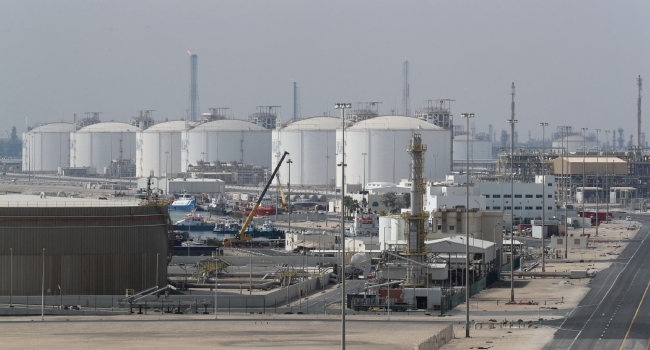
Iran has intensified its military campaign against energy infrastructure across the Gulf, launching drone strikes on oil refineries in Saudi Arabia and Kuwait as the regional conflict with Israel and the United States enters its third week.
The attacks mark a significant escalation in the war, widening the battlefield beyond direct military targets to include key oil facilities that underpin the global energy market.
Saudi Arabia’s defence ministry confirmed that a drone struck the Samref refinery located in the industrial zone of the Red Sea port city of Yanbu. Authorities said the incident caused damage within the facility and emergency teams were deployed to assess the extent of the impact.
The Samref refinery has the capacity to process about 400,000 barrels of crude oil per day, making it one of the kingdom’s major refining centres.
Yanbu is particularly strategic because it serves as the endpoint of Saudi Arabia’s Petroline pipeline, which transports crude oil from eastern oil fields to the Red Sea. The pipeline provides the kingdom with an alternative export route that bypasses the vital Strait of Hormuz—a waterway currently disrupted by the conflict.
Energy analysts say any disruption to Yanbu could complicate Saudi Arabia’s ability to maintain export flows if shipping through the Gulf remains restricted.
In neighbouring Kuwait, Iranian drone strikes triggered fires at two of the country’s largest refineries—Mina Abdullah and Mina Al-Ahmadi.
Both facilities are operated by the Kuwait National Petroleum Company and together have a refining capacity of about 800,000 barrels per day, making them central to Kuwait’s oil export system.
Officials said emergency crews were able to bring the fires under control after the attacks, although investigations into the damage and operational disruptions were still underway.
The latest wave of attacks follows major damage reported at Ras Laffan, the world’s largest liquefied natural gas hub, located in Qatar.
Iran said its strikes on Gulf energy facilities were retaliation for Israeli air attacks on the South Pars gas field, a massive offshore reserve shared between Iran and Qatar and considered the largest natural gas field in the world.
South Pars plays a crucial role in Iran’s energy sector and economy, and the Israeli strike has been widely viewed as a significant escalation targeting Tehran’s economic lifeline.
The widening attacks on Gulf energy infrastructure have intensified concerns over global energy security.
Oil prices have surged since the war began, with the benchmark Brent crude climbing above $115 per barrel on Thursday amid fears that further disruptions could severely constrain global supply.
The Middle East accounts for a large share of the world’s oil production, and several key shipping routes—including the Strait of Hormuz—are vital for transporting crude to international markets.
Analysts warn that sustained attacks on refineries, pipelines and export terminals could push prices even higher, potentially triggering broader economic consequences worldwide.
The targeting of Saudi and Kuwaiti facilities raises fears that the conflict could spread further across the Gulf, drawing additional regional powers into the confrontation.
Security experts say Iran’s strategy appears aimed at demonstrating its ability to disrupt global energy supplies and pressure countries supporting Israel and the United States.
With the war already affecting shipping routes, energy production and international markets, observers warn that any further escalation could deepen the economic shock and increase the risk of a prolonged regional crisis.