


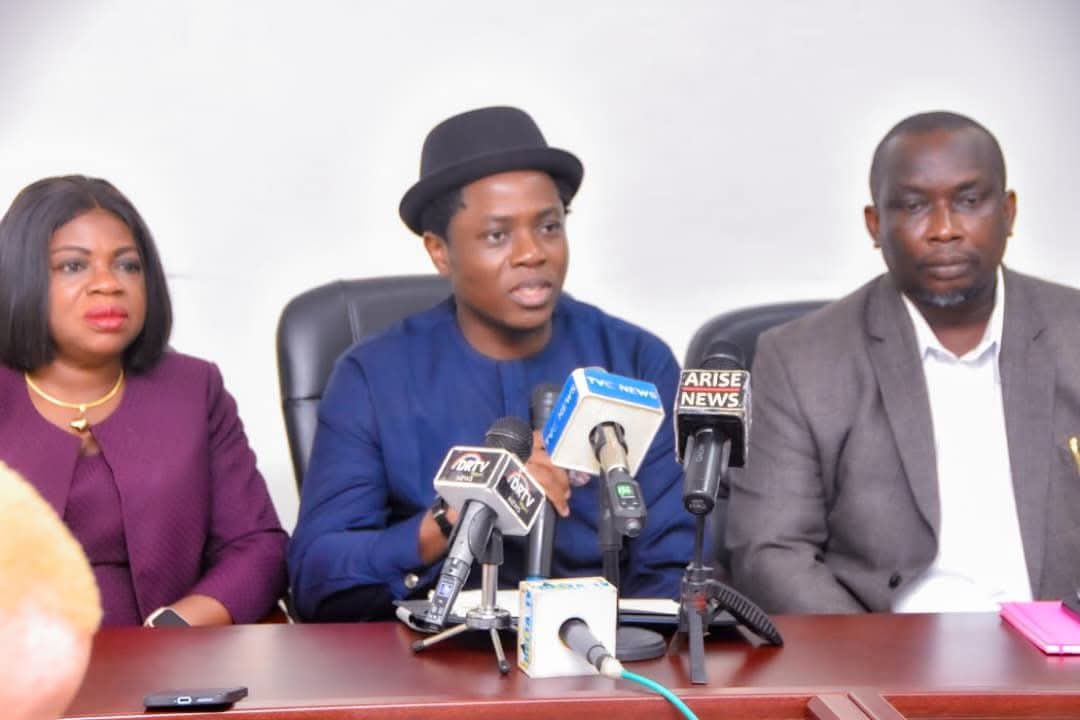
ASABA: Governor Sheriff Oborevwori of Delta State has approved the employment of more than 700 medical and support personnel as part of a major effort to strengthen healthcare delivery across the state.
The approval was disclosed by the Delta State Commissioner for Health, Joseph Onojaeme, during a press briefing where he outlined the government’s ongoing initiatives aimed at expanding the state’s healthcare capacity and improving medical services for residents.
According to Onojaeme, the recruitment forms part of the administration’s broader strategy to reinforce the health sector, particularly as several new healthcare projects and facility upgrades are being completed across the state.
The commissioner explained that the decision to recruit additional health personnel was influenced by the rising demand for healthcare services, especially following the upgrade of several medical facilities in the state.
Among the major developments is the conversion of Warri General Hospital into a Central Hospital, a move expected to significantly expand the facility’s capacity to provide advanced medical services.
He also noted that the Mother and Child Hospital in Ekpan, located in Warri, is nearing completion and will soon begin operations, further increasing the need for qualified health professionals.
Onojaeme said the governor’s approval reflects the administration’s proactive approach to ensuring that healthcare facilities are properly staffed to meet the growing needs of communities across the state.
Distribution of New Health Workers
Providing a breakdown of the recruitment plan, the commissioner disclosed that 295 personnel will be deployed to the Delta State Hospital Management Board.
Another 120 staff members will be employed by the Delta State University Teaching Hospital (DELSUTH), one of the state’s major tertiary health institutions.
In addition, the newly established College of Health Technology Ovrode will recruit 100 personnel to support its academic and training operations.
Other allocations include:
- 60 personnel for Asaba Specialist Hospital
- 12 staff members for Warri Central Hospital
The commissioner noted that the recruitment will cover a wide range of medical and non-medical positions, including consultants, doctors, nurses, pharmacists, laboratory scientists, physiotherapists, health technologists, administrative staff and other support personnel.
Addressing the ‘Japa’ Effect in the Health Sector
Onojaeme also pointed out that the recruitment exercise is partly aimed at addressing the growing shortage of health workers caused by the mass migration of professionals abroad, popularly known as the “Japa syndrome.”
According to him, the Delta State government has maintained a policy of replacing health workers who leave the system in order to ensure that healthcare facilities continue to operate effectively.
He emphasized that filling these vacancies is crucial for maintaining service delivery and ensuring that hospitals remain adequately staffed.
Beyond staff recruitment, the commissioner revealed that the state government is also investing in critical health infrastructure to strengthen diagnostic and treatment capabilities.
One of the key projects nearing completion is the Delta State Public Health Laboratory, which will significantly enhance the state’s ability to conduct disease surveillance and medical testing.
Onojaeme recalled that during the outbreak of COVID-19, samples from the state had to be transported to Abuja for analysis due to the absence of a local laboratory facility.
He noted that the new laboratory would eliminate such challenges in the future and improve emergency response to disease outbreaks.
The commissioner also disclosed that a new psychiatric hospital currently under construction will expand mental health services in the state and create additional opportunities for specialized medical professionals.
In terms of medical technology, the government has acquired three 1.5 Tesla MRI machines, which he described as modern helium-free systems that are more cost-efficient and easier to maintain than older models.
Onojaeme further revealed that the state has upgraded its dialysis facilities, resulting in a significant reduction in treatment costs.
According to him, dialysis sessions in some government hospitals have been reduced to about ₦45,000, with plans to lower the cost even further through additional government interventions.
The commissioner assured the public that the recruitment exercise will be conducted through a transparent and merit-based process.
He said job vacancies would be advertised in both national and local newspapers to ensure that qualified professionals across the country have the opportunity to apply.
Onojaeme expressed optimism that the recruitment and ongoing investments in health infrastructure would significantly improve healthcare delivery, strengthen the workforce, and enhance overall health outcomes for residents of Delta State.
The initiative, he said, forms part of Governor Oborevwori’s broader development agenda aimed at improving social services and ensuring that citizens across urban and rural communities have access to quality healthcare.