

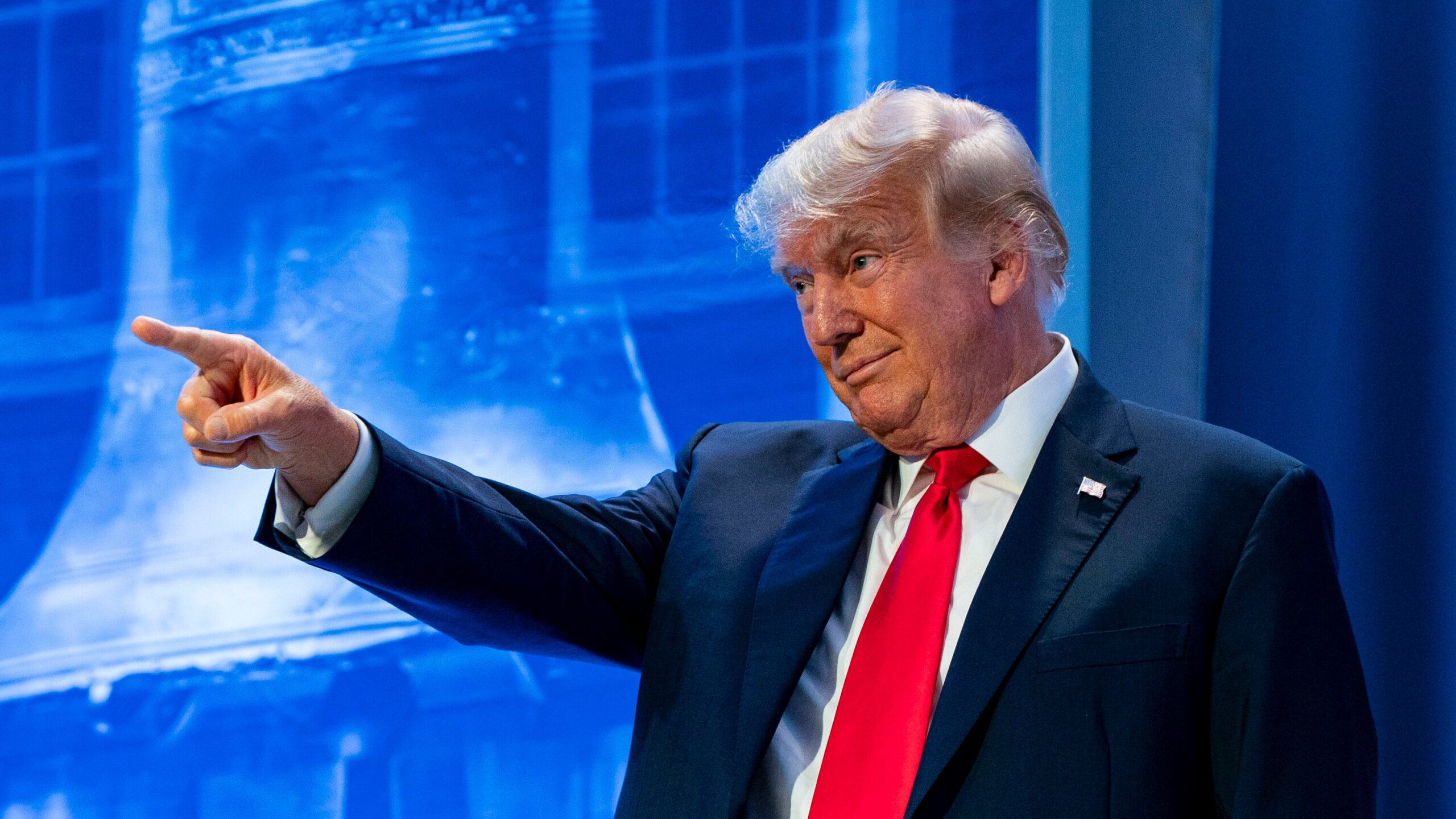
WASHINGTON: US President Donald Trump has declined to dismiss the prospect of military action against Venezuela, raising fresh concerns that Washington may be edging closer to a direct confrontation with the South American country and its leader, Nicolás Maduro.
Speaking during an interview with NBC News on Friday, December 19, Trump was asked whether a full-scale conflict with Venezuela was possible. His response was blunt: I don’t rule it out, no.
The comments come amid escalating tensions between both countries, following Trump’s order for a major buildup of US naval forces in the Caribbean.
The move followed the seizure of a Venezuelan oil tanker by American forces, as well as the blockade of other vessels linked to Caracas.
This latest development is part of a wider campaign that has seen US forces strike boats in nearby waters over the past few months. Washington claims the vessels were involved in drug trafficking operations. Those actions have reportedly resulted in dozens of deaths and have attracted international criticism.
The White House has accused the Maduro administration of selling what it describes as “stolen” oil to fund what it calls a dictatorial regime, while allegedly allowing drug gangs to smuggle narcotics into the United States.
Maduro has firmly rejected the allegations, insisting that the US actions are part of a broader strategy to destabilise his government and gain control of Venezuela’s vast oil resources.
When asked whether removing Maduro from power was his objective, Trump declined to give a clear answer, saying only: “He knows exactly what I want. He knows better than anybody.”
Trump also warned that more Venezuelan oil tankers could be seized near the country’s waters.
If they’re foolish enough to be sailing along, they’ll be sailing along back into one of our harbours, he said.
Venezuela holds the world’s largest proven oil reserves, but production has dropped sharply in recent years due to poor investment, decaying infrastructure and the impact of international sanctions.
Sanctions imposed by the United States, the European Union and other allies following the violent crackdown on protests in the 2010s have severely weakened Venezuela’s oil industry and economy.
As a result, the country now exports most of its crude oil to China, a situation that has unsettled US officials amid growing tensions between Washington and Beijing.
Analysts suggest Trump may view Venezuela’s growing ties with China and Russia as a geopolitical threat, especially given the country’s resource wealth.
The idea of a country in our hemisphere with oil, minerals and rare earths, whose main allies are China and Russia, doesn’t fit into Trump’s worldview,” said David Smilde, a Venezuela expert at Tulane University.
Despite mounting pressure, Venezuelan authorities have remained defiant, insisting that US threats, seizures and blockades will neither cripple their oil exports nor force political change.