


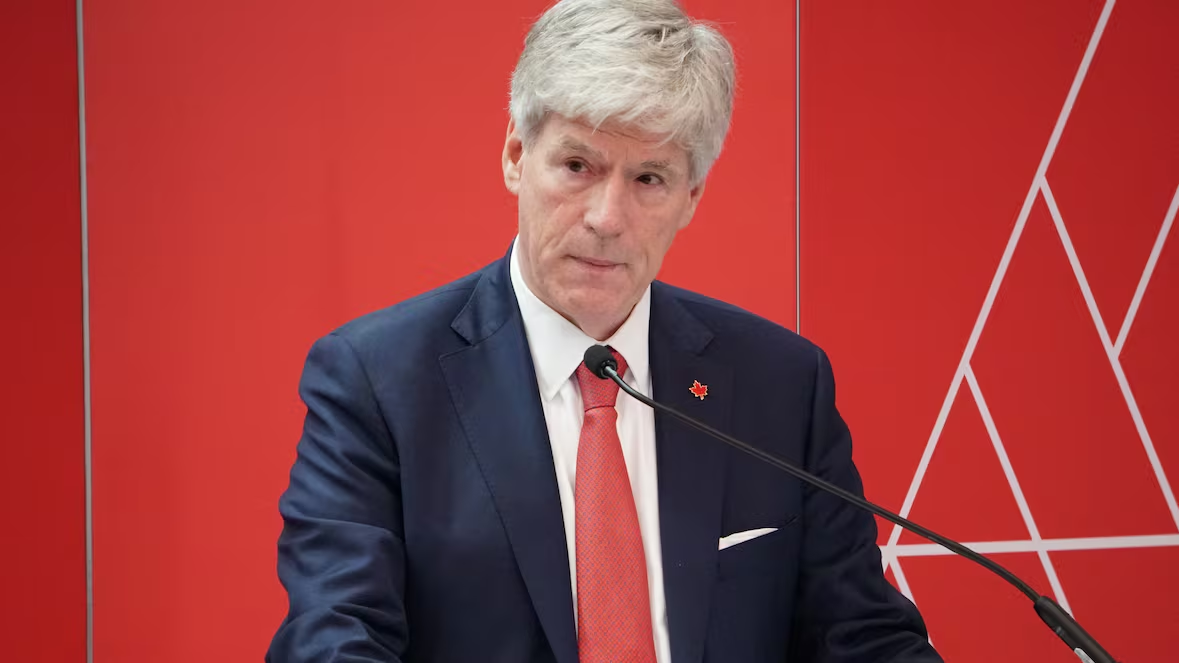
As global energy markets reel from geopolitical tensions, Canada is stepping into the spotlight, signaling its intention to become a major energy supplier to the world.
This week, in Houston, Texas, the nation’s Federal Natural Resources Minister, Tim Hodgson, delivered a message of ambition and urgency at the annual CERAWeek energy conference, one of the most influential gatherings of global oil, gas, and energy executives.
Canada is back, Hodgson declared, emphasizing the country’s readiness to expand production, export critical resources, and reshape its global energy reputation.
His statement comes as the world grapples with the energy shock caused by the U.S.-Israel conflict with Iran, which has sent oil prices soaring and stoked fears of rising inflation and a potential global recession.
Hodgson’s timing was deliberate. With nations scrambling to secure reliable energy supplies, Canada is positioning itself as a stable alternative, leveraging its abundant oil and natural gas reserves, critical minerals, and growing clean energy portfolio.
In interviews with CBC News, Hodgson framed Canada’s energy push as both a national security imperative and a commercial opportunity.
We know that our allies desperately need our energy, and they desperately need our critical minerals. It’s a matter of national security, Hodgson said. By tying Canada’s energy sector to international security, the federal government is signaling that investment in Canadian resources is not just economically viable but geopolitically strategic.
One of the most notable aspects of Canada’s presence at CERAWeek was the unprecedented display of political unity.
For the first time, federal and provincial leaders including the conservative premiers of Alberta, Newfoundland and Labrador, and Nova Scotia attended together. Hodgson noted that previous years often saw separate delegations, diluting Canada’s message.
This is an opportunity, Hodgson said. And I think 2026 will be when we take advantage of that opportunity. By presenting a unified front, Ottawa hopes to reassure global investors that Canada is politically cohesive in its energy strategy, reducing perceived risks tied to regional disputes or policy fragmentation.
Over the past year, the federal government has introduced a series of policy adjustments aimed at stimulating energy investment. Among them:
- Fast-tracking nation-building projects, raising questions about balancing industrial development with environmental oversight.
- Reduction of oil emissions caps, signaling a willingness to ease restrictions on traditional energy sectors.
- Memorandums with Alberta supporting potential oil export pipelines to the B.C. coast, though the province of B.C. continues to resist such projects, advocating for refinery development instead.
While these moves have been welcomed by industry executives as positive signals, there remains cautious optimism.
Past pipeline and LNG projects in Canada have encountered delays, regulatory hurdles, and political pushback, causing investors to remain wary.
At CERAWeek, industry leaders were quick to acknowledge the promise of Canada’s new stance—but they stressed that concrete actions must follow rhetoric.
- Shell CEO Wael Sawan, whose company leads LNG Canada, emphasized the opportunity presented by low-cost natural gas, supportive policy, and proximity to Asian markets. The underpinnings of that project continue to be very strong, he said, highlighting the value of a 10-day sailing time to Asia amid global supply uncertainties.
- Shell is currently evaluating whether to approve an expansion of its LNG operations in B.C., a move that would solidify Canada’s role as a major LNG exporter.
- TC Energy CEO François Poirier acknowledged a change in tone at the government level regarding natural gas and conventional energy, but he emphasized that execution still lags.
- From a policy standpoint, progress is evident, but the regulatory and permitting timelines still need acceleration,” Poirier said.
- Enbridge executive Colin Gruending compared Canada’s historical regulatory timelines to other countries, noting that energy project approvals in Canada have often taken years, while U.S. regulators can complete similar processes in six months.
- In a rapidly shifting global energy market, speed matters.
- Kevin Krausert, CEO of clean energy accelerator Avatar Innovations, underscored the urgency: “The world is screaming for Canadian oil. We need to prove that Canada can be a stable energy superpower and deliver on its promises.”
Canada’s ambitions are not occurring in isolation. The federal government faces competition from jurisdictions worldwide, including the United States, which is aggressively pursuing “energy dominance” under its current administration.
With key oil shipping routes near Iran blocked due to conflict, Canada has an opportunity to fill global supply gaps, particularly for allies in Europe and Asia. However, to capitalize on this window, Canada must simultaneously address:
- Policy certainty – investors need confidence that regulations and government support will remain consistent.
- Production growth – pipelines and LNG capacity must be aligned with expanding output.
- Infrastructure development – timely approvals for pipelines and export terminals are crucial.
The federal government’s creation of the Major Projects Office in Calgary aims to expedite review and permitting for select energy projects, including LNG expansions on the West Coast. The initiative signals Ottawa’s recognition that speed and coordination are critical to staying competitive internationally.
Expanding Canada’s energy sector is not just about exports; it is also about economic diversification. Increased energy production could stimulate:
- Job creation in oil, gas, and supporting industries.
- Regional development, particularly in Alberta, Newfoundland and Labrador, and B.C.
- Revenue growth for federal and provincial governments, helping to offset trade uncertainties, including tensions with the U.S.
Moreover, a stronger energy export sector could position Canada as a reliable partner in global energy security, enhancing its geopolitical influence
While enthusiasm in Texas was high, experts caution that Canada’s journey to energy prominence requires sustained commitment and follow-through. Policy announcements and political unity are important first steps, but delivering projects on time and at scale is what will ultimately convince global partners of Canada’s energy reliability.
Hodgson’s challenge is to convert interest into investment and execution. For Canada, the stakes are high: the world needs energy, the timing is right, and the country possesses the resources but only action will secure its place as a true energy powerhouse.
Canada is presenting itself as an energy leader at a critical moment in global markets. With government support, industry collaboration, and geopolitical opportunity, the country could reshape its reputation and assert itself as a stable, reliable, and strategic energy superpower.
But the path is narrow: without accelerated project approvals, coordinated policy, and demonstrated delivery, international interest could remain just that interest, not investment.