


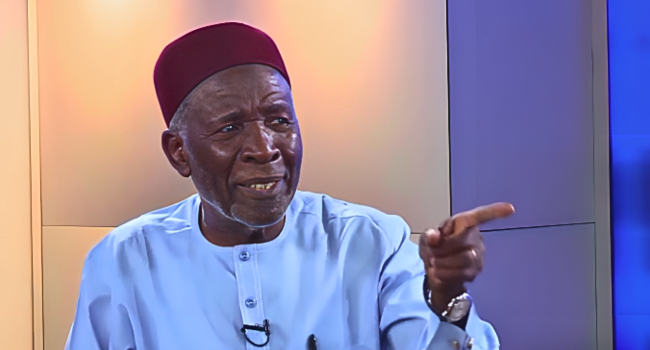
Nigeria’s political atmosphere ahead of the 2027 general elections has intensified following strong remarks by a chieftain of the New Nigeria Peoples Party (NNPP), Buba Galadima, who warned that Nigerians could again vote out a ruling government if worsening economic and security challenges persist.
Speaking during an appearance on Politics Today, a flagship political programme, Galadima drew parallels between the current administration and the political circumstances that led to the defeat of former President Goodluck Jonathan in 2015.
According to Galadima, Nigerians have historically demonstrated the willingness to remove governments perceived to have failed in addressing insecurity and economic hardship.
He argued that insecurity in parts of the North-East during Jonathan’s administration was significantly less severe than current national challenges, yet voters still demanded political change at the polls.
If Nigerians could remove a sitting government in 2015 over insecurity, the present administration should not assume public patience is unlimited, he warned.
His comments come amid mounting criticism of policies implemented under President Bola Ahmed Tinubu, particularly economic reforms such as fuel subsidy removal and foreign exchange unification, which have contributed to rising inflation and increased cost of living nationwide.
Galadima accused the Federal Government of adopting policies that have negatively impacted Nigeria’s agricultural sector, noting that escalating fertiliser prices and grain importation were discouraging local farming activities.
He claimed that farmers who constitute a large percentage of Nigeria’s rural population are gradually withdrawing from production due to high operational costs and declining profitability.
According to him, continued neglect of agriculture could threaten food security and undermine investments made in rice milling and local food production during previous administrations.
The NNPP stalwart also raised concerns about what he described as growing intolerance toward dissenting voices, citing alleged arrests of citizens expressing political opinions through media platforms.
He cautioned authorities against underestimating public frustration, warning that minor political grievances could evolve into broader national resistance if not properly addressed.
Galadima’s remarks align with recent coordinated opposition activities involving prominent political figures including Atiku Abubakar, Peter Obi, and Rotimi Amaechi, who have criticized aspects of the newly enacted Electoral Act and called for reforms ahead of the 2027 elections.
The opposition bloc has increasingly framed economic hardship, insecurity, and electoral transparency as central campaign issues expected to shape voter decisions in the next electoral cycle.
The Federal Government, however, maintains that ongoing reforms are necessary to stabilise Nigeria’s economy and correct longstanding structural imbalances.
Officials insist that short-term economic pain will ultimately yield sustainable growth and improved national security outcomes.
Political analysts say statements such as Galadima’s reflect early mobilisation efforts by opposition parties seeking to consolidate public dissatisfaction into electoral momentum.
With defections, electoral debates, and policy disagreements already dominating national discourse, Nigeria’s political landscape appears set for an increasingly competitive build-up to the 2027 general elections.
As both ruling and opposition parties intensify positioning, governance performance and public perception are expected to remain decisive factors in determining the country’s next political direction.


