


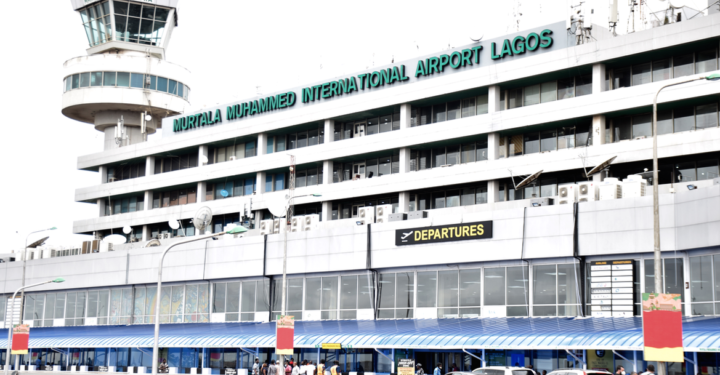
Nigeria’s aviation sector holds vast untapped potential, but unlocking it will require sustained infrastructure investment and stronger collaboration among stakeholders across the industry value chain.
This was the key message delivered by Thomas Ogungbagbe, Managing Director and Chief Executive Officer of CITA Aviation, during a gathering of aviation stakeholders in Lagos.
Speaking at the Aviation Safety Roundtable Initiative (ASRTI) Q1 Business Breakfast Meeting, themed around building Murtala Muhammed International Airport into a safe and economically viable aviation hub, Ogungbagbe emphasised that strong foundational systems are essential for sustainable industry growth.
According to him, weak infrastructure frameworks inevitably produce limited and unreliable outcomes, stressing that Nigeria must first strengthen its aviation fundamentals if it hopes to compete with established global aviation centres.
Ogungbagbe acknowledged the ongoing airport infrastructure upgrades being implemented under the current federal administration, describing them as important steps toward the broader vision of transforming Lagos into a continental aviation hub.
However, he cautioned that physical infrastructure alone will not deliver the transformation Nigeria seeks.
Instead, he called for stronger alignment among stakeholders across the aviation ecosystem including airlines, airport terminal operators, regulatory authorities, ground handling companies, and aviation fuel suppliers.
According to him, meaningful collaboration among these groups will determine whether Nigeria can build the integrated operational systems that define successful aviation hubs worldwide.
No single organization can deliver the level of service coordination required to operate a globally competitive aviation hub, he noted, adding that industry-wide cooperation remains critical to achieving that goal.
Drawing comparisons with successful global aviation hubs, Ogungbagbe highlighted countries such as the United Arab Emirates, Singapore, and Hong Kong, where passenger traffic far exceeds national population sizes.
He explained that these aviation success stories are built on long-term strategic investments in airport infrastructure, supportive government policies, and well-coordinated industry partnerships.
The contrast with Nigeria’s current aviation performance, he observed, remains significant.
Despite having a population exceeding 200 million people, the country records fewer than 20 million airline passengers annually. For a nation of Nigeria’s size and economic influence, Ogungbagbe described the figure as far below its potential.
He argued that with the right investments and policy support, Nigeria could handle significantly higher passenger volumes and position itself as a central aviation gateway for West Africa.
The aviation executive also emphasised the strong relationship between air travel and economic growth, noting that aviation expansion typically reinforces broader economic development.
In many economies, increased passenger traffic stimulates tourism, trade, and business travel, creating a positive feedback loop that drives national GDP growth.
For travel industry professionals operating across West Africa, improved aviation infrastructure in Nigeria could unlock new opportunities for regional tourism development and international connectivity.
Reliable aviation fuel supply was also highlighted as a key component of aviation infrastructure.
Ogungbagbe pointed to the role of CITA Energies, which has maintained operations across several Nigerian airports for more than two decades.
The company’s consistent supply of aviation fuel, he explained, has been essential to sustaining uninterrupted airline operations across the country.
Stable energy provision, he added, directly influences airline efficiency, passenger traffic growth, and the overall reliability of airport operations.
Nigeria’s geographic position within Africa offers additional advantages for aviation hub development.
Located strategically within West Africa and serving as a natural gateway between Africa and international markets, the country has the potential to attract transit traffic that currently flows through competing hubs across the continent and beyond.
If properly developed, Lagos could become a major connection point for travellers moving between Africa, Europe, the Middle East, and other global destinations.
For travel professionals across sub-Saharan Africa, developments within Nigeria’s aviation sector carry significant implications.
Improved airport infrastructure and airline connectivity in Lagos could expand route options for travellers and make it easier for tour operators to design multi-destination itineraries across West Africa.
Enhanced aviation capacity would also support conference tourism, international business travel, and broader tourism development across Nigeria’s growing hospitality sector.
In closing, Ogungbagbe urged aviation stakeholders to renew their commitment to collaboration, improved service delivery, and strategic planning.
He stressed that with sustained effort and coordinated industry action, Nigeria’s aviation sector could evolve into one of Africa’s leading air transport hubs over the coming decades.
Such progress, he concluded, would not only strengthen Nigeria’s aviation industry but also generate long-term economic benefits for stakeholders across the African travel and tourism ecosystem