


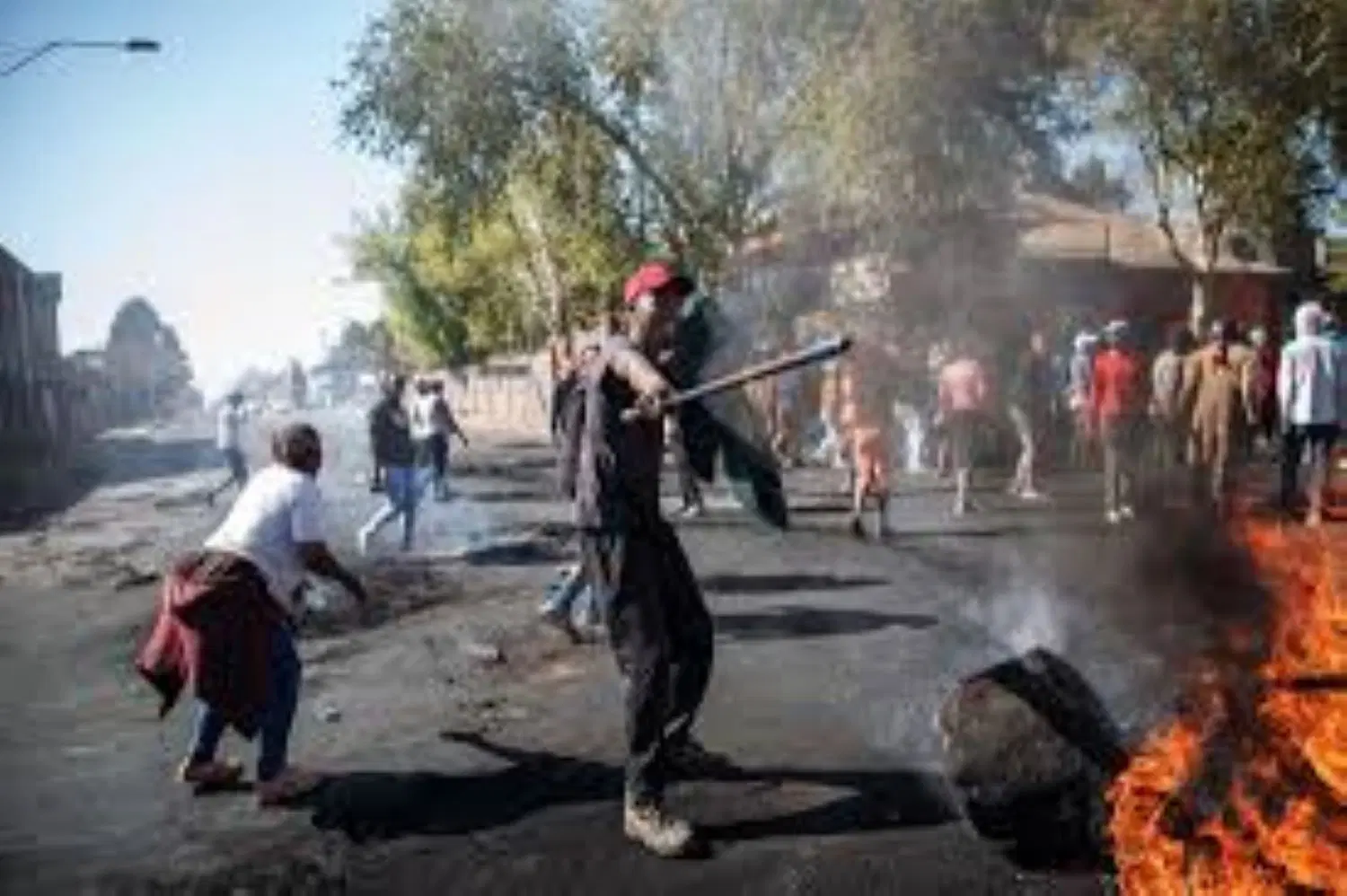
DURBAN S/AFRICA: Fresh anti-immigrant protests erupted in the South African city of Durban on Wednesday as demonstrators marched through parts of the city demanding stricter immigration laws and the deportation of undocumented foreign nationals, including Nigerians.
The protest was organised by the controversial civic group March and March and drew participation from several political organisations and anti-migration groups in South Africa.
Among the groups that joined the march were the political party ActionSA and the vigilante anti-immigrant movement Operation Dudula, both of which have repeatedly called for stronger measures against undocumented migrants.
The protesters demanded tighter border control and the mass deportation of foreigners they claim are living illegally in the country.
The demonstration was led by Jacinta Ngobese‑Zuma, a prominent activist and leader of March and March. During the rally, she accused undocumented migrants of overburdening public services and benefiting from government resources meant for South African citizens.
She questioned why the government allows undocumented immigrants to access public healthcare facilities, arguing that such services should not be provided free to foreign nationals.
“If you are saying you can’t refuse them healthcare, why must it be public?” she said. “Make them pay for their own healthcare if they want to stay in the country.”
Her comments have drawn criticism from rights groups and observers who say the rhetoric risks inflaming xenophobic sentiments in a country that has experienced multiple waves of anti-immigrant violence over the past two decades.
Leader of ActionSA, Herman Mashaba, also addressed protesters during the march, saying his party joined the demonstration because the government had been too slow to address the issue of illegal immigration.
Mashaba claimed that South Africa was being “flooded” by migrants from various countries across the world, including Nigeria, Pakistan, Bangladesh and Mexico.
“We are seeing our government allowing our country to be flooded by groups from all over the world,” he said. “We are saying to our government that this is unacceptable.”
According to Mashaba, ActionSA supports the campaign by March and March, which he said has spent the past year drawing attention to immigration issues in South Africa.
Some demonstrators at the rally argued that undocumented migrants were taking employment opportunities away from local citizens.
One protest participant, Muzi Xaba, said foreigners should be removed from workplaces so that South Africans can be hired instead.
Our duty is to deal with labour and civil matters,” he said. “We must remove foreigners and then hire South Africans.
Beyond employment concerns, several anti-immigrant groups also blamed migrants for rising crime rates and what they described as the erosion of local communities.
However, migration experts and rights groups have repeatedly challenged such claims, noting that crime statistics in South Africa do not support the widespread perception that immigrants are responsible for most criminal activities.
When contacted over the protest, the Nigerians in Diaspora Commission (NiDCOM) said it had not received official reports of new attacks targeting Nigerians.
The Commission’s Head of Media, Public Relations and Protocols, Abdur‑Rahman Balogun, said the agency was unaware of any fresh incidents involving Nigerians following the demonstration.
He nevertheless advised Nigerians living in South Africa to remain cautious and avoid areas where protests or anti-immigrant demonstrations are taking place.
Balogun urged members of the Nigerian community to prioritise their safety whenever tensions rise.
Attempts to obtain comments from Nigeria’s Ministry of Foreign Affairs were unsuccessful as calls to the ministry’s spokesperson, Kimiebi Ebienfa, were not answered at the time of filing the report.
The absence of an immediate official response has left observers watching closely to see whether diplomatic engagement between Nigeria and South Africa may follow if tensions escalate.
Anti-immigrant protests and attacks have periodically erupted in South Africa, often targeting migrants from other African countries.
Nigerians, Zimbabweans, Ethiopians and other African nationals have frequently been victims of such incidents, which have sometimes escalated into violence, looting and destruction of businesses owned by foreign nationals.
Previous waves of xenophobic attacks have triggered diplomatic tensions between Nigeria and South Africa, prompting interventions by both governments and regional organisations.
Analysts warn that continued anti-immigrant agitation could strain relations within the African continent, particularly at a time when regional integration and economic cooperation are being promoted through initiatives such as the African Continental Free Trade Area.
The latest protest also reflects growing debate within South Africa over immigration management, border control and economic pressure caused by high unemployment rates.
With unemployment remaining a major challenge in the country, political parties and civic groups have increasingly used immigration as a central issue in domestic political discourse.
However, human rights organizations caution that framing economic challenges around immigration risks deepening social divisions and fueling xenophobic attitudes.
For many migrants living in South Africa, including thousands of Nigerians who operate businesses or work in various sectors, such protests often create anxiety about safety and security.
As tensions continue to simmer, authorities are expected to closely monitor developments in Durban and other cities to prevent the situation from escalating into violence.