


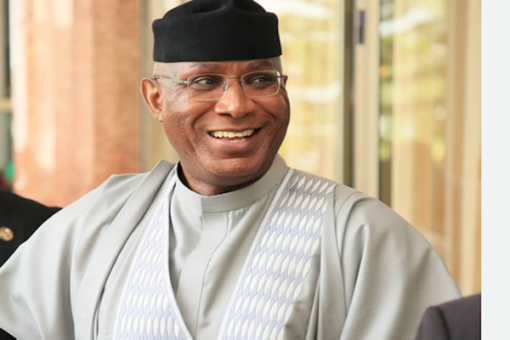
WARRI: As political realignments intensify ahead of the 2027 general elections, a chieftain of the All Progressives Congress (APC) in Delta State, Williams Makinde, has openly backed the return of former Deputy Senate President Ovie Omo-Agege to the Senate, arguing that established political traditions in Urhobo land support his candidacy.
Makinde’s position comes at a time when the political landscape in Delta State is undergoing major shifts, particularly within the APC, following growing permutations linked to the 2027 elections.
According to him, the long-standing power-sharing arrangement between Eastern and Western Urhobo divisions makes it both honourable and politically necessary for the Delta Central senatorial seat to revert to Eastern Urhobo in 2027 a development that would favour Omo-Agege’s return to the National Assembly.
Makinde explained that contrary to arguments in some political circles advocating a rotational arrangement among the three federal constituencies in Delta Central, the district’s historical political structure has always been based on the two recognised divisions of Eastern and Western Urhobo.
Read also:
- OMO AGEGE IS A SPENT FORCE IN EMERGINNG APC POLITICS IN DELTA STATE by Iwemdi Nwaham
- Oborevwori, Omo-Agege, Keyamo, Okowa Showcase Unity at Delta APC Stakeholders’ Meeting
He noted that Western Urhobo comprises the Okpe/Sapele/Uvwie and Ethiope federal constituencies, while Eastern Urhobo includes Ughelli North/Ughelli South/Udu.
According to him, this division has guided political balancing within the senatorial district since the creation of Delta State.
My submissions to federal constituencies rotation are not historically factual and are based on false evidence and presentation, Makinde stated, stressing that the internal political dynamics of Delta Central have always revolved around the Eastern–Western Urhobo divide.
Makinde cited several historical precedents to justify his position.
He noted that whenever Delta Central produced a governor, the senatorial seat was deliberately zoned to the opposite division in order to maintain political equilibrium within the Urhobo nation.
For instance, during the administration of the late Felix Ibru from Eastern Urhobo, the Senate seat was held by W. O. Eradajaye from Western Urhobo.
Similarly, during the tenure of former governor James Ibori from Western Urhobo, senators from Eastern Urhobo occupied the Delta Central seat in the National Assembly.
The facts of history show that whenever the opportunity for Urhobo to produce the governor arises, the offices of governor and senator are shared between Eastern and Western divisions, Makinde explained.
Makinde also referenced the internal political arrangement within the APC ahead of the 2023 general elections.
At the time, Omo-Agege emerged as the party’s governorship candidate from Eastern Urhobo.
To maintain the delicate balance between the two blocs, leading figures from Eastern Urhobo, including O’tega Emerhor and Christopher Ominimini stepped aside to allow Ede Dafinone from Western Urhobo to emerge as the party’s senatorial candidate unopposed.
Makinde described that move as a strategic sacrifice aimed at maintaining party unity and preserving the traditional power-sharing formula within the district.
“This precedent guided APC’s 2023 nominations. Honour demands that Western Urhobo reciprocate by yielding the senate seat to Eastern Urhobo in 2027,” he said.
Changing Political Landscape in Delta APC
Political observers believe the renewed push for Omo-Agege’s return to the Senate is also connected to evolving power dynamics within the APC following the mass political realignment in Delta State.
In recent months, the entry of several influential political actors from the Peoples Democratic Party (PDP) into the APC has significantly altered the party’s internal balance of power.
These developments have reportedly reshaped the governorship calculations within the party ahead of the 2027 election cycle.
Analysts say that with the influx of PDP political heavyweights into the APC, the contest for the party’s governorship ticket may become more complicated and highly competitive.
Within that context, some APC stakeholders are believed to be encouraging Omo-Agege to consider a strategic return to the Senate rather than risk losing out in a crowded governorship race.
Supporters of the former Deputy Senate President argue that returning to the Senate would allow him to retain political relevance while maintaining a strong legislative voice for Delta Central.
Makinde himself emphasised the advantages of sending a ranking and experienced lawmaker back to the National Assembly.
“There is no Urhobo person who has attained a higher ranking in the Senate than the former Deputy President of the Senate,” he said.
According to him, Delta Central stands to benefit significantly from Omo-Agege’s experience, influence and network within federal political structures.
However, the unfolding political permutations could create a major challenge for the current senator representing the district, Ede Dafinone.
If the traditional zoning arrangement advocated by Makinde and other APC stakeholders is strictly followed, Western Urhobo may be expected to step aside for Eastern Urhobo in the next electoral cycle.
Such a development could effectively place Dafinone outside the main equation for the APC senatorial ticket in 2027.
Political strategists say this scenario may lead to intense negotiations and possible realignments within the party as different blocs attempt to protect their political interests.
Makinde therefore appealed to leaders and stakeholders in Western Urhobo to respect the longstanding tradition of political balancing within the Urhobo nation.
“As a proud son of Western Urhobo, I am appealing to my brothers to uphold our cherished tradition of power-sharing with Eastern Urhobo,” he said.
He warned that any attempt to disrupt the arrangement could threaten the fragile political unity that has helped maintain stability in the district over the years.
Makinde concluded by urging Omo-Agege to take up the challenge and prepare for a possible return to the Senate.
He described the former Deputy Senate President as energetic, experienced and well-positioned to continue advancing the political and developmental interests of Delta Central at the national level.
According to him, sending a tested political figure back to the Senate would not only strengthen the voice of the district in national politics but also help attract federal projects and investments to the region.
With the 2027 elections gradually approaching, the unfolding debate around the Delta Central senatorial seat highlights the complex interplay of tradition, strategy and power within Delta State politics.
Whether the APC eventually aligns behind Omo-Agege’s return to the Senate and how that decision may affect the political future of Senator Dafinone remains one of the key questions shaping the party’s internal calculations ahead of the next electoral cycle.


