


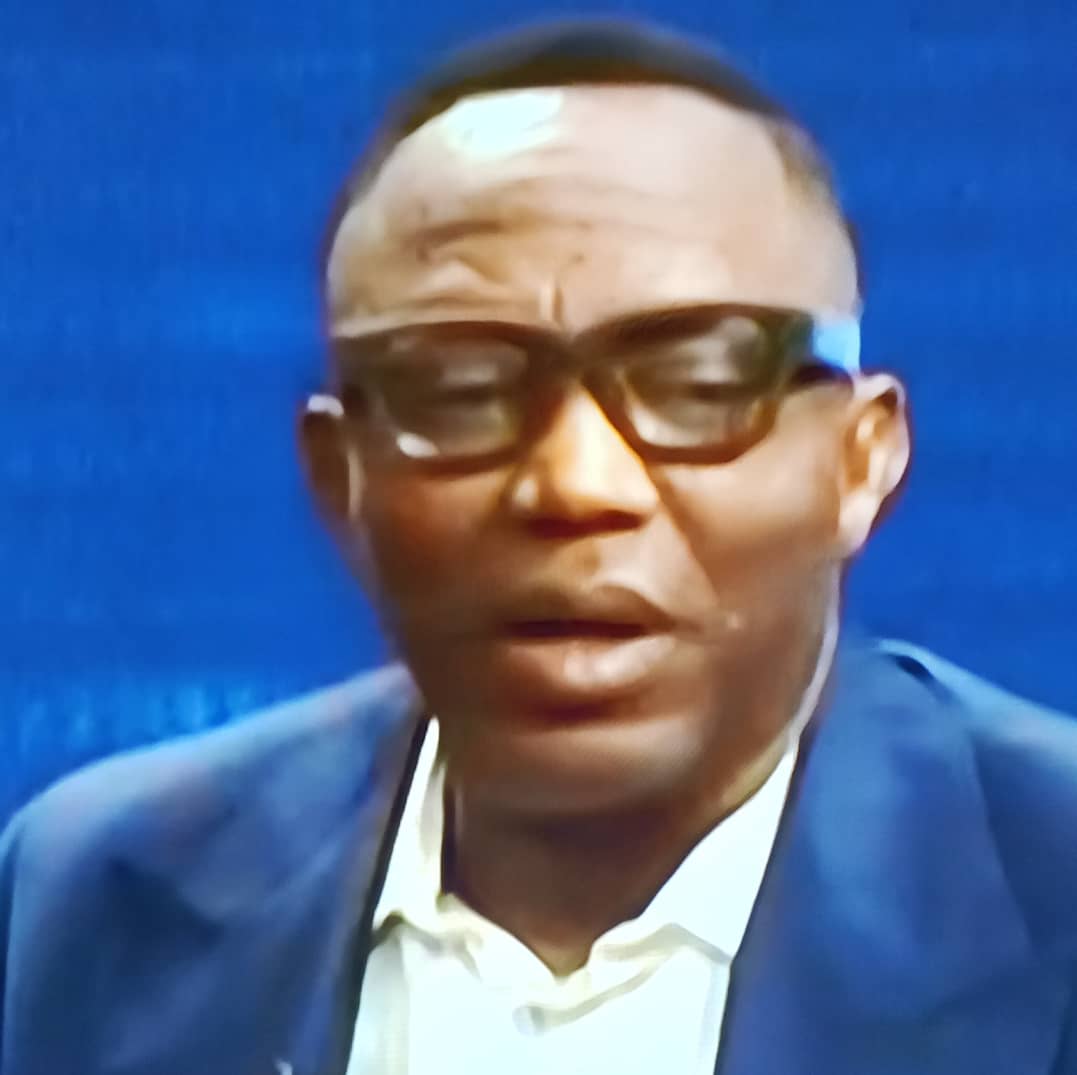
LAGOS: Omoyele Sowore, presidential candidate of African Action Congress and human rights activist, has accused Nigeria’s Department of State Services (DSS) of political persecution, excessive surveillance and attempts to criminalise free speech, warning that the actions of security agencies could undermine democracy and constitutional rights.GOS
Sowore made the allegations while reacting to developments in his ongoing legal battle and the reported decision by the DSS to seek a lengthy adjournment of the proceedings.
The presidential candidate questioned the extent to which a security agency should influence the direction of a case already before the courts, arguing that matters concerning the continuation, suspension or withdrawal of criminal charges must be handled through due process and within the framework of the judicial system.
His allegations have renewed debate over the use of security agencies in politically sensitive cases and the protection of freedom of expression in Nigeria, particularly as the country moves closer to the 2027 general elections.
Sowore alleged that he had previously been subjected to measures including the seizure of his passport, detention and an attempt to secure his imprisonment after he missed a court appearance.
According to the presidential candidate, the experience raised serious questions about the relationship between Nigeria’s security agencies and the judiciary.
He argued that political opponents should not be intimidated or prevented from exercising their constitutional rights through the use of state security institutions.
Sowore said his case was no longer simply a personal legal dispute but part of a wider question about the ability of Nigerians to criticise those in government without facing intimidation, prosecution or other forms of state pressure.
Sowore maintained that criticism of public officials is an essential component of democratic governance.
You cannot criminalise free speech and get away with it, he said.
The presidential candidate argued that where a citizen makes a statement about a government official, the appropriate legal process should determine whether the statement constitutes legitimate criticism, an allegation that requires proof or a criminal offence.
He called on government officials and security agencies to respect constitutional rights and allow political opponents to operate freely.
Sowore said citizens should not be forced to choose between exercising their right to speak and protecting themselves from possible retaliation by state institutions.
The presidential candidate also alleged that the DSS attached a tracking device to his vehicle.
He said members of his team discovered the device and traced it, an allegation that he said raised concerns about the level of surveillance allegedly directed at political figures.
The surveillance claim could not independently be verified based on the information available.
However, Sowore said the alleged incident formed part of his broader concerns about the use of security powers against opposition politicians and critics of government.
The allegation adds another dimension to the dispute between the presidential candidate and the security agency, particularly over the boundaries between legitimate intelligence gathering and unlawful political surveillance
Sowore also challenged arguments that the DSS has a responsibility not only to provide physical protection for the President but also to shield him from psychological attacks.
He questioned whether such an interpretation could give security agencies excessive powers to restrict political criticism.
According to him, the mandate of security institutions must remain subject to the law and constitutional safeguards.
He warned that allowing security agencies to determine what constitutes an acceptable criticism of political leaders could create a dangerous precedent for Nigeria’s democracy.
Sowore also criticised what he described as inadequate institutional independence, arguing that democratic institutions must be capable of acting without political pressure.
The presidential candidate also referred to former Kaduna State Governor Nasir El-Rufai while discussing political detention and restrictions imposed on political figures.
Sowore said prolonged detention or restrictive bail conditions involving politicians could raise concerns about political persecution, particularly where such measures are perceived as being connected to political affiliations.
He called for equal treatment under the law and urged authorities to ensure that political differences do not determine how citizens are treated by state institutions.
According to Sowore, Nigeria must learn from its democratic history and avoid returning to an era in which political opponents could be silenced through state power.
Sowore warned political leaders and government officials against assuming that their control over state institutions would last indefinitely.
He argued that political power is temporary and that individuals who exercise authority over security and other government institutions today could eventually become subject to the same institutions.
The presidential candidate recalled seeing former public officials who once wielded enormous influence later move around without the extensive security presence they enjoyed while in office.
He said the experience should serve as a reminder that government institutions must be strengthened rather than personalised around political office holders.
Sowore also praised members of his legal team for their handling of his case and thanked Nigerians who had supported calls for the protection of his fundamental rights.
He said the legal battle had evolved into a broader discussion about freedom of expression, human rights, political participation and democratic accountability.
The presidential candidate maintained that Nigeria is bigger than any political party, individual or government agency.
He urged authorities to place the national interest above political considerations and respect the rights of citizens to participate in political debate.
The allegations come at a politically sensitive time, with Nigeria heading toward the 2027 general elections and political parties and presidential aspirants increasingly engaging in public campaigns and criticism.
The dispute involving Sowore and the DSS therefore touches on broader questions about the limits of state security powers, political prosecution, surveillance and freedom of expression.
For Sowore, the central issue is whether Nigerians can freely question and criticise those in power without fear of arrest, detention or prosecution.
He said he would continue to advocate for freedom of expression and fundamental human rights, insisting that citizens must be able to scrutinise their leaders and participate fully in Nigeria’s democratic process.