


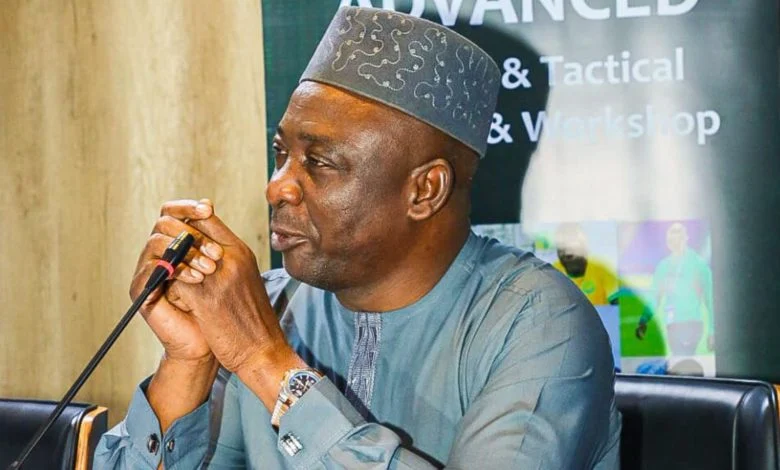
ABUJA: The President of the Nigeria Football Federation (NFF), Ibrahim Gusau, and several members of the federation’s executive committee have resigned from their positions amid growing concerns over the management of Nigerian football.
The development comes after months of mounting pressure on the NFF leadership, particularly over the declining fortunes of the country’s national teams and questions surrounding the administration of funds released by the Federal Government.
The crisis reached a new level following Nigeria’s failure to qualify for the 2027 FIFA Women’s World Cup, ending the Super Falcons’ record of appearing at every edition of the tournament since its inception in 1991.
The NFF board has also faced increased scrutiny from security agencies over the utilisation of funds allocated to the national teams.
The Department of State Services (DSS) has reportedly joined other security agencies in investigating the NFF over the management of a N17 billion intervention fund released by the Federal Government.
The funds, approved by President Bola Tinubu in 2024, were intended to settle outstanding salaries, allowances and bonuses owed to players and officials of Nigeria’s national football teams.
A source familiar with the development said the DSS had requested documents and other records showing how the funds released to the NFF were utilised.
It’s a normal thing for DSS to go through all documents relating to the funds released to them, the source said, dismissing suggestions that the investigation amounted to a witch-hunt.
The probe comes against the backdrop of increasing public criticism of the administration of Nigerian football, with several national teams experiencing disappointing results in recent years.
The Super Eagles have missed successive FIFA World Cup tournaments, while the Super Falcons recently suffered the unprecedented setback of failing to secure automatic qualification for the 2027 Women’s World Cup.
Nigeria’s hopes of securing a direct qualification ticket were dealt a major blow after the Super Falcons lost 1-0 to Cameroon in the quarterfinals of the 2026 Women’s Africa Cup of Nations (WAFCON).
The defeat ended Nigeria’s title defence and forced the team into the World Cup qualification playoff route.
The Super Falcons subsequently faced South Africa’s Banyana Banyana in the playoff, with the South Africans securing a 2-1 victory to book their place at the 2027 FIFA Women’s World Cup in Brazil.
The failure marked a historic moment for Nigerian women’s football, as the Super Falcons had previously featured in every Women’s World Cup since the competition began in 1991.
The resignation of Gusau and other board members follows sustained calls for changes within the NFF leadership.
More than half of the federation’s executive committee members have reportedly resigned, with eight of the 13 members said to have left their positions.
The departures have thrown fresh uncertainty over the future of the federation and could affect plans for the next NFF election.
The federation had scheduled its elective congress for September 27 in Lafia, Nasarawa State, but the latest developments could force a review of the timetable.
The NFF is now facing a major leadership crisis as stakeholders demand greater accountability, improved administration and a clear strategy to restore Nigeria’s football fortunes.


