


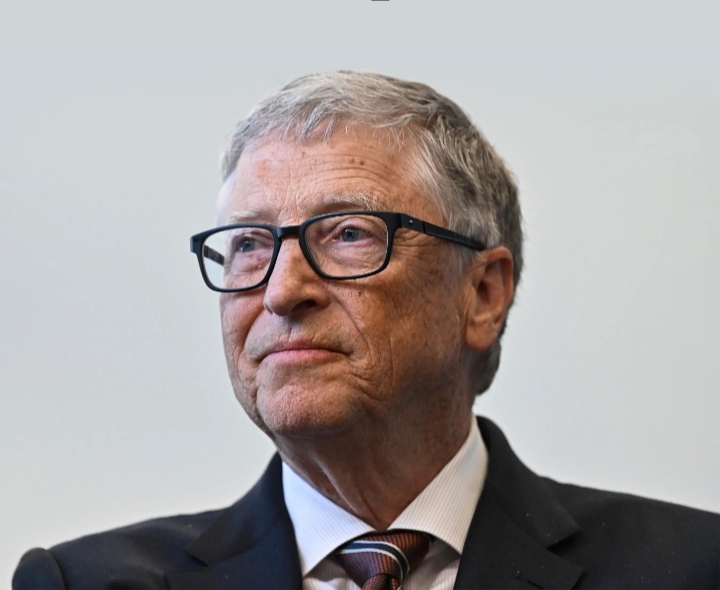
Microsoft co-founder Bill Gates has proposed that governments designate certain occupations as Human Reserved as artificial intelligence and robotics become more capable of performing tasks traditionally handled by people.
He also renewed his call for taxes on AI systems and robots, arguing that such measures could slow job displacement and generate funds for retraining programmes and social welfare.
Gates outlined the proposals in a more than 6,000-word essay titled The turbulent AI era is here. The choices we make now are critical, published on his Gates Notes website on Wednesday.
According to Gates, some jobs should remain exclusively or primarily in human hands because of their social, emotional or economic importance.
He said his views were influenced by his experience caring for his father, who died of Alzheimer’s disease in 2020. Gates recalled how paid caregivers were able to understand his father’s needs even when he could no longer communicate clearly.
Something in the care they gave my dad was irreplaceably human. No robot could or should have done it, he wrote.
Gates said the term Human Reserved was inspired by nature reserves—areas that could be developed but are deliberately protected because their loss would be too significant.
He argued that some occupations might be reserved for humans because automation could displace large numbers of workers who would find it difficult to move into entirely different careers.
For example, you can’t tell a 55-year-old who has worked in construction their whole career that they need to go work at an elder care facility and expect them to find it fulfilling,” he said.
Gates added that economic considerations would not be the only basis for protecting certain jobs. In healthcare, for instance, he said patients should not receive devastating medical news from a machine, even if a robot were technically capable of delivering it.
He suggested that sectors such as education and mental healthcare could eventually combine human expertise with AI assistance, with people remaining in charge while using technology to improve their work.
However, Gates acknowledged that countries might adopt different approaches. While some nations may insist that elderly people be cared for by humans, countries facing severe labour shortages such as Japan could be more willing to use caregiving robots.
He said policymakers would need to determine which jobs should be protected, who would make those decisions and how companies could be prevented from bypassing the rules.
Gates also argued that tax systems currently encourage companies to replace employees with machines.
He noted that employers typically pay payroll taxes when hiring workers, while robots and other machines can often be treated as deductible business expenses.
I believe we should tax AI tokens and robots, he wrote.
In his view, such a tax could reduce the speed of automation while raising money for worker retraining, social support and communities most affected by job losses.
Gates acknowledged that critics might consider the proposal economically inefficient. However, he argued that employment provides wider benefits to individuals and society that are not fully reflected in standard economic calculations.
He said technological progress would create enough wealth for societies to accept some limited inefficiency in order to preserve employment.
Gates noted that he had advocated a robot tax for years and remained a strong supporter of the idea. Nevertheless, he stressed that taxation alone would not solve the employment challenges associated with AI.
He urged governments to ensure that funds raised through any new tax reached workers who lost their jobs, people whose working hours or wages declined, and communities experiencing concentrated economic damage.
Gates warned that governments should begin preparing before AI-driven unemployment and social disruption become more severe.
He called on leaders to develop coordinated policies across different sectors instead of leaving AI-related issues to separate government departments.
He also urged policymakers to involve workers, students entering the labour market, community leaders, religious organisations, parents, educators and other groups whose voices are often excluded from technology debates.
Gates said the future of AI should not be determined solely by technology companies or a small group of experts.
He challenged governments and institutions to consider how the benefits of AI could reach people without wealth or influence, how displaced workers and communities could be supported, and how societies could preserve human dignity during the transition.
Leaders across academia, business, government, and civil society all have a role to play in shaping what comes next, he said