


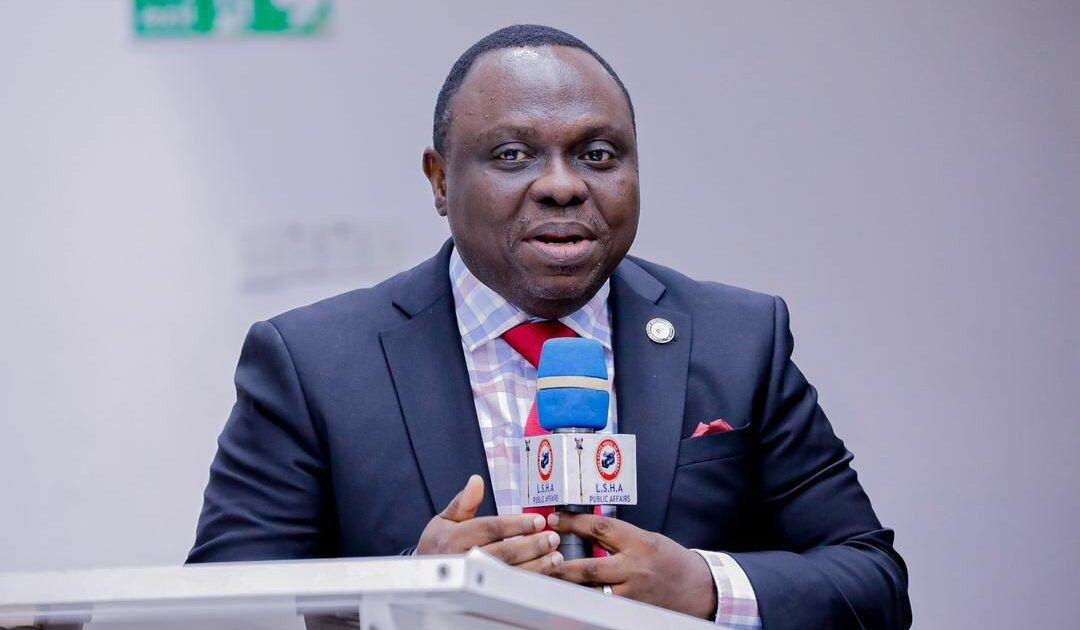
LAGOS: The Lagos State Commissioner for Energy and Mineral Resources, Biodun Ogunleye, has called for a comprehensive approach to urban regeneration, saying the transformation of older cities must go beyond road reconstruction and building rehabilitation to address electricity supply, infrastructure deficits and residents’ living conditions.
Ogunleye said established urban centres such as Lagos do not need to abandon their historical identity but require a new operational framework capable of delivering reliable public services, supporting economic activities and improving the quality of life.
He made the remarks during a panel discussion on Urban Renewal, Regeneration and the Transformation of Older Cities, where he described urban regeneration as an integrated process involving infrastructure development, economic growth, social protection, cultural preservation and climate resilience.
An older city does not need a new identity. It needs a new operating system, the commissioner said, stressing that meaningful renewal should restore a city’s capacity to serve its residents while preparing it for future development.
Referencing the United Nations-Habitat World Cities Report 2024, Ogunleye identified six major challenges confronting established urban districts.
They include ageing and overloaded electricity, water and sanitation infrastructure; increasing exposure to flooding and extreme heat; inadequate drainage systems; competing demands for land from housing, commercial activities and transportation; housing affordability and overcrowding; and fragmented governance involving government agencies, utility providers and private investors.
He cited Lagos Island as an example of an older urban district facing recurring flooding, deteriorating infrastructure and the challenge of balancing commercial activities, transportation needs and the preservation of historical sites.
According to him, addressing these pressures requires coordinated infrastructure investment, effective land-use planning and policies that protect existing communities and cultural heritage.
The commissioner identified unreliable electricity as one of the major constraints affecting urban productivity, business operations and economic development.
Citing findings referenced from the Sustainable Energy for All (SEforALL) initiative and the Lagos State Government, Ogunleye said an estimated 4.5 million fossil-fuel-powered generator sets were operating across Lagos State.
He noted that the electricity grid accounted for only about 20 per cent of demand in the study cited, while generators were estimated to produce approximately 39 million tonnes of carbon dioxide equivalent annually.
He argued that dependence on generators should not be considered a sustainable alternative to reliable public electricity, noting that their continued use increases energy costs, pollution and noise while placing additional pressure on businesses.
Ogunleye advocated a transition from generator-dependent neighbourhoods to properly serviced electricity systems supported by networked power infrastructure, shared facilities, measurable service standards and coordinated utility planning.
He maintained that dependable electricity should be accessible in communities where residents live, work and conduct business.
The commissioner also highlighted reforms introduced by the Lagos State Government to strengthen electricity governance and attract investment into the sector.
He traced the reforms to the Lagos State Electricity Law of 2024 and the subsequent establishment of the Lagos State Electricity Regulatory Commission (LASERC) and the Lagos Independent System Operator (LAISO) between 2025 and 2026.
According to him, the government is also working on investment frameworks, licensing arrangements, contractual structures and consumer protection measures.
He emphasised that electricity market reforms should contribute directly to urban development rather than operate as an isolated economic objective.
Ogunleye further identified two projects intended to demonstrate how neighbourhood-level electricity infrastructure could support the regeneration of commercial and residential districts.
The first is a commercial district upgrade project involving 40 megawatts of planned embedded generation capacity and a 12.6-kilometre dedicated underground feeder network designed to supply businesses within the area.
The project remains under development and has not yet become operational.
The second is the Akute Independent Power Plant, an existing but dormant facility with 26 megawatts of base contracted capacity. Ogunleye said the facility was scheduled for rehabilitation under a concession agreement in 2026 to support public electricity services.
Ogunleye stressed that the success of urban regeneration should not be measured solely by new buildings, reconstructed roads or modern infrastructure but also by whether existing residents can continue to live and prosper in their communities.
He outlined four major commitments that should guide regeneration projects: protecting residents, traders and vulnerable households through transparent consultations and fair procedures; preserving important architecture and neighbourhood identity; ensuring access to affordable housing, public spaces and sustainable livelihoods; and incorporating safety, utilities and trading opportunities into construction plans.
The commissioner warned that urban renewal without adequate social inclusion could displace established communities and undermine the broader objectives of development.
He maintained that residents and small businesses should be considered throughout the planning and implementation of regeneration projects.
On financing and implementation, the commissioner proposed that neighbourhoods should be treated as integrated development units, with roads, drainage, electricity, water supply and land-use arrangements coordinated before procurement begins.
He said public funds should be directed towards common infrastructure, while private-sector investment and public-private partnerships should support suitable service assets.
He also called for a broader approach to contract evaluation, arguing that projects should be assessed not only by construction delivery but also by reliability, maintenance, resilience, affordability and their ability to support local businesses.
Ogunleye presented a three-stage framework for implementing sustainable urban renewal.
The first stage, which could last up to 12 months, would involve a detailed assessment of infrastructure conditions, flood risks, residents, traders and electricity demand.
The second stage, covering 12 to 36 months, would focus on delivering priority projects through coordinated public works and improvements to electricity infrastructure.
The third stage, beginning after 36 months, would involve expanding successful projects, attracting further investment and using performance data to guide additional development.
He said progress should be measured through improvements in electricity reliability, reduced flooding, business continuity, affordability and residents’ satisfaction.
Ogunleye concluded by urging policymakers, investors and other stakeholders to rethink how older cities are planned and transformed.
Do not just rebuild the city. Renew what the city can do, he said.
He maintained that the ultimate objective of urban regeneration should be to build a Lagos that is more resilient, inclusive and productive, while preserving the identity and communities that have shaped the city over the years.
Temidayo Shokoya
Public Affairs Unit, LASERC