


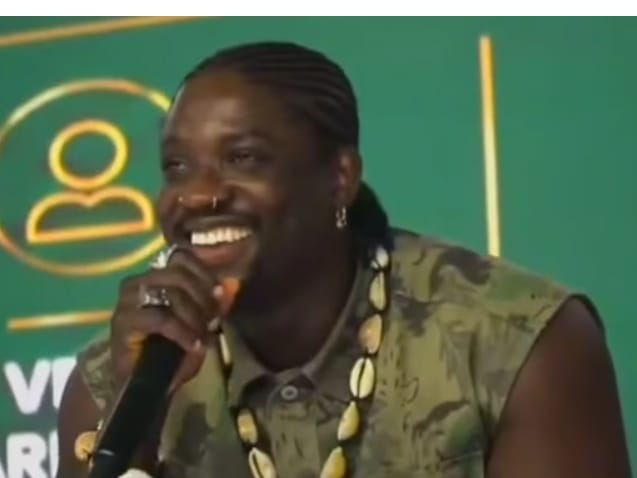
PORT HARCOURT: Social media activist and commentator VeryDarkMan has challenged the continued use of the phrase “unknown gunmen” to describe perpetrators of violent attacks across Nigeria, questioning whether the country is doing enough to identify, investigate and prosecute those responsible for insecurity.
Speaking at a Nigerian Bar Association (NBA) event, VeryDarkMan said he was not addressing the issue as a politician but as someone who had personally witnessed the devastating consequences of violence in different parts of the country.
He said his experiences as a first responder and media personality had brought him into contact with victims and communities affected by killings, kidnappings and bomb attacks.
According to him, insecurity should not be regarded as a distant problem affecting only particular communities because violence can eventually reach anyone, regardless of their location or social status.
VeryDarkMan also criticised sections of the conventional media, alleging that some major media organisations have become increasingly reluctant to travel to communities affected by violent attacks.
He argued that independent media practitioners and citizen journalists are increasingly filling the gap by travelling to affected locations, documenting incidents and exposing the human consequences of insecurity.
At the centre of his intervention was the question: Unknown Gunmen or Known Gunmen?
VeryDarkMan questioned why attackers are repeatedly described as “unknown gunmen” despite recurring patterns of violence and, in some cases, the availability of information about longstanding disputes and criminal networks within affected communities.
He argued that Nigeria must move beyond simply labelling perpetrators as unidentified criminals and concentrate on determining who is behind attacks, what motivates them, how they operate and the networks that support their activities.
For him, the issue is ultimately about accountability.
If perpetrators remain unidentified after repeated attacks, he suggested, public confidence in the ability of security agencies to protect citizens and bring criminals to justice will continue to suffer.
VeryDarkMan also addressed recurring clashes between farmers and herders, particularly in parts of the Middle Belt and northern Nigeria.
He noted that disputes involving farmland, cattle movement, livelihoods, retaliation and competing claims to natural resources have contributed to prolonged cycles of violence that have resulted in significant loss of life over the years.
However, he cautioned against reducing the problem to simplistic ethnic or religious narratives.
Instead, he called for more honest conversations about the economic, cultural, social and political factors contributing to violent conflicts across the country.
Such an approach, he argued, would make it easier to understand the underlying causes of insecurity rather than treating every incident as an isolated confrontation.
During his intervention, VeryDarkMan also raised controversial allegations concerning cattle movement and financial activities in Nigeria.
Those allegations remain claims and should not be treated as established facts without independent investigation, credible evidence and verification by the appropriate authorities.
The broader issue, however, remains significant: Nigeria continues to face multiple forms of insecurity, ranging from terrorism and banditry to kidnapping, communal violence and criminal attacks.
VeryDarkMan’s intervention at the NBA event has reignited a broader national debate over whether the Nigerian government is genuinely overwhelmed by the scale of insecurity or whether a stronger political will is required to decisively confront those responsible.
For many Nigerians, the demand goes beyond official condemnations issued after attacks.
Citizens want better intelligence gathering, effective policing, rapid security responses, proper investigations, justice for victims and the consistent identification and prosecution of perpetrators.
The debate over “Known Gunmen?” therefore goes beyond terminology.
It raises fundamental questions about accountability, intelligence gathering, political will and the effectiveness of Nigeria’s security institutions.
Until perpetrators are consistently identified, investigated and brought before the courts, the expression “unknown gunmen” may continue to represent more than unidentified attackers.
For many Nigerians, it has become a symbol of their frustration with a security crisis that has persisted for years and their demand for answers, accountability and justice.