


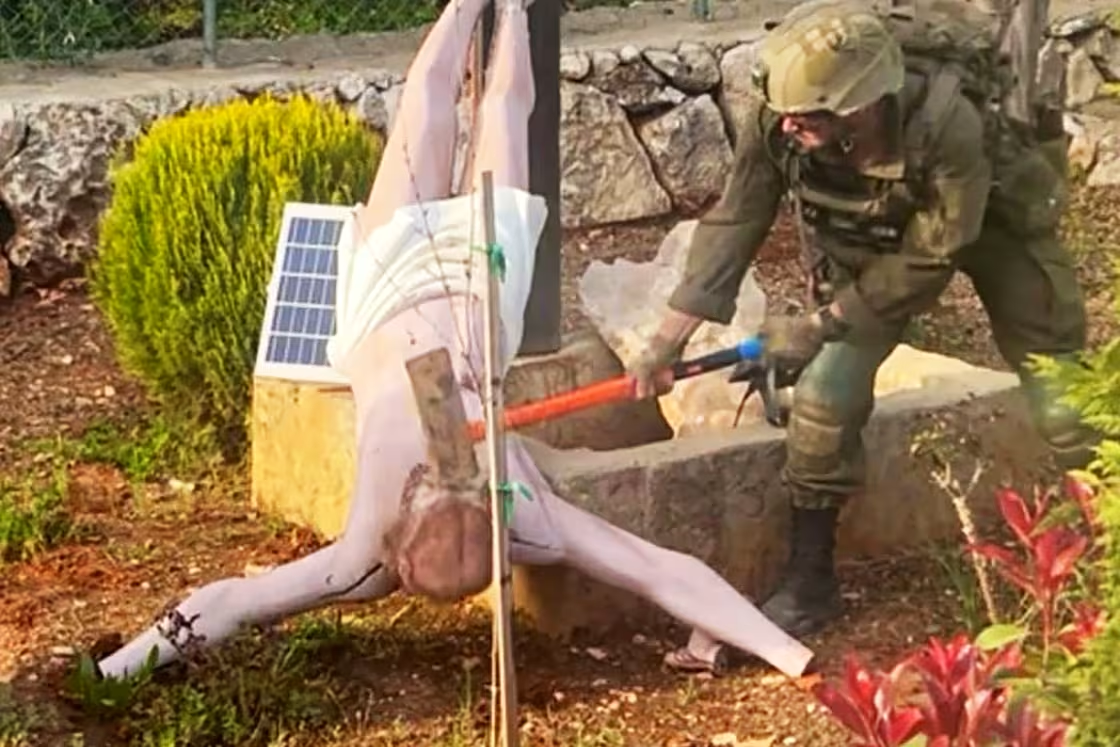
A viral photograph showing an Israeli soldier allegedly damaging a statue of Jesus Christ in southern Lebanon has escalated into a major diplomatic and political controversy, prompting condemnation from Israeli leaders, an internal military investigation, and strong reactions from international officials and religious communities.
The image, which circulated widely on social media over the weekend, appears to show a soldier in military gear using what looks like an axe or sledgehammer against a Christian statue in a village in southern Lebanon.
The statue, reportedly part of a small roadside shrine, was shown overturned and visibly damaged.
The incident has intensified scrutiny of Israeli military conduct during ongoing operations in southern Lebanon, where Israel has been engaged in cross-border conflict with Hezbollah.
IDF confirms authenticity and launches investigation
The Israel Defense Forces (IDF) confirmed that the image is authentic after internal verification. In a public statement, the military described the act as wholly inconsistent with the values expected of its troops and said it is treating the matter with “great severity. The IDF announced:
A formal investigation has been opened
Disciplinary action will be taken if wrongdoing is confirmed
Efforts are underway to assist in restoring the damaged statue
The military also emphasized that its operations in southern Lebanon are aimed at Hezbollah infrastructure and not civilian or religious sites, stating that it has no intention of harming civilian infrastructure, including religious buildings or symbols.
However, the incident has raised broader questions about discipline, oversight, and conduct in active conflict zones. Netanyahu and government response
Israeli Prime Minister Benjamin Netanyahu publicly condemned the incident, saying he was stunned and saddened by the image.He stressed that the act does not reflect Israel’s values and reaffirmed the country’s commitment to religious freedom.
Netanyahu stated that Israel expresses regret for any hurt caused to believers in Lebanon and around the world, adding that the soldier’s behavior was unacceptable and would be addressed.
Foreign Minister Gideon Saar also strongly criticized the act, calling it “grave and disgraceful, and said he expects strict disciplinary action to follow.
International condemnation and pressure
The incident quickly drew international attention, with calls for accountability coming from both political and diplomatic figures.
U.S. Ambassador to Israel Mike Huckabee called the act “outrageous,” demanding swift, severe, and public consequences. His comments reflect concern in Washington over potential reputational damage and increased tensions in an already fragile regional conflict.
Lebanese and religious reaction.
In Lebanon, where nearly one-third of the population is Christian, local religious figures condemned the destruction of the statue as a violation of sacred space.
A priest in the affected village described the incident as a “desecration of holy symbols,” stating that the shrine belonged to a local Christian family and had been part of the community for years.
Religious groups have warned that such incidents risk deepening sectarian tensions in an already volatile region.
The incident has also triggered political debate within Israel itself.
Arab Israeli lawmakers strongly criticised the event, arguing that it reflects broader concerns about treatment of religious and civilian sites during military operations.
Some politicians accused the military and government of failing to ensure accountability in conflict zones, while others demanded clearer safeguards for cultural and religious property.
Opposition voices also used the incident to question command oversight and the effectiveness of military discipline in active operations.
The controversy unfolds against the backdrop of continued Israeli military operations in southern Lebanon, largely aimed at Hezbollah positions following cross-border attacks.
Key context includes:
A U.S.-brokered ceasefire remains fragile
Israeli operations have displaced over one million people in Lebanon
Lebanese officials report nearly 2,300 deaths since escalation began
Hezbollah and Israel continue to exchange strikes in border areas
The region remains highly unstable, with both military activity and political tensions continuing to escalate.
Beyond the military and political dimensions, the incident carries significant religious sensitivity. Lebanon has a substantial Christian population, and religious symbols in southern villages are often closely tied to local identity and community history.
Analysts say the viral nature of the image has amplified its impact far beyond the immediate location, turning it into a symbolic flashpoint in the broader Israel–Lebanon conflict.
The IDF investigation is ongoing, and military officials have indicated that disciplinary measures could follow depending on the findings. However, the political and diplomatic consequences are already unfolding.
Pressure is mounting on Israeli leadership to demonstrate accountability, maintain international credibility, and prevent similar incidents in the future.
At the same time, the incident is likely to remain part of a broader debate over conduct in conflict zones and the protection of religious and cultural heritage during warfare.