


NEW-YORK: The United States and Iran have resumed indirect negotiations aimed at ending their nearly seven-month conflict, even as tensions remain high over the Strait of Hormuz and President Donald Trump has warned of further military action if no agreement is reached.
The latest talks took place on the sidelines of the United Nations General Assembly in New York, with Qatari mediators facilitating communication between the two sides.
US envoy Steve Witkoff said American and Iranian representatives held lengthy discussions and described the latest round as constructive and potentially promising. Trump also said the discussions were positive and indicated that another meeting was expected.
However, significant differences remain.
A senior Iranian official told Reuters that Tehran was reviewing a US response to an Iranian proposal for ending the fighting, but said major disagreements had yet to be resolved.
The official said the reopening of the Strait of Hormuz and an end to the US naval blockade of Iranian ports and vessels were among the issues discussed during the indirect negotiations.
Iran has continued to demand the lifting of the blockade and has insisted on conditions for reopening the strategic waterway.
Iranian Supreme National Security Council Secretary Mohsen Rezaei said the Strait would remain closed until the country’s conditions were met.
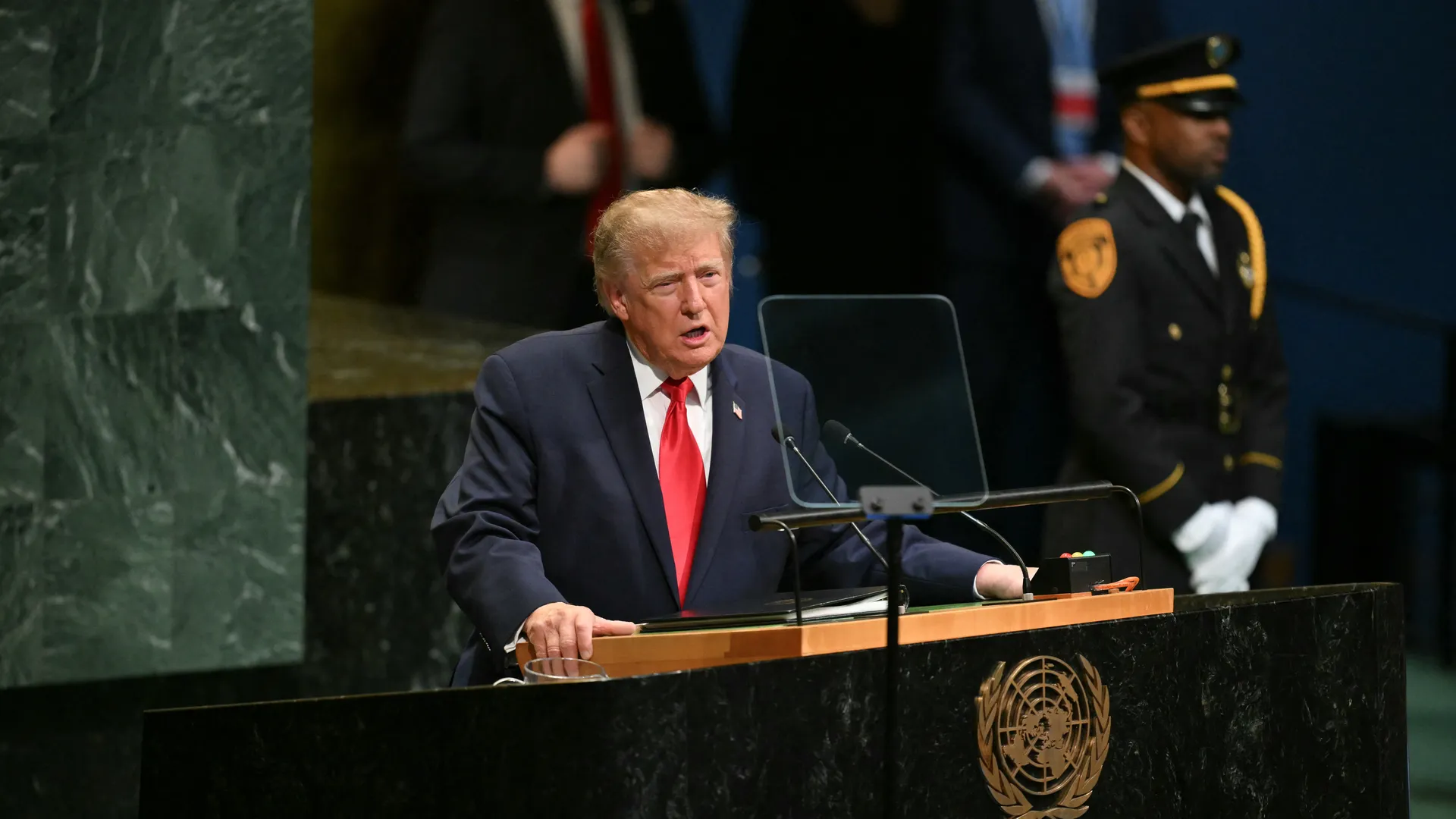
The negotiations followed Trump’s address to the United Nations General Assembly, where he presented Tehran with a stark choice between reaching a deal and facing further US military action.
Trump said he was considering whether to allow Iran to rebuild under an agreement or take more drastic action against the Islamic Republic.
Iranian Foreign Ministry spokesman Esmaeil Baqaei rejected Trump’s remarks, describing them as a sign of desperation and saying Tehran had communicated its conditions clearly through mediators.
Iranian President Masoud Pezeshkian, addressing world leaders at the UN on Wednesday, said Iran had been the victim of terrorism and denied that his country had initiated the conflict.
Pezeshkian also referred to the bombing of a school in Minab during the opening phase of the war. A preliminary US assessment previously reported that American forces were likely responsible for the strike, although the assessment said the school was not deliberately targeted.
Pezeshkian maintained that Iran had consistently been willing to negotiate while defending itself against what he described as an imposed war.
The diplomatic efforts have unfolded alongside renewed tensions around the Strait of Hormuz, one of the world’s most important maritime energy routes.
A commercial vessel, the Antigua and Barbuda-flagged Cape Dao, was struck by a projectile in the waterway on Wednesday and caught fire. Oman’s Royal Navy said one crew member died and 27 others were evacuated. India’s Ministry of External Affairs said the deceased crew member was an Indian national and that 20 Indians were among those aboard.
The incident has added to concerns about maritime security and the potential consequences of the continuing confrontation between Washington and Tehran.
The conflict is also affecting the wider Middle East.
Iran-aligned Houthi forces in Yemen have warned that US interests in the region could become targets if Washington intervenes militarily in Yemen’s renewed conflict in support of Saudi Arabia.
A Houthi military adviser said the group could attempt to close the Bab el-Mandeb Strait to American ships if the United States intervenes.
The warning comes as fighting between Houthi forces and Saudi-backed government forces has intensified along Yemen’s Red Sea coast.
The conflict has also triggered fresh restrictions on Iranian aviation.
Several countries began suspending or restricting Iranian airline operations after new US sanctions targeting Iran’s aviation sector took effect. Georgia suspended Iranian carrier flights, while Azerbaijan also halted Iranian flights. Iraq suspended Iranian flights to Baghdad, although flights to other Iraqi airports, including Najaf, were expected to continue.
Meanwhile, Iran said about half of the damaged production capacity at its South Pars gas field had been restored following attacks earlier in the conflict.
The developments underline the multiple fronts affected by the war, from diplomacy and energy supplies to aviation and maritime trade.
For now, Washington and Tehran remain engaged in indirect negotiations, but the unresolved dispute over sanctions, the Strait of Hormuz, military operations and Iran’s nuclear programme continues to complicate efforts to reach a broader settlemen