


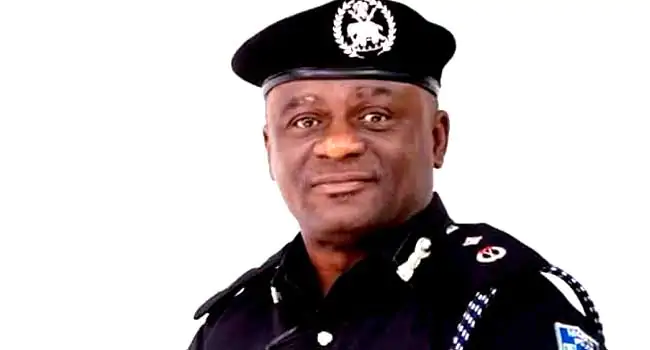
ASABA: The Delta State Police Command has invited former Deputy Senate President, Senator Ovie Omo-Agege, Ughelli North Local Government Chairman, Jaro Movudu Egbo, and five other persons for questioning over the deadly political violence that erupted during a Nigeria Democratic Congress (NDC) gathering in Uduere community, Ughelli North Local Government Area of Delta State.
The police invitations form part of an ongoing investigation into the November 23 violence, which left several people dead and others injured during a political engagement involving Omo-Agege, the NDC senatorial candidate for Delta Central.
According to the police, the invited individuals are expected to report to the State Criminal Investigation Department (SCID) at the Delta State Police Command Headquarters in Asaba on Thursday and Friday, November 26 and 27, respectively.
In a statement issued by the Police Public Relations Officer, SP Bright Edafe, the command said the invitations were necessary to establish the roles played by individuals connected with the incident.
Omo-Agege has been scheduled to appear on Thursday at 11am, while Egbo is expected at 2pm on the same day.
The five other persons invited are Gowon Egoide, former chairman of Uduere Quarters; Onoriode Oneya, the community’s incumbent youth chairman; Edirin Wokode Ewhubare; Erukaye Egoide; and Tony Gabon Mevowovo. They are expected to report on Friday at noon.
The police urged all those invited to honour the appointments and cooperate with investigators. It also warned that only the named individuals would be admitted, adding that supporters and other unauthorised persons should not accompany them to the command headquarters.
The command said the investigation was aimed at establishing the level of involvement of each person connected with the incident.
The development came as Delta State Governor, Sheriff Oborevwori, visited the troubled community and directed security agencies to identify and arrest everyone involved in the killings.
The governor, who had earlier met with security chiefs at the Area Command Office in Ughelli, described the violence as unfortunate and unacceptable, stressing that political disagreements could never justify the loss of human lives.
He was accompanied during the visit by the Commissioner of Police, Samuel Erale; Commander of the 63 Brigade of the Nigerian Army, Brigadier-General Ibrahim Buhari; the State Director of the Department of State Services and other security officials.
Oborevwori appealed to political leaders and their supporters to exercise restraint and reject political thuggery, warning that political activities must not become a source of insecurity.
He also directed security agencies to conduct a comprehensive investigation and ensure that those responsible were brought to justice.
Following the incident, the state government imposed a dusk-to-dawn curfew across Ughelli North Local Government Area. The police confirmed that the restriction would run from 6pm to 6am until further notice.
Inspector-General of Police, Olatunji Disu, had earlier ordered an immediate, impartial and evidence-based investigation into the violence.
The police said the investigation would establish the sequence of events, identify those responsible and examine the circumstances surrounding the shootings, including the deployment and conduct of officers assigned to the gathering.
The Force Public Relations Officer, CSP Aniete Iniedu, said officers found to have acted negligently, unlawfully or in breach of professional standards would face disciplinary action, while those involved in criminal conduct would be prosecuted.
The police also acknowledged that conflicting casualty figures had circulated following the attack, saying investigators would establish the verified number of people killed and injured.
Accounts from the rival political camps have differed. Egbo identified three people allegedly killed on his side, including the community’s President-General, Cosmos Ejovwoke, while Omo-Agege listed four members of his campaign organisation who died.
The governor and police had put the confirmed death toll at six, while competing accounts from the political camps claimed a higher figure.
One of the victims identified as Efemena Umukoro reportedly welcomed his first child about six months before the incident. His death has sparked grief and renewed calls for justice from his family and associates.
His elder brother, Godwin Anaughe, who also lost his brother Moses in the violence, said the family wanted those responsible to be brought to justice.
A community leader in Uduere, Chief Joshua Asah, has offered an account of how the violence allegedly began, insisting that Omo-Agege’s visit was a community consultation rather than a campaign rally.
Speaking to Vanguard, Asah alleged that preparations for the meeting were disrupted by suspected thugs who chased away youths attempting to erect canopies at the community town hall on Sunday evening.
According to him, the youths were told that they could not use the hall because a prominent politician from the community had reserved it for another event.
He said the Omo-Agege team subsequently moved the gathering to an open compound opposite the town hall.
Asah further alleged that stones were thrown at the crowd as Omo-Agege was concluding his address, before gunshots were heard, forcing people to flee.
He also questioned the response of police officers allegedly present at the venue, claiming that they failed to prevent the violence.
Asah said he escaped through nearby bushes into neighbouring Saniko community before being rescued by a relative.
He maintained that the community’s eldest man, Chief Edward Imonikugbere, could confirm the arrangements for the meeting. However, efforts by Vanguard to reach Imonikugbere for confirmation were unsuccessful.
The eyewitness account represents one side of the disputed events and has yet to be independently established by the police investigation.
The Delta State chapter of the NDC accused a prominent APC politician in the area of involvement in the attack, while questioning why security operatives allegedly present at the venue failed to protect those attending the gathering.
The party also rejected allegations that its supporters were armed, insisting that it remained committed to peaceful political engagement.
Speaking on Channels Television, Delta NDC Chairman, Anagiamaowei Oyindoubra, and Deputy Spokesperson of the NDC Presidential Campaign Council, Sam Omale, described the incident as an attack on peaceful political activities.
Oyindoubra, who said he was in Asaba when the violence occurred, said his allegations were based on accounts from eyewitnesses. He challenged the politician accused by the party to provide evidence of any APC members killed or injured during the incident.
The politician, however, denied being at the scene and blamed Omo-Agege’s supporters for initiating the violence, alleging that the incident escalated into a reprisal attack.
He further claimed that two of his associates, Prince Oharisi and another man identified only as Oche, were shot dead as Omo-Agege and his supporters were concluding their gathering.
The competing allegations have heightened tension between the political camps as police investigators work to establish what happened.
Amid the controversy, the NDC boycotted a security meeting convened by the Inspector-General of Police for chairmen and secretaries of registered political parties.
The meeting was organised to address attacks on campaign rallies, destruction of campaign materials and threats to public peace ahead of the 2027 general elections.
In a statement signed by its National Publicity Secretary, Osa Director, the party said it no longer felt protected by the police and would not participate in a process it believed had failed to safeguard its members.
The NDC accused the police of failing to protect its supporters during attacks in several states, including Benue, Edo, Cross River, Enugu and Delta.
It also called on the international community to pressure the Federal Government to uphold democratic standards and ensure the protection of opposition parties.
The Delta killings have also drawn reactions from opposition political groups, with the Kabiru Tanimu Turaki-led interim National Working Committee of the Peoples Democratic Party calling on President Bola Tinubu to renounce what it described as inflammatory political rhetoric.
In a statement by its National Publicity Secretary, Ini Ememobong, the PDP group linked the growing climate of political hostility to remarks previously made by the President about the struggle for political power.
It cited Tinubu’s 2022 statement that political power must be “grabbed, snatched and run away with” and his 2026 remark that “all is fair in politics”, arguing that such comments could encourage supporters to resort to intimidation and violence.
Similarly, the Makinde-Daura Presidential Campaign Organisation accused the APC of promoting political violence to intimidate opposition parties ahead of the elections.
In a statement signed by its Director of Strategic Communications, Richard Ihediwa, the organisation warned that the killings raised concerns about the possible use of armed political thugs to disrupt the electoral process.
The APC and those accused in the various allegations have not been established by the ongoing police investigation as responsible for the killings.
Minister of Aviation and Aerospace Development, Festus Keyamo, condemned the killings, describing the incident as alien to the Delta State he knew.
In a statement titled “This Is Not the Delta We Have Always Known”, Keyamo said he was disturbed by reports of political violence in his hometown of Ughelli, which reportedly left four people dead and several others injured.
He also recalled an earlier killing involving a tricycle operator in Asaba on November 7, allegedly carried out by supporters of a political party.
Keyamo urged security agencies to apprehend those responsible for both incidents, saying he had been engaging security chiefs over the rising political violence and inflammatory political statements in the state.
APC chieftain and Executive Director of Business Development at the Nigerian Export-Import Bank, Stella Okotete, also condemned the killings, disclosing that she had lost a friend and political ally, Moses Anaughe.
She promised to work with security agencies to ensure that those involved were brought to justice and called for a thorough investigation into who instigated, organised or carried out the attack.
Social crusader Zik Gbemre also described the killings as preventable and unacceptable, questioning the conduct of police officers allegedly present at the scene.
Human rights lawyer Inibehe Effiong condemned the killing of Efemena Umukoro, popularly known as Akima, describing him as a courageous rights activist and demanding accountability.
The violence in Delta has renewed concerns about the safety of Nigeria’s 2027 electoral process, with former Chief Justice of Nigeria, Justice Olukayode Ariwoola, warning against a repeat of the deadly violence that followed the 2011 general elections.
Ariwoola, who chairs the Council of the Wise of the Savannah Centre for Diplomacy, Democracy and Development, expressed concern over reported attacks on political convoys, campaign rallies and party gatherings across the country.
He warned that the trend posed a serious threat to candidates, voters, journalists and members of the public.
The former CJN urged political parties, candidates, supporters and security agencies to respect the Constitution, the Electoral Act 2026 and relevant electoral regulations.
He called on security agencies to provide adequate protection at campaign venues, arrest perpetrators and confiscate dangerous weapons.
He also urged political leaders to publicly condemn violence, discipline supporters involved in unlawful activities and honour the Peace Accord.
Ariwoola warned that Nigeria must not allow a repeat of the violence that followed the 2011 elections, during which more than 800 people were reportedly killed.
The National Peace Committee, led by former Head of State, General Abdulsalami Abubakar, also raised concerns over political violence, reporting 109 violations of peace accords across 26 states and the Federal Capital Territory during a 10-week monitoring exercise covering August 19 to October 27.
Political violence and thuggery accounted for 33 incidents, while misinformation and disinformation represented 29 cases.
Separately, the Kimpact Development Initiative said its monitoring recorded 124 incidents of electoral violence and 22 deaths across 35 states and the FCT between July 1 and November 23, 2026.
The figures were released under its Nigeria Election Violence Education and Reporting Project.
According to KDI, reported incidents rose from three in July to 48 in October, with another 40 recorded in the first half of November.
The organisation identified physical assault as the most common form of violence, accounting for 46.8 per cent of cases. Property destruction represented 28.8 per cent, shootings 10.2 per cent, intimidation and harassment nine per cent, while kidnappings accounted for four per cent.
KDI said political party members and affiliated groups were identified as perpetrators in 82.3 per cent of the incidents and victims in 86.5 per cent.
It warned that the absence of publicly available evidence of prosecutions or convictions in many reported cases could weaken accountability and encourage further violence.
With the 2027 elections approaching, the organisation urged political leaders to discourage violence, sanction supporters involved in unlawful conduct and demonstrate a clear commitment to peaceful political competition.
The police investigation into the Ughelli killings is expected to provide further clarity on the circumstances surrounding the attack and the responsibility of those involved. The invitation of Omo-Agege, Egbo and the other persons of interest marks a significant step in the effort to establish the facts and ensure accountability.