


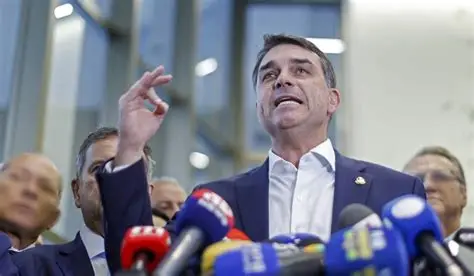
Brazilian President Luiz Inácio Lula da Silva has secured a dramatic election victory over right-wing senator Flavio Bolsonaro, winning an unprecedented fourth presidential term after a closely contested runoff election on Sunday.
Lula, who turns 81 on Tuesday, defeated Flavio Bolsonaro, son of former far-right president Jair Bolsonaro, with 51.75 per cent of the votes, against his rival’s 48.25 per cent, according to official results.
The victory marks another remarkable political comeback for Lula, who had suffered a first-round defeat to Bolsonaro before launching an intensified campaign to win back voters.
The result also represents a setback for Brazil’s conservative movement, which has gained ground in several Latin American countries, including Argentina, Chile, Colombia and Peru, amid support from US President Donald Trump.
Controversy Erupts Over Voting Extension
Sunday’s election was overshadowed by political tension following a last-minute Supreme Court ruling extending voting by two hours nationwide.
Lula had requested the extension, arguing that the withdrawal of buses from circulation in several cities had prevented some citizens from reaching polling stations.
Flavio Bolsonaro also sought voting extensions in certain areas because of heavy rainfall, but his camp criticised the nationwide decision.
The move sparked heated reactions among voters and political supporters, further exposing the deep divisions within Brazil, a country of more than 200 million people.
While some voters condemned the extension, Lula’s supporters defended it as necessary to ensure eligible citizens were not denied their democratic rights.
The bitter campaign was characterised by allegations, political attacks and competing visions for the country’s future.
Lula’s victory adds another chapter to his extraordinary political journey, which has spanned more than four decades.
Born into poverty in northeastern Brazil to a family of illiterate farmers, Lula rose to become one of the country’s most influential political figures.
He first served as president from 2003 to 2010 before returning to power in 2022 following a dramatic comeback after a corruption scandal resulted in his imprisonment for more than 18 months.
The charges against him were subsequently annulled on procedural grounds, although the controversy continued to feature in political debates.
During his third term, Lula’s administration recorded declines in inflation and unemployment and expanded social welfare programmes aimed at reducing hunger and poverty.
However, concerns over the cost of living and insecurity remained major issues among voters.
His campaign relied heavily on mobilising supporters, strengthening social media engagement and encouraging people to vote amid concerns over voter abstention.
Mass rallies also featured warnings against a return to the political direction associated with former President Jair Bolsonaro.
Tough Challenges Await Lula
Despite his victory, Lula faces a difficult political landscape as he prepares for another term.
The election results reveal a deeply divided electorate, with nearly half of voters backing his opponent and demanding political change.
Lula will also contend with a Congress dominated by right-wing lawmakers, potentially complicating efforts to advance his legislative agenda.
Economic challenges, including expectations of slower growth, rising living costs and persistent insecurity, are expected to shape his next administration.
Brazil continues to struggle with criminal factions operating in working-class communities, placing pressure on the government to strengthen public safety.
At 80, Lula is already among the world’s oldest leaders and will be 85 by the end of his new term in 2030.
His combined time in office will reach 16 years, following his first presidency between 2003 and 2010 and his subsequent return to power.
Sovereignty Dominates Campaign Debate
National sovereignty was another major theme of Lula’s campaign, particularly amid commercial and diplomatic pressure from the United States under President Donald Trump.
Lula urged voters to choose a government that would defend Brazil’s national interests, accusing his opponent of aligning too closely with Washington.
His victory is expected to keep Brazil’s political direction under left-wing leadership, even as the country remains sharply divided over its economic priorities, social policies and international relations.
The election outcome sets the stage for another consequential chapter in Brazilian politics, with Lula facing the challenge of governing a divided nation while delivering on the expectations of his supporters.