


WASHINGTON: The long-running dispute over alleged mass killings of Christians in Nigeria has resurfaced in Washington, where senior members of the U.S. Congress are again questioning the Federal Government’s stance. Lawmakers insist that recent patterns of violence clearly suggest religiously targeted attacks.
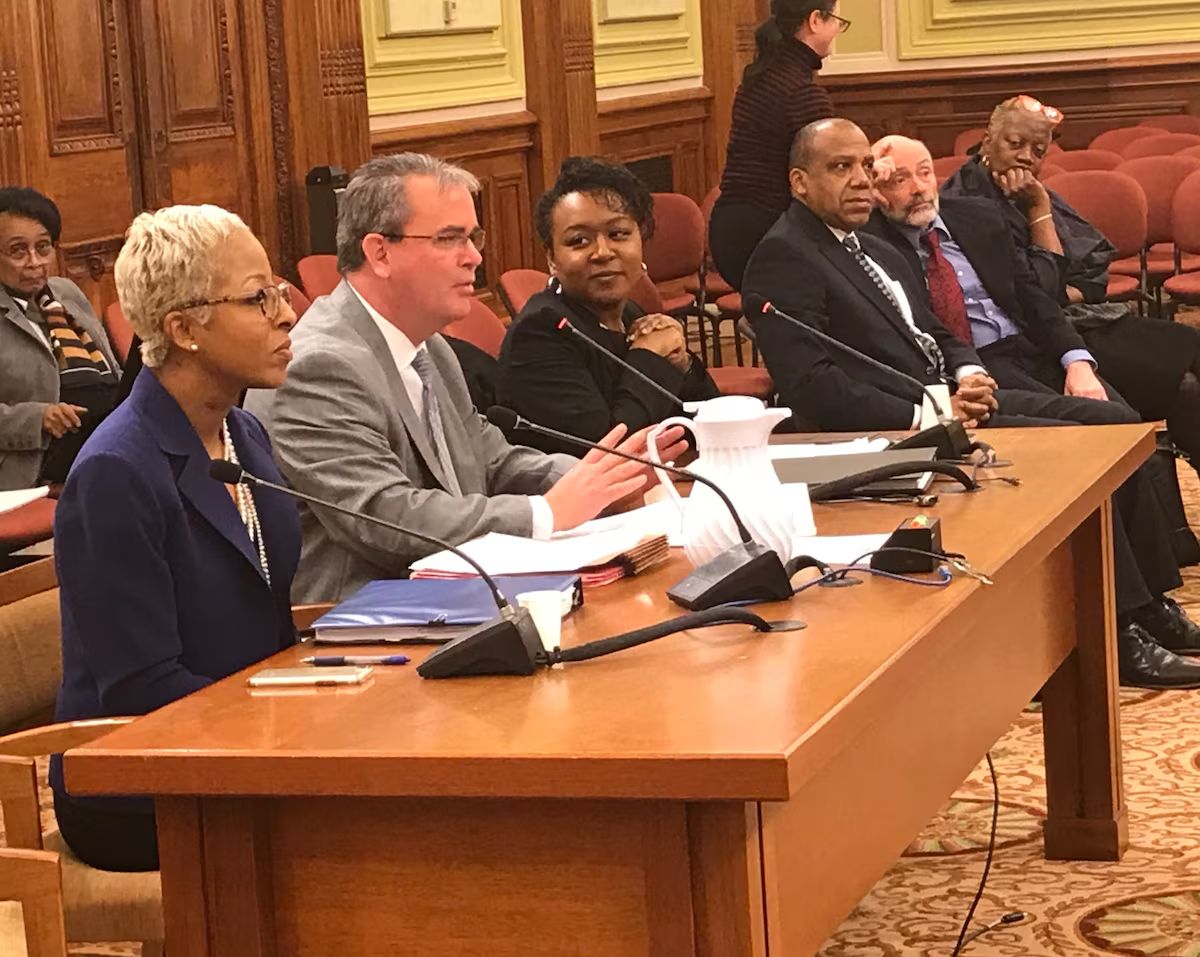
The renewed confrontation followed a joint closed-door briefing by the House Appropriations Committee and the House Foreign Affairs Committee, which examined new intelligence on Nigeria’s insecurity and concluded that the situation requires urgent international attention.
The briefing forms part of a wider investigation ordered by former U.S. President Donald Trump, directing Congress to produce a comprehensive report on alleged persecution of Christians in Nigeria and recommend possible U.S. actions.
Mario Díaz-Balart, Vice Chair of the Appropriations Committee, led the session, noting that evidence gathered so far exposes major shortcomings in Nigeria’s security response.
He said the upcoming report will shape key U.S. diplomatic and security decisions.
One of the most troubling testimonies came from Vicky Hartzler, Chair of the U.S. Commission on International Religious Freedom (USCIRF).
She told lawmakers that religious freedom in Nigeria is under siege, citing incidents of radical militants wiping out Christian villages, burning churches, and escalating school kidnappings.
Hartzler said available data shows Christians are attacked at a ratio of 2.2 to 1 compared to Muslims.
Although she acknowledged some recent reforms by the Nigerian government, she warned that Nigeria is entering a coordinated and alarming phase of intensified violence.
Hartzler urged sanctions against Nigerian officials allegedly complicit in abuses, stricter conditions for U.S. aid, and a Government Accountability Office review.
She stressed that reclaiming villages captured by armed groups must become a top priority to allow displaced families return home.
Dr. Ebenezer Obadare of the Council on Foreign Relations also faulted claims that extremists target both Muslims and Christians equally, describing such assertions as a myth.
He argued that Boko Haram and similar groups operate with explicit religious motives and accused the Nigerian military of being too compromised to dismantle extremist networks without international pressure. He urged the U.S. to support dismantling vigilante and extremist groups enforcing Islamic law in rural communities and to escalate responses to early warning signs of attacks.
Sean Nelson of ADF International added that Nigeria is now “the deadliest country in the world for Christians, saying more Christians are killed there than in all other countries combined.
He also noted that extremists target Muslims who reject their ideology. Nelson called for stricter oversight of U.S. aid, along with transparency in ransom payments and rescue operations for kidnap victims.
Díaz-Balart blamed the Biden administration for removing Nigeria from the list of Countries of Particular Concern in 2021, arguing that the decision has produced deadly consequences.
He hinted that congressional scrutiny will intensify as Trump’s requested report nears completion.
Hartzler acknowledged positive steps taken by the Nigerian government, including President Bola Tinubu’s withdrawal of about 100,000 police officers from VIP protection duties, calling it a promising sign.
She also referenced recent remarks by Nigeria’s House of Representatives Speaker admitting that the country is facing a deeply coordinated escalation of violence.
Hartzler stressed that Nigeria must demonstrate firm commitment to justice, respond swiftly to threats, and ensure accountability for security lapses.
As at the time of filing this report, the Nigerian Embassy in Washington had not responded to requests for comment.


